Factsheet at a Glance
Reprinted with permission from Minnesota Rural Water Association (MRWA), this article was originally published in the Fall 2025 edition of Today, a publication of MRWA. The article has been edited for length. To read the complete article, access the PDF on the MRWA website, Fall 2025_web.pdf.
Household Hazardous Waste
MDH assigns each public drinking water well a vulnerability either high, moderate, or low and from there MRWA/MDH planners can look at what potential contaminants could be threatening your drinking water. Private well owners may never think about the possible contaminants surrounding their well. If the well is working, there isn’t a problem, right? Not necessarily!
Most people probably don’t look at a bottle of window cleaner or a can of old paint and think about how it could affect aquatic wildlife, rivers, streams, or aquifers, but those of us whose goal is to protect your drinking water every day do think about that. We are thinking about everything that can contaminate your drinking water. Household hazardous wastes are something that each of us can keep out of our water.
An average household can have anywhere from 20 to 100 pounds of hazardous waste in their homes. It could be pesticides, herbicides, cleaning chemicals, batteries, paint, pool chemicals, etc. Many of us don’t think about throwing away an empty can of paint or prescription bottles but what about unused paint or prescriptions? There is a proper way to dispose of everything, but are you doing your part to protect the water?
More………Fall 2025_web.pdf.
Minnesota Rural Water Association Training/Resources
For more information about the 2026 Class E and Class D training sessions offered throughout Minnesota, please visit the MRWA Training Calendar at MRWA Training Calendar – Minnesota Rural Water Association and click on Go To Small Systems Training.
Class E Trainings (8 a.m. – Noon)
July 22
Beltrami Electric Co-op
4111 Technology Dr. NW
Bemidji
October 8
Peoples Energy Cooperative
1775 Lake Shady Ave. S.
Oronoco
Nov. 5
Redwood Area Community Center
901 E. Cook S.
Redwood Falls
Dec. 9
Harbor Church
11125 Point Douglas Dr. S.
Hastings
Class D Trainings (8 a.m. – 5 p.m.)
July 9
City of Mountain Iron Community Center
8586 Enterprise Dr. S.
Mountain Iron
July 16
AE2S
6901 E. Fish Lake Rd.
Maple Grove
************************************************************************
Operator Certification
Nontransient noncommunity public water supply systems must employ a certified water operator. These systems include schools, day care facilities, factories, and businesses. Water operators who have questions about their certification status or need to take a water operator exam should reach out to Noel Hansen at 651-201-4690 or noel.hansen@state.mn.us.
Water Operator Certification and Training also provides further information.
Plan Review
MDH was delegated plumbing plan review authority for plumbing work performed by licensed contractors (LWCs), effective Jan. 2026. Plumbing work by LWCs primarily includes water service line installations. Additional information about plumbing plan review for LWCs can be found on the Plumbing Plan Review for Licensed Well Contractors webpage (https://www.health.state.mn.us/communities/environment/water/planreview/lwcplumb.html).
Plans and specifications for plumbing work performed by anyone other than a licensed well contractor must be reviewed by the Minnesota Department of Labor and Industry. For more information, please call 651-284-5063, send email to iMS.bldplb.dli@state.mn.us, or visit Plumbing | Minnesota Department of Labor and Industry (https://www.dli.mn.gov/business/get-licenses-and-permits/plumbing).
In addition, please remember that all plans must be reviewed and approved by MDH prior to any installation or alteration of the public water system between the water source and the entry point to the distribution system. Projects include but are not limited to water service lines, pressure tanks, storage tanks, chemical feeds, filters, and other water treatment. More information can be found at Plan Review for Noncommunity Water Systems - MN Dept. of Health

New Staff
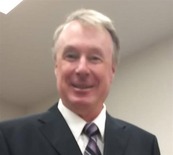
Jeff Johanson joined the Drinking Water Protection Noncommunity Unit in December. Jeff has worked for the Minnesota Department of Health since 2022. He was formerly the metro mobile food unit coordinator in the Food, Pools, and Lodging Services Section. Before coming to MDH, he was an industrial hygienist performing lead risk assessments and asbestos inspections. He received his Bachelor of Science degree from University of Minnesota, Duluth in 2011 and is excited to be back near family in the Duluth area. He and his high school sweetheart Leah are expecting their first child in April.
Jeff enjoys mountain biking, grouse hunting, dark house spearing, playing cribbage, singing karaoke, experimenting in the kitchen, and exploring the majestic Boundary Waters Canoe Area year-round.
Ryan Miller joined the Drinking Water Protection program in January. Ryan has worked for the Minnesota Department of Health since 2021. He was formerly in the Food, Pools, and Lodging Services Section. He received his Bachelor of Science degree from Winona State University in 2016 and has been a registered sanitarian since 2019. In his previous role he was responsible for inspection of Food, Pools, and Lodging establishments in Mankato and plan review and approval of construction plans for food and lodging establishments throughout Minnesota.
Ryan enjoys skiing in the winter, taking long hikes in the spring, being by the water in the summer, and college football in the fall.
|

Source Water Protection Grants
The Source Water Protection (SWP) Grants program helps small public water systems protect and secure their drinking water sources, and their impact is significant. In 2025, 107 grants were awarded, with 74 of those grants benefiting public water suppliers operating at or below the median household income level, earning them a health equity point.
In 2025, the grants program launched a new online system for applying for grants, called Fluxx. The new database allows for streamlining of the grants application process. Applicants can track progress of their grants online, collaborate with MDH staff or others on their application, complete reporting requirements, and more. The SWP Grants website Source Water Protection Grants - MN Dept. of Health has numerous resources to help applicants learn the new Fluxx system.
A change from previous years is that SWP grants will be required to include a quote/estimate, a written verbal quote, or explanation of why a quote cannot be obtained. Two quotes are recommended and will receive more points than one quote.
There is now a set of documents to help systems applying for septic system activities figure out if they are eligible for grant funds. This needs to be included with any application for a grant that involves septic system work. MDH sanitarians or engineers can fill this document out for their public water systems and upload it into Fluxx, along with a Project Evaluation form.
As a reminder, as of Fall 2025, all three SWP Grant types have an upper limit of funding of $15,000. Previously the funding limit was $10,000.
|
|