|
View this as a webpage
In this edition:
If this email was forwarded to you and you’d like to join our list, subscribe at this link.
Child & Teen Checkups (C&TC) Coordinators: please forward this email to your clinic contacts.
A clinic is working to improve quality of care for adolescents. How might they strengthen their suicide screening practices?
A. Consult the C&TC Suicide Risk Screening (PDF) fact sheet.
B. Implement a universal suicide risk screening for all youth, given at each C&TC visit ages 12-20 years.
C. Conduct a suicide risk screening only at the 12-year C&TC visit.
D. Answers A and B.
C&TC new age-related screening standards take effect Oct. 1
Beginning Oct. 1, Minnesota Health Care Programs (MHCP provider news and updates) will implement updates to the C&TC Schedule of Age-Related Screening Standards. Updates include three changes:
- New recommendation: One-time sudden cardiac arrest/sudden cardiac death risk assessment for youth ages 11-21.
- Revised recommendation: Extend the HIV screening to age 21.
- Clarified requirement: Physical exam language adds a footnote to reflect that Medicaid screening services include a comprehensive unclothed physical exam.
Updated guidance and supporting fact sheets will be available beginning July 1 to help clinics prepare for implementation of these changes.
Reminders on telehealth options for MHCP
MHCP members with fee-for-service coverage can get many health care services delivered via telehealth. Services can include some C&TC visit components with the visit completed in-person later. To bill for this, attempt to schedule the in-person portion within a reasonable timeframe (30 days). Use the date the C&TC screening was complete on the claim. See the MHCP Telehealth Services Provider Manual page for general information.
A new way to stay informed about MHCP
A weekly GovDelivery email newsletter keeps providers informed of ongoing, new and factual developments at the Minnesota Department of Human Services (DHS). The goal is to help keep you aware of changes that impact your work and the communities we serve together. Sign up to receive DHS email updates from this newsletter (and other communications).
MDH aligns with medical association immunization recommendations
On Jan. 5, the U.S. Department of Health and Human Services announced an overhaul of childhood immunization schedule. This change was not made because of any new information related to the science or efficacy of vaccinations. Several long-standing routinely recommended vaccines were shifted to shared clinical decision-making or limited to high-risk groups.
The Minnesota Department of Health (MDH)’s response to this change is to direct families and health care providers to follow immunization schedules and guidance from the American Academy of Pediatrics, American Academy of Family Practice, and the American College of Obstetricians and Gynecologists. The evidence-based information provided by these professional organizations reflects current clinical practice. For more information, visit Health Advisory: MDH Aligns with Medical Association Immunization Recommendations (PDF).
The Minnesota Immunization Information Connection will remain aligned with published immunization schedules from American Academy of Pediatrics and American Academy of Family Practice. Vaccines recommended by medical associations are expected to remain covered by private insurance and will remain available through the Minnesota Vaccines for Children program. For evidence-based resources, refer to the reliable sources of immunization information webpage.
The American Academy of Pediatrics recently published its annually revised immunization schedule. The 2026 schedule reflects the American Academy of Pediatrics’ current recommendations for the use of vaccines licensed in the United States. Bookmark and print this resource to use when making Child and Teen Checkup immunization decisions.
Questions on immunization recommendations or vaccines in general? Contact the MDH immunization program at health.vaccineSME@state.mn.us.
MDH immunization conference
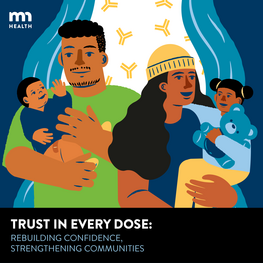
Registration is open for MDH’s Trust in Every Dose: Rebuilding Confidence, Strengthening Communities immunization conference on April 20-21 in Brooklyn Center.
The conference brings together health care providers, public health professionals, and community partners to share immunization best practices, learn from each other, and form collaborative relationships to strengthen communities.
For detailed information including hotel accommodations, speakers, and to access registration and an agenda at a glance, visit the Immunization Conference 2026 webpage.
|
Suicide Risk Screening and Prevention Through the C&TC Lens
Wednesday, April 15 from noon – 1 p.m.
Learn about the C&TC suicide risk screening recommendations for adolescents, why suicide risk screening is critical in preventative visits, suicide risk screening tools, and safety planning and resources.
Intended audience: C&TC providers, clinical teams, and those who support C&TC with outreach, including coordinators, Integrated Health Partnerships, Tribal, and local public health partners.
Register for the free, virtual Suicide Risk Screen and Prevention Through the C&TC Lens webinar.
Hosted by MDH’s Child and Teen Checkups program and Suicide Prevention unit.
Syphilis Screening Through the C&TC Lens
Wednesday, April 29 from noon – 1 p.m.
Learn about the C&TC syphilis screening recommendations for adolescents, the importance of screening for syphilis as part of a comprehensive sexual health visit, current syphilis epidemiology, and available resources.
Intended audience: C&TC providers, clinical teams, and those who support C&TC with outreach, including coordinators, Integrated Health Partnerships, and Tribal and local public health partners.
Hosted by MDH’s Child and Teen Checkups program and Medical Specialist Dr. Nick Lehnertz.
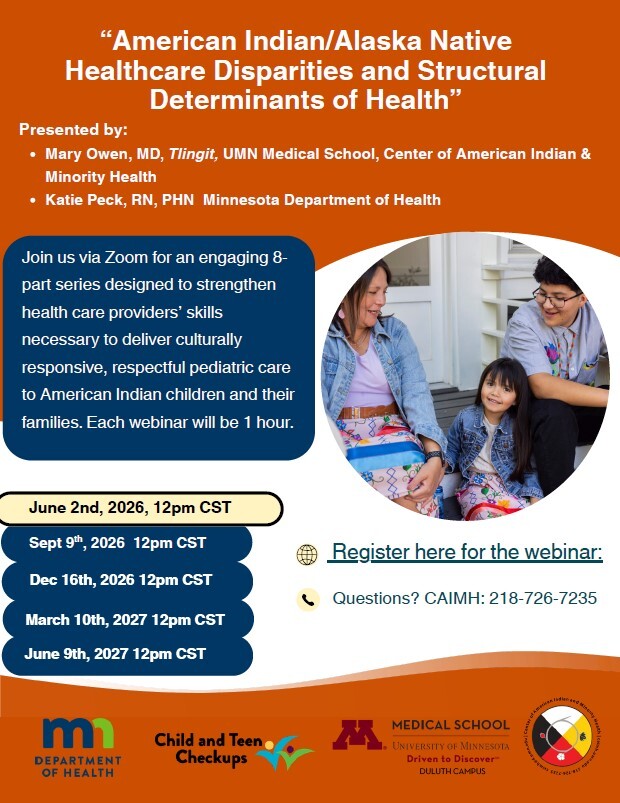
American Indian/Alaska Native Healthcare Disparities and Structural Determinants of Health
Tuesday, June 2 from noon – 1 p.m.
Join session four of a nine-part webinar series to strengthen culturally responsive pediatric care for American Indian and Alaska Native youth. This series is offered both online and in person at the University of Minnesota-Duluth campus. Providers will gain valuable insights and skills to deliver respectful and informed care. Register for the American Indian/Alaska Native Health Care Disparities and Structural Determinants of Health June session.
Community care and support resources
Community care and support resources are available for navigating federal immigration enforcement actions, heavy news, and coping in stressful times.
-
Change to Chill has resources specifically about talking to children and teens.
-
Hello 4 Health focuses on building social connections for better health and has resources regarding community care and support.
Help Me Grow self-referrals
Help empower families’ safety while they continue caring for their children. As trusted partners, health care professionals can share information about making a self-referral through Help Me Grow when families have worries about their baby or young child. Schools will contact the family directly for next steps and can provide services virtually, in the home, or at other safe locations. Early connection helps ensure children and families receive timely support and appropriate services. Please share this important information with families.
Community resource centers
Community and family resource centers are designed to provide culturally responsive, relationship-based service navigation and support for expecting and parenting families and youth to meet multiple, intersecting needs (child care and early education, health care, housing, transportation, food security, cash and other assistance) relative to protective factors and wellbeing.
For clinicians, it may be helpful to know that community and family resource centers have WIC navigators, diaper banks, and partnerships with local farms through VeggieRX or other programs designed to provide families with access to fresh, local, organic produce. Additionally, some community and family resource centers offer and utilize health development and screening programs/tools.
For a more expansive list of resources, review Help Me Connect.
New state webpage separates fraud facts from fiction
DHS has launched a Medicaid program integrity webpage to correct misleading information about Medicaid fraud in Minnesota.
Second Wednesday of each month from 9-9:30 a.m.
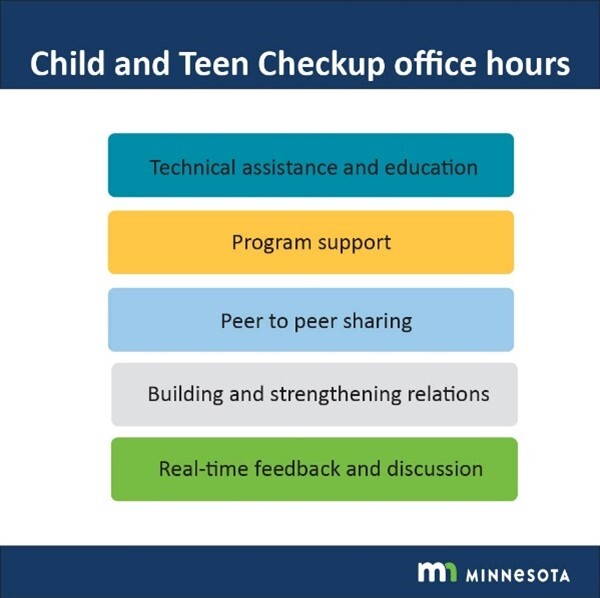
Join the DHS and MDH C&TC program for optional virtual office hours to ask questions, get program support, engage in peer sharing, and strengthen relationships.
Register and submit your questions for our May session and June session.
|