e-Trauma Update

Trauma System logo

e-Trauma Update

View this as a webpage

April


State Trauma Advisory Council (STAC) Updates

New Level 3 and Level 4 Criteria Clarified

Following the December STAC approval of updated Level 3 and Level 4 Trauma Hospital designation criteria, review sessions were held in January and February with hospitals statewide. These discussions surfaced several questions requiring STAC clarification, primarily within the Trauma Team Activation (TTA) criteria. Clarification addressed pediatric vital sign age ranges, improved labeling of vital sign tables, and definitions of open or multiple long bone fractures. Updates are reflected in the Level 4 TTA Criterion 4.3 and Level 3 Tier-One TTA Criterion 5.1.

Criteria have been updated and published to the trauma system website. Additionally, the criteria crosswalk tools are available on the trauma hospital portal.


Initial Data Reports sent to Trauma System Hospitals

The first round of Quarterly MDH Trauma Data Quality Reports are being sent out to designated trauma hospitals this month. This initiative will provide hospitals with regular feedback from the Minnesota trauma registry. These quarterly reports include information about the hospital, along with comparative aggregate data from same level trauma hospitals, the trauma region, and Minnesota averages. The goal is to provide practical, timely feedback to support the hospital's performance improvement efforts. MDH will hold Q & A Sessions to answer and clarify questions that hospitals may have.

Q & A Sessions will be held virtually from 1 pm- 2pm 

April 24

May 8

May 22

June 5

Join the Q & A Sessions (Microsoft Teams meeting)

Trauma Hospital Designations

Congratulations to the recently re-designated hospitals. 

Thank you to all for your commitment to providing excellent trauma care.

Level 1:

  • Mayo Clinic Hospital Saint Mary's Campus, Rochester
  • Mayo Clinic Hospital Eugenio Litta Children's Hospital, Rochester

Level 2:

  • Aspirus St. Luke's Hospital, Duluth

Level 3:

  • Park Nicollet Methodist, St. Louis Park
  • United Hospital, St. Paul

Level 4:

  • CentraCare Health- Redwood Hospital, Redwood Falls
  • Children's Minnesota, St. Paul
  • Lake Region Healthcare Elbow Lake Medical Center
  • Olivia Hospital and Clinic
  • Owatonna Hospital
  • Sanford Trauma Medical Center


Trauma Performance Improvement (PI) and Education

PI Series Education offered

A series of three sessions will be held beginning next month. This series is intended to be an interactive and in-depth learning of the trauma PI process. These are independent and focused educational opportunities. This spring series will feature new case scenarios to practice PI review. All are welcome to attend, even if you've attended in the past.

The PI series will be offered virtually from 9:30-11:30 am on the following dates:

May 14th

     PI 1: Case finding and Primary Review

June 11th

     PI 2: Investigative follow up and Secondary Review

July 9th

     PI 3: Tertiary Review and PI project

Join us for the PI Series education sessions (Microsoft Teams meeting).


Level 3/Level 4 PI Tools

Performance Improvement (PI) Tools have been updated to reflect the new trauma hospital designation criteria. These tools are in the form of editable templates for hospitals to use or customize to meet their needs. The PI Tools for Level 3 and Level 4 trauma hospitals can be found in the Trauma Hospital Portal under the Education tab.

  • New Level 3 PI Tools
  • New Level 4 PI Tools
checklist calendar

Regional Trauma Advisory Committees

Regional Trauma Advisory Committee (RTAC) Highlights

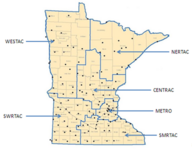
The new Level 4 Trauma Hospital Designation Criteria includes language which requires hospitals to participate in regional trauma advisory committees. The Level 4 criteria mirrors the existing RTAC participation requirement in the Level 3 criteria. This criteria is required to be implemented by January 1, 2027. 

An increase in RTAC participation has already been noted. For more information regarding the Minnesota regional trauma advisory committees, visit the trauma system website.