|
Public Health
System Transformation Update
A monthly update from Minnesota's Joint Leadership Team sharing how, together, we're creating a seamless, responsive, publicly-supported public health system in Minnesota

|
|
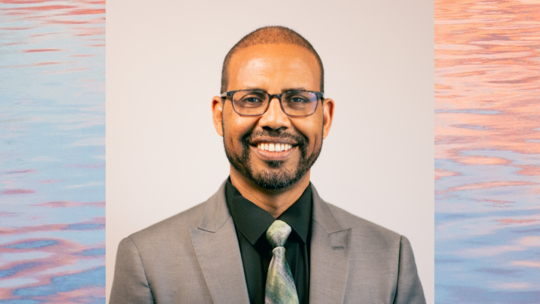
Dr. Robsan (Halkeno) Tura of the Minnesota Department of Health: What Does “Transforming Public Health” Mean to You?
We asked Dr. Robsan (Halkeno) Tura, MDH representative to the Joint Leadership Team, to weigh in on how he’s building sustainable change through a sometimes-unpredictable public health landscape.
How do you sustain yourself during times when transforming public health happens slowly?
I remind myself that systems don’t change at the speed of urgency; they change at the speed of alignment. And alignment takes time.
It’s a bit like growing a prairie: You start with soil that’s been stressed or depleted and, for a long time, nothing seems to happen on the surface. But beneath the ground, roots are taking hold. That deep, unseen growth is what eventually makes the prairie resilient, self-sustaining, and able to thrive in harsh conditions.
Public health work is also long-haul work. The policies we shape, the partnerships we build, the trust we earn in communities: those are not quick wins. They are steady investments.
|
|
Do you see examples of a seamless, responsive, publicly-supported public health system in your community? Let us know! |
|
What should I know this month about system transformation?
Keep reading for updates from your colleagues across the state!
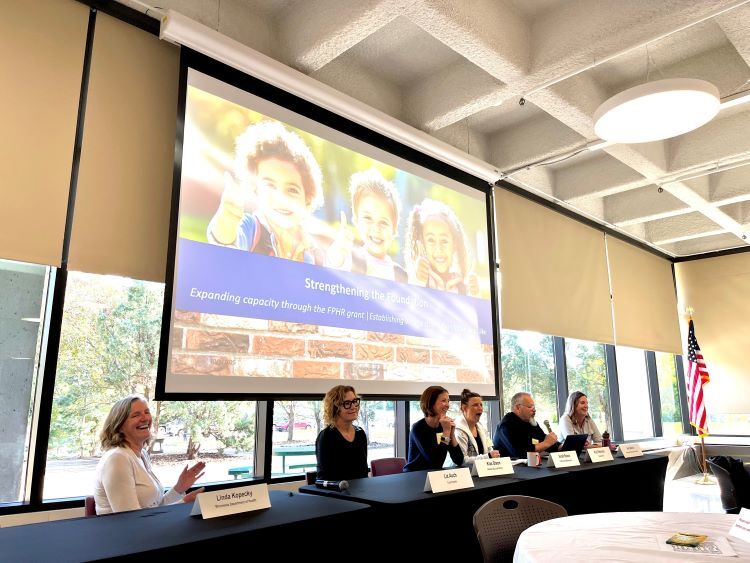 Above: SCHSAC FPHR Workgroup share their insights on foundational responsibilities at the October 2025 SCHSAC retreat.
How do we define "foundational public health responsibilities" in Minnesota?
In Minnesota, governmental public health agencies cooperate to help all Minnesotans live their healthiest lives, no matter who they are or where they live.
In 2025, over 50 local and state public health experts teamed up over 18 months to create clear definitions, criteria, and standards for foundational public health responsibilities—that is, the basic, fundamental parts of governmental public health that all Minnesotans should have access to.
With everyone using the same definitions and standards, Minnesota’s public health system can move forward in a more unified and organized way, while still adapting other efforts to meet the specific priorities of each community.
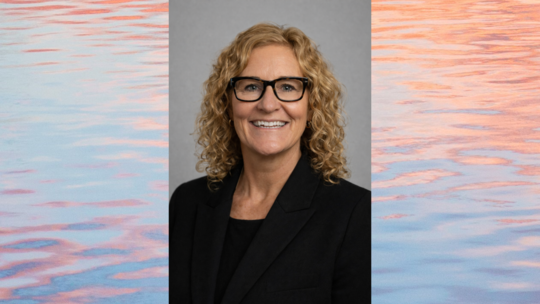
Building the future, one relationship at a time: Q&A with Liz Auch of Countryside Public Health
Join us for a conversation with Liz Auch, Director and Administrator of Countryside Public Health and member of the SCHSAC Foundational Public Health Responsibilities Workgroup, on how partnership and relationships shape the past, present, and future of public health.
Why did you volunteer for the SCHSAC Foundational Public Health Responsibilities Workgroup?
It’s setting the stage for the future of public health. Like, we are slowly turning the corner to a new way of really looking at public health in Minnesota—we are going to do public health differently. I felt like it was really important to be at the table [to help identify] how public health is going to be.
I think we're cutting edge in the State of Minnesota, [in] how we're going forward. And I wanted to help be part of that.
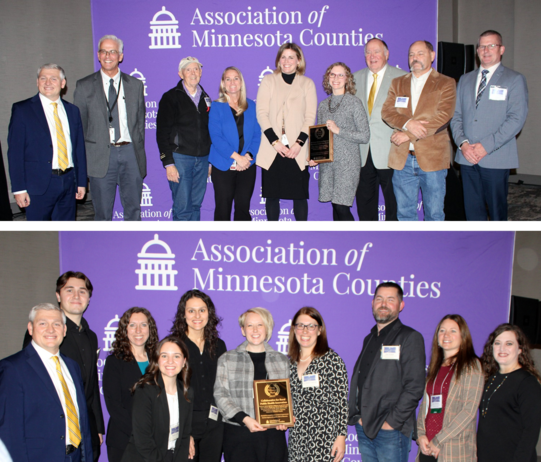 The Association of Minnesota Counties recognize leaders from the Southeast Minnesota Regional Population Health Data Model (top) and the Collaborative for Rural Public Health Innovation (bottom) at its December 2025 annual meeting.
Photo credit: Association of Minnesota Counties.
Association of Minnesota Counties recognizes two local public health innovation projects
At its annual conference in December 2025, the Association of Minnesota Counties recognized two locally-led public health innovation projects kickstarted by the Minnesota Infrastructure Fund. These projects bring together entire regions’ local public health departments to share knowledge, work, and ideas.
 |
|
In the Southeast Minnesota Regional Population Health Data Model, 10 counties have joined together to share staffing, knowledge, skills, and infrastructure needed to engage with and use population health data. This results in more and better "just in time" data for all 10 counties, and greater capacity for everyone to make data-driven decisions about their communities' health. |
 |
|
The Collaborative for Rural Public Health Innovation (or CRPHI) brings together 26 counties in southern Minnesota to reimagine rural public health delivery. Partnering with MDH and Minnesota State University, Mankato, this project addressed local public health workforce gaps and public health student readiness in population health data and public health communications. |
In case you missed it: Why regional data models?
A strong public health data infrastructure across Minnesota means that, no matter where you live, your local health department can make data-driven decisions to meet your community’s health needs and priorities.
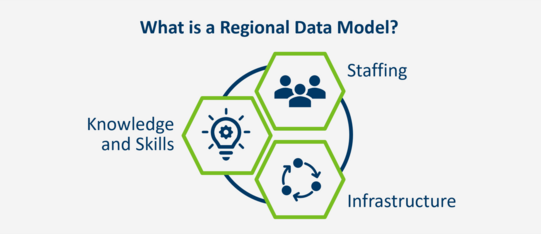
Minnesota’s regional data models will help provide the staffing, knowledge, expertise, skills, and necessary infrastructure to increase an entire region’s ability to access, collect, use, manage, and share population health data.
|
|
 |
|
Guide | Carlton-Cook-Lake-St. Louis Community Health Board, Aitkin-Itasca-Koochiching Community Health Board, Kanabec County Community Health
Three public health agencies in northeast Minnesota co-hosted their first Regional Narratives for Health Cohort. Convening across jurisdictions can build knowledge and skill together, and create a collective to help transform narratives in a coordinated, sustained effort that can echo across the region. Can you use similar narratives in your work? What would it look like to create your own?
Image credit: Carlton-Cook-Lake-St. Louis Community Health Board, adapted from Narrative Initiative.
|
 |
|
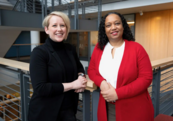
Interview | Minnesota Public Radio
MPR News host Angela Davis talks with Chera Sevcik, executive director of Health and Human Services for Faribault and Martin counties, and Dr. Brooke Cunningham, commissioner of the Minnesota Department of Health, about what public health funding cuts could mean for Minnesota and why a federal judge stepped in to temporarily block them.
Photo credit: Nikhil Kumaran, MPR News.
|
 |
|
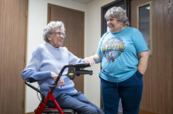
News | Mankato Free Press
Ride along with Nicollet County Health and Human Services as staff help their community build a detailed picture of local health, and a foundation for future planning and collaboration.
Photo credit: Nicollet County Health and Human Services.
|
 |
|
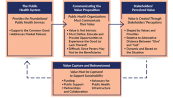
Analysis | Kansas Health Institute
Public health long celebrated invisibility—success measured by crises that never came. But amid workforce shortages, unstable funding and political strain, unseen impact becomes vulnerability. Prevention still saves lives, yet value that is not recognized cannot be sustained.
Image credit: Kansas Health Institute.
|
 |
|
Guide | de Beaumont Foundation
This toolkit can help you make the most of your time with policymakers and their staff. Learn about audience insights that can explain the current “trust gap,” a message formula for communicating with policymakers, examples of public health initiatives that show the value of the field, message “do’s” and “don’ts,” recommendations for enlisting credible messengers, and more.
|
 |
|
Guide | State Health Access Data Assistance Center (SHADAC)
Federal developments in 2025 have led to concerns about the future of numerous data sources. In response to those concerns, SHADAC is conducting a project called State Alternatives for Health Data Continuity. SHADAC developed this blog to consolidate several examples of efforts related to health data and resources for state data users, researchers, and others to explore in a clear and organized table.
|
|
|
What is the Joint Leadership Team?
Three sectors in Minnesota work together to guide the work of transforming Minnesota's public health system, determining what it looks like when a system is equitable and has adequate resources.
This Joint Leadership Team consists of people from: SCHSAC (State Community Health Services Advisory Committee), LPHA (Local Public Health Association of Minnesota), and MDH (Minnesota Department of Health).
Learn more: Joint Leadership Team.
|
|
Contact a specific member of the Joint Leadership Team
Based on the collaborative nature of this work, please direct any questions or feedback to one of the following.
-
Local public health staff and leadership: Please contact your LPHA representatives currently serving on the joint leadership team.
-
MDH staff and leadership: Please contact the MDH staff currently serving on the joint leadership team.
-
SCHSAC members and alternates: Please contact the SCHSAC representatives currently serving on the joint leadership team.
General questions
For general questions, including about funding, grants, and eligible activities: Please contact the MDH Center for Public Health Practice at health.ophp@state.mn.us.
Not sure who to contact?
If you're not sure who represents you on the Joint Leadership Team, contact the MDH Center for Public Health Practice at health.ophp@state.mn.us and staff will forward your question to the right person.
|
|
|
|
|