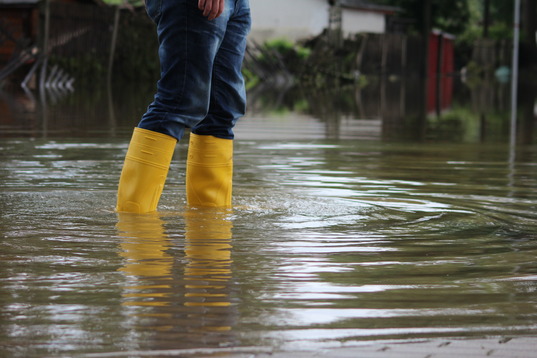
 Snowpack across the state is minimal, and what remains is expected to melt over the next week. This significantly reduces the risk of flooding from snowmelt. Frost depth is near to above normal in some areas, but it would likely only become an issue if there is significant rainfall while the ground is still frozen.
With little snow left to melt, rainfall will be the main factor to watch in the coming weeks.
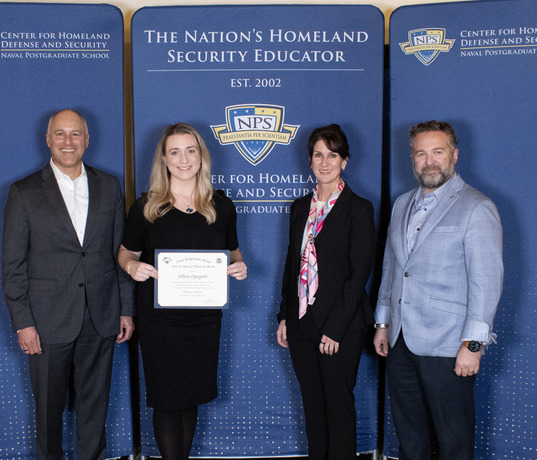
Pictured from left to right: Class instructor Bijan Karimi, Jillian Oppegard, Class instructor Cynthia Renaud and Director of the Center for Homeland Defense, and Security Dr. Gregory Bernard
MDH EPR congratulates Jillian Oppegard, education, exercise, and response coordinator, on completing the Emergence Program at the Center for Homeland Defense and Security at the Naval Postgraduate School on Jan. 16, 2026.
Minnesota continues to monitor COVID-19, influenza, and respiratory syncytial virus (RSV) through wastewater testing, which allows public health officials to detect signs of disease in communities before people seek medical care. This approach provides valuable early warning and helps guide public health responses, including vaccine updates. As of 2026, 29 sites across the state send wastewater samples to the Minnesota Public Health Laboratory, where results are tracked and shared on a new public map.
The Minnesota Public Health Laboratory now leads all wastewater testing for these respiratory diseases using a sophisticated method called digital polymerase chain reaction (dPCR). This technique can detect very small amounts of viral genetic material, even amid the many chemicals found in wastewater. The University of Minnesota labs continue to support research and monitor other diseases, while the Public Health Laboratory focuses on providing consistent, real-time data to help protect the health of Minnesotans. For additional information, and to view data, visit Wastewater Monitoring in Minnesota (Data & Statistics) (https://www.health.mn.gov/diseases/wastewater/stats/index.html)
|