|
View this as a webpage
January 2026
Local public health nurse, Mary Zaffke, honored
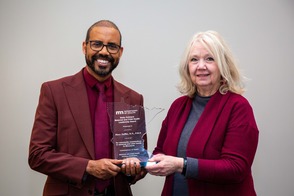
Mary Zaffke, public health nurse from Houston County was recently honored with the annual Betty Hubbard Maternal and Child Health Leadership Award. This award recognizes people or organizations in Minnesota making significant contributions to supporting good health for mothers and children.
In a small rural county where resources are limited, Mary has continually stepped into multiple roles. Her deep dedication and commitment to family health, paired with her skilled reflective practice, has allowed her to identify a family’s strengths and provide support where it is needed.
Mary’s passion for collaboration with partners, such as Houston County Human Services staff, Birth to Three staff, local school nurses and staff, the Minnesota Department of Health (MDH), University of Minnesota Extension Services, Gundersen Clinic and Mayo Health, and local libraries has increased the quality and accessibility of family support services in Houston County.
|
Upcoming local public health workshops in 2026
In lieu of the annual Children and Youth with Special Health Needs (CYSHN) local public health conference, MDH will host a series of six in-person workshops across the state in 2026. These five-hour sessions (with lunch provided) are tentatively planned for April, June, and October. Each workshop will take place in a different part of Minnesota, and participants are welcome to attend whichever workshop works best for them and their schedule.
The workshops will include time for discussion on condition follow-up, the Follow Along Program, and opportunities to connect with MDH and other local public health partners. Because local public health roles vary, staff may choose to attend the portions of the day that are most relevant to their work. An agenda will be sent out ahead of the workshops.
More details on how to register, dates, and locations will be shared soon.
Program-specific updates
Birth defects monitoring and analysis
January is Birth Defects Awareness Month!
Birth defects are structural changes that can affect almost any part of the body and may cause lifelong health challenges. While not all birth conditions can be prevented, many risks can be reduced through education, early care, and community support.
Throughout the month, MDH will be sharing posts on its social media channels and lighting structures in blue and pink across the state in recognition of Birth Defects Awareness Month. We encourage you to share our posts and photos on social media and invite you to learn more by attending one or both Birth Defects Awareness Month webinars featured in the upcoming webinars, trainings, and events section of this newsletter. These sessions will focus on Zika virus and fetal alcohol spectrum disorders, offering insights into prevention, impacts, and public health response.
|
Early hearing detection and intervention
Newborn hearing screening and follow-up: understanding the 1-3-6 goals
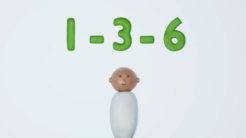
In a short new video, Newborn Hearing Screening and Follow-up: Understanding the 1-3-6 Goals, providers and families can learn about the early hearing detection and intervention (EHDI) system of care and the importance of the EHDI 1-3-6 goals for infants who are deaf and hard of hearing. The video is available at the above playlist in English, ASL, Hmong, Somali, and Spanish.
|
Follow Along Program
Follow Along Program support contacts
Michele Kvikstad has transitioned to a new role as early childhood coordinator within the maternal and child health section at MDH. While Michele will continue to promote early childhood systems in her new role, including partnership with the community connector project, she is no longer the primary contact for implementation of the Follow Along Program for local public health agencies.
The staff that also coordinate local public health outreach for children with birth defects and newborn screening conditions are now leading Follow Along Program implementation. These staff include:
- Follow Along Program grant manager: Jennifer Heath
- Local public health onboarding and program implementation: Dana Janowiak
- Data system and program evaluation: Paige Fairchild
- Communications: Haley Bice
- Follow Along Program redesign project manager: Jessica Mattson
- Local public health grant management and invoicing: Cara Weston
Data report and invoice deadlines
MDH will continue to collect Follow Along Program (FAP) data reports and invoices according to the same process that has been used for the last two invoicing cycles. Follow Along Program semi-annual data reports are due every 6 months. Data for July 1 – Dec. 31, 2025 are due by Saturday, Jan. 31 via the Follow Along Program semi-annual data reporting survey.
After completing semi-annual data reporting for the program, please submit your invoice using the data reporting survey above, the separate FAP semi-annual invoicing survey, or send your invoice by email to health.cyshn@state.mn.us no later than Friday, Feb. 20.
Jan. 12 – Part C federal reporting in-reach session
The Part C Federal Reporting In-Reach Session is a chance to learn about early intervention services in the schools and share your experiences to strengthen supports for children and families across the state.
Monday, Jan. 12
The links above go directly to the meetings. There is no need to pre-register. Contact Cat Tamminga at cat.tamminga@state.mn.us with any questions.
Jan. 14 – Virtual film screening and discussion: The FASD Project
Jan. 15 – Genomic sequencing in newborns webinar series
Genomic sequencing in newborns (gNBS) holds enormous potential of early diagnosis and detection for individuals with rare diseases. Reducing the diagnostic journey can allow for timely intervention and treatments as well as a reduction in healthcare utilization. At the same time, implementation into public health programs poses a number of challenges.
In the upcoming session, gNBS from Concept to Implementation: Logistical and Ethical Concerns, on Thursday, Jan. 15 from 9:30 a.m. – 10:15 a.m., a panel of internationally recognized experts will take a deeper look at the ethical and operational challenges incorporating this technology into clinical practice. This session is part of a three-part series hosted by the Minnesota Rare Disease Advisory Council. However, attendees can attend any or all of the three sessions. They do not need to be attended sequentially.
Jan. 15 – Prepare for Rare: Newborn Screening and Genetic Testing ECHO program
The Prepare for Rare: Newborn Screening and Genetic Testing ECHO Program will engage clinicians with experts to better care for patients with positive newborn screenings or puzzling symptoms who may be appropriate for genetic testing. This telementoring and educational program helps clinicians connect with one another to learn, review interesting case examples, and share valuable insights for quality care delivery in Minnesota.
Interact with peer clinicians through what can feel like a daunting process—guiding parents of a newborn through a diagnosis for a condition they’ve likely never heard about. Sessions are eligible for continuing education credits for medical and nursing licensees. One-hour sessions (hosted by Stratis Health) are the third Thursday of the month at noon from Jan. 15 – June 18.
Jan. 21 – Virtual meeting about Follow Along Program changes
Join a virtual meeting on Wednesday, Jan. 21 at 1 p.m. to review upcoming changes to the Follow Along Program. Please pre-register for the Follow Along Program updates meeting to receive a confirmation email with a Zoom meeting link.
This meeting will provide updates on the Follow Along Program redesign, including planning underway at MDH and what to expect in the months ahead. The meeting will be recorded and an FAQ will be sent out by email after the meeting.
While MDH prepares for the next phase of the redesign, local public health partners are encouraged to continue their current Follow Along Program implementation processes.
Follow Along Program redesign and local public health work
Follow Along Program is changing to align with Minnesota Statute, section 145.9574 and the implementation of the new data system. During the meeting, we will discuss these changes and what it means for local public health.
Electronic screening pilot
In November and December, three local public health agencies (Crow Wing, St. Louis, and Washington) piloted a new process for online electronic screening using the Ages and Stages Questionnaires®. MDH will provide an update on the pilot, including key takeaways and next steps.
Time will be reserved during the meeting for questions. You are invited to send your questions to the outreach and prevention team at health.cyshn@state.mn.us. Questions sent prior to the virtual meeting will also be compiled and included in the FAQ.
Jan. 21 – Explore new tools for understanding billable community health worker services
-
Informational grids with service models, supervision requirements, and codes.
-
Workflows and checklists outlining steps to successfully obtain reimbursement.
-
Tip sheets and example forms for obtaining NPI numbers, enrolling staff with the Department of Human Services, and contracting with managed care organizations.
-
An interactive financial modeling workbook to estimate expenditures and income for providing reimbursable staff services.
A webinar, titled Explore New Tools for Understanding Billable Community Health Worker Services, on Wednesday, Jan. 21 from noon – 1 p.m. will provide an overview of the toolkit and how to use the tools to deliver and bill for community health worker services. Webinar content will be directed to health care organizations, federally qualified health centers, Tribal organizations, community-based organizations, community hubs and local public health departments.
Jan. 28 – Zika in 2026: Lessons from the past and the current state of research and risk
MotherToBaby is hosting the webinar Zika in 2026: Lessons from the Past and the Current State of Research and Risk. This session, presented by Dr. Miguel del Campo Casanelles, MD, PhD at 11 a.m. on Wednesday, Jan. 28, will review what we’ve learned about Zika since the height of global concern, summarize current data on risk, and highlight the evolving research landscape. As questions about congenital infections continue to arise in prenatal counseling, this webinar will provide timely, evidence-based information to support discussions with patients and families during Birth Defects Awareness Month and beyond.
Feb. 13 to March 13 – Pediatric care coordination office hours
Building a connection with families and learning from their stories is foundational to the practice of pediatric care coordination. With this understanding, the pediatric care coordination: community of practice is hosting five, one-hour office hours every Friday from Feb. 13 to March 13.
These office hours are intended to be informal and will focus on review and reflection of the Pacer Center’s Thriving Together series (available on the Pacer Center’s training and workshops webpage). The topics in this series are: family stories of resilience, navigating health care systems, managing health needs in school, public insurance and county services, and belonging and advocacy. Each weekly office hour will include a summary of the webinars and small group discussions to connect with colleagues, reflect on stories from families, and share lessons from personal or professional experiences.
|
Feb. 18 – CYSHN condition follow-up community of practice
The next virtual CYSHN condition follow-up community of practice for LPH is Wednesday, Feb. 18 from 9 - 10:30 a.m. The purpose of these meetings is to provide routine opportunities for local public health nurses who provide follow-up for children referred by CYSHN programs (birth defects, EHDI, heritable conditions, cCMV) to learn condition-specific information and discuss nursing practice.
This month's meeting will include a presentation about cleft lip and palate by Jo Barta, MD pediatric craniofacial and plastic surgeon from Gilette Children’s. One contact hour of continuing education will be offered for attending. All current CYSHN condition follow-up local public health nurses are welcome to attend. Please register for this virtual, optional meeting. This meeting will be recorded and available for 30 days following the presentation. If you have any questions you would like to submit in advance, email them to health.cyshn@state.mn.us with “local public health” in the subject line.
|