What should I know this month about system transformation?
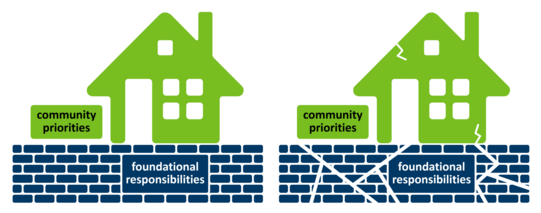 Sustained investment builds a strong foundation
When we have funding for public health that’s ongoing, equitably distributed, and that we can use flexibly across public health programs and topics, we can build a stronger foundation across Minnesota.
Building capacity in foundational responsibilities like communications, equity, and assessment and surveillance, enhances the work we everywhere else—that’s the cross-cutting nature of foundational work.
 Foundational work moves from the backburner to the table
Minnesota’s community health boards are helping their communities thrive, by using sustainable funding sources like the FPHR Grant to grow capacity in foundational public health responsibilities.
“We are thrilled to implement projects that have long been on the agency's back burner. With new full-time equivalents (FTEs) and resources now available, we can finally take action on these initiatives, driving our mission forward.”
Growing foundational capacity happens in big and small ways; some are newly discovered, and some long-desired:
- Strategically expanding workforce
- Growing capacity for community engagement and health equity
- Improving communications and visibility
- Increasing infrastructure for data and assessment
- Changing policies and systems to improve population health
- Expanding strategic and operational planning
Learn more about the successes and challenges of using the FPHR Grant in 2024, along with recommendations for future use, in the full annual report.
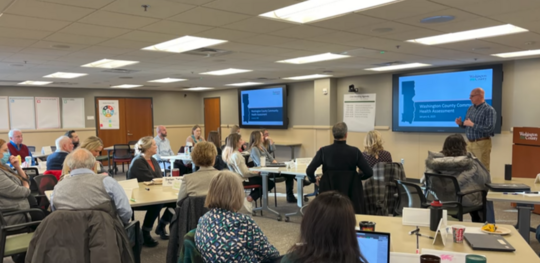
Above: Washington County Public Health and Environment staff convene community members to talk about the county's community health assessment. Photo credit: Washington County Public Health and Environment.
 A deeper dive: Why Minnesota needs sustained investment in public health
Every day, public health workers cooperate across their communities to help everyone be their healthiest, protecting and improving health from the ground up.
However, the way public health is funded in Minnesota often holds that work back by limiting how public health can connect work across topics and populations, or by pulling focus away from population-level prevention.
Imagine if Minnesota’s public health workers had the resources to dig down to the root cause of health problems, and help prevent them in the first place.
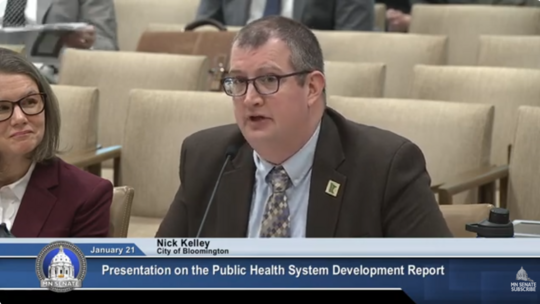
Above: Chelsie Huntley (L) and Nick Kelley (R) of the Joint Leadership Team discuss the value of investing in public health with the Minnesota Senate Health and Human Services Committee, January 2025. Photo credit: Minnesota Senate.
 In case you missed it...
|