|
Children and Youth with Special Health Needs News |
|
|
View this as a webpage
December 2025
Condition follow-up program evaluation and check-ins
Beginning in 2026, children and youth with special health needs (CYSHN) condition follow-up contacts at local public health (LPH) will receive county-level data about the nursing assessments in MEDSS. These measures include:
-
The number of reimbursable referrals sent.
-
The number of reimbursable referrals that received outreach from LPH.
-
The number of reimbursable referrals that LPH initiated outreach within 30 days of referral sent.
This information will be shared ahead of scheduled check-ins by e-mail, so that staff can review their county’s data before meeting with Outreach and Prevention Nurse Consultant, Dana Janowiak. During these check-ins, LPH staff and Dana will look at the measures together to celebrate what’s working well and talk through any challenges staff are seeing in the follow-up process. The goal is to make sure families affected by newborn screening conditions and birth defects are getting timely, consistent support. These evaluation measures are for program improvement only. If you have any questions, reach out to Dana at dana.janowiak@state.mn.us.
Program updates
Birth defects monitoring and analysis
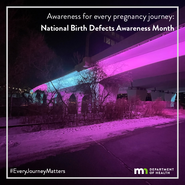
January is Birth Defects Awareness Month!
Throughout the month of January, MDH and our partners will help raise visibility for people and families affected by birth conditions and share information to support healthy pregnancies. CYSHN staff are also coordinating bridge and structure lightings across Minnesota to highlight community awareness and support.
|
Follow Along Program
Redesign update and transition
While MDH is preparing for the next part of the Follow Along Program redesign, we encourage local public health partners to maintain their current implementation processes for the Follow Along Program through 2026. MDH will continue to collect Follow Along Program data reports and invoices according to the same process that has been used for the last two invoicing cycles, described in detail below. Please look for more updates about this program's redesign in January.
As a reminder, Michele Kvikstad has transitioned to another section at MDH and is no longer the primary contact for the Follow Along Program. The CYSHN staff that also coordinate condition follow-up onboarding and technical assistance are now leading the Follow Along Program. Send your Follow Along Program questions to the outreach and prevention team at health.cyshn@state.mn.us.
Semi-annual data reporting due Jan. 31
We encourage staff to invoice MDH in February and August, following the semi-annual data submission deadlines in January and July. Invoices reflect an amount for the general implementation of the program; CHBs and counties are not expected to submit a budget by category of expense. After completing semi-annual data reporting for the program, please submit your invoice using the data reporting survey above, the separate FAP semi-annual invoicing survey, or send your invoice by email to health.cyshn@state.mn.us no later than Friday, Feb. 20.
March 3 and June 2 – Webinar series on caring for American Indian and Alaska Native youth
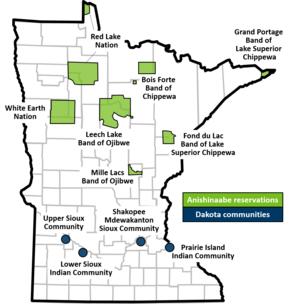
The next webinars in a multi-part series designed for health professionals who work with and serve American Indian and Alaska Native children will be at noon on Tuesday, March 3 and Tuesday, June 2, 2026. These sessions will explore practical strategies through culturally informed care.
When registration is available, the link will be on the webinars webpage of the Center of American Indian and Minority Health, where you can also find recordings of the previous webinars.
This series is supported and brought to you in partnership with the University of Minnesota Medical School, the Center for American Indian and Minority Health, and the Minnesota Department of Health. If you have any questions, please contact the Center of American Indian and Minority Health at 218-726-7235.
|
|
|
Resource corner
Vaccines and autism: statement for partners
Decades of extensive, independent research, including dozens of studies involving millions of children, continue to show the same result: Vaccines, including the measles, mumps, and rubella or MMR vaccine, do not cause autism. This conclusion has been affirmed across countries, populations, and research methods and is strongly supported by national disability organizations, public health experts, and health care professionals. Vaccines are well tested and important for protecting against serious infectious diseases.
Scientists are still working to understand what causes autism. Current research shows there is not a single cause but likely involves a mix of genetic and environmental factors. What is known is that autism involves differences in how the brain develops and functions.
Myths linking vaccines to autism are not supported by evidence and reinforce the harmful idea that autism is a problem to be prevented. These myths distract from what autistic people consistently say matters most: ensuring access, affordability, and high-quality health care and support services that help people and families thrive.
Accurate and reliable resources, like the ones included below, are essential for informed decision making:
A PDF copy of this statement is available upon request by emailing Sarah Dunne at health.cyshn@state.mn.us. If you have any questions about this statement or other questions about vaccines, contact the infectious disease epidemiology, prevention, and control (IDEPC) division using the IDEPC comment form.
Invoicing
|
Quarter 1
|
Quarter 2
|
Quarter 3
|
Quarter 4
|
|
Jan. 1 - March 31
|
April 1 - June 30
|
July 1 - Sept. 30
|
Oct. 1 - Dec. 31
|
Complete nursing follow-up documentation in MEDSS by the end of the quarter after the one in which the referral was made. For example, if the date the event was sent to local public health is July 15 (in quarter 3), the follow-up documentation should be submitted by Dec. 31 (the end of quarter 4).
Invoice letters are sent to local public health by MDH in the month following the end of the quarter in which documentation was submitted, or training was completed. So, in the example, the invoice letter would be sent to local public health some time before Jan. 31 (the month following the end of quarter 4).
Follow Along Program semi-annual data reports are due every 6 months. Data for quarters 1 and 2 are due annually on July 31. Data for quarters 3 and 4 are due annually on Jan. 31. Invoices for quarters 1 and 2 are due each year on Aug. 20. Invoices for quarters 3 and 4 are due each year on Feb. 20. Semi-annual data reports must be received prior to the invoice being paid.
|
|
About the CYSHN newsletter
Children and Youth with Special Health Needs (CYSHN) section staff at MDH work together to champion the health and well-being of people living in Minnesota with special health needs and disabilities, from the earliest states of life through transition to adulthood.
As the Child and Family Health Division works to coordinate and collaborate on communication, this newsletter may evolve to include a broader focus, but the following CYSHN programs are the primary focus: Birth Defects; Early Hearing Detection and Intervention (EHDI); Heritable Conditions (HC); Congenital Cytomegalovirus (cCMV); Critical Congenital Heart Disease (CCHD); Neonatal Abstinence Syndrome (NAS); and the Follow Along Program (FAP).
|
|
|
|
|