|
U.S. Antibiotic Awareness Week (USAAW) is observed annually during Nov. 18-24 to raise awareness about the threat of antimicrobial resistance and highlight the critical role antibiotics play in human health, environmental health, animal health, and beyond.
The Centers for Disease Control and Prevention (CDC) estimates that more than 2.8 million antibiotic resistant infections occur in the U.S. each year, and more than 35,000 of those lead to death. The health of people closely connects to the health of animals and our shared environment, and we ALL play a role in fighting antimicrobial resistance.
Working together, through a One Health approach, we must improve the global prescribing and use of antibiotic and antifungal drugs and invest in global infection prevention actions across human health, animal health, plants, and the environment.
Learn more:
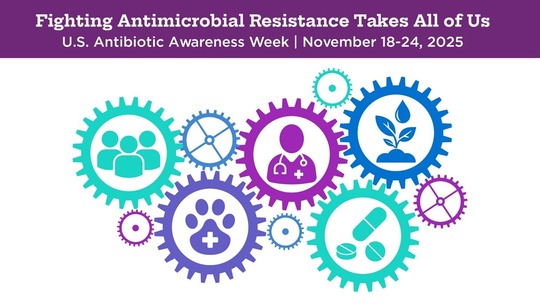
Every year during U.S. Antibiotic Awareness Week, CDC asks people to “Go Purple” to raise awareness about antimicrobial resistance. On Tuesday, Nov. 18, Minnesota landmarks (Lowry Avenue Bridge, I-35W Bridge, Minneapolis Convention Center, Eagan's Sperry Tower, Faribault water tower, and Mayo Clinic's Plummer Building) will light up purple for the "Go Purple" campaign.
We invite you to participate by wearing purple, bringing purple to your social media accounts, or spreading the word. A variety of resources are available to help you participate at CDC: U.S. Antibiotic Awareness Week (USAAW) Toolkit. Download USAAW frames for social media, share Go Purple graphics, and use the hashtag #USAAW25. Look out for email campaigns and opportunities to engage on social media.

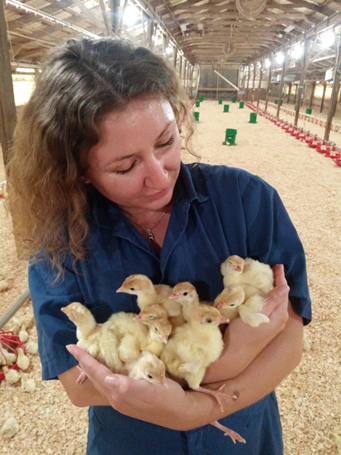
VETERINARY SPOTLIGHT:
Food Safety is One Health
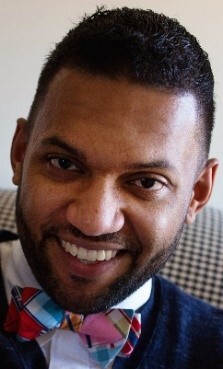
Valeriia Yustyniuk, DVM, PhD, MPH (c)
Postdoctoral Associate
Center for Animal Health and Food Safety (CAHFS) College of Veterinary Medicine
University of Minnesota
“My work has always been driven by the belief that protecting animal health is inseparable from protecting people and the environment. Whether in the lab, the classroom, or the field, I see One Health as a daily practice, not just a concept.”
Valeriia’s journey in antimicrobial resistance (AMR) began during her Fulbright Scholarship at North Carolina State University, where she explored links between bacteria found in animals, meat, and the environment. That early exposure to applied research sparked her long-term commitment to improving antibiotic stewardship and strengthening disease prevention systems.
|
Now a Postdoctoral Associate at the University of Minnesota’s Center for Animal Health and Food Safety, Valeriia works at the intersection of epidemiology, veterinary public health, and emergency preparedness. Her experience as a Veterinary Public Health Resident shaped a hands-on understanding of how stewardship and infection control can be integrated into daily veterinary practice.
Her recent work has been part of ongoing efforts to enhance antimicrobial surveillance and infection prevention at the University’s Veterinary Medical Center. As a part of the infection control and stewardship team, Valeriia supported initiatives to refine hospital hygiene protocols, assist with systematic environmental sampling, and improve data reporting processes for clinicians. These collective efforts have fostered a stronger culture of stewardship within the hospital, promoting awareness of multidrug-resistant organisms and supporting evidence-based infection control practices among staff and students.
Outside the clinic, Valeriia contributes to field-based and community-level disease preparedness efforts that reflect the same One Health principles guiding her AMR work. In collaboration with the Minnesota Board of Animal Health, she assisted in reviewing and refining state response plans for African swine fever (ASF) and foot-and-mouth disease (FMD), ensuring consistency with U.S. regulations while drawing on her prior international experience with ASF in Ukraine. She has also been involved in several wildlife health initiatives, providing support for projects focused on wildlife avian influenza sampling and chronic wasting disease (CWD) surveillance in Minnesota tribal communities. Through her involvement with cervid biosecurity projects and collaboration with wildlife professionals, she helps translate complex scientific and regulatory concepts into practical, accessible tools that producers and local responders can apply in their day-to-day work.
“The most meaningful part of my work is seeing how collaboration between veterinarians, public health professionals, and communities translates into tangible improvements in health outcomes. Every surveillance report, every training, every field visit is part of a bigger effort to keep both animals and people safe.”
Recognized by the American Association of Food Safety and Public Health Veterinarians (AAFSPHV) for her leadership, Valeriia continues to advance applied research and education within the Minnesota One Health Antibiotic Stewardship Collaborative (MOHASC). Her work reflects a consistent goal: turning One Health from theory into action through practical, evidence-based solutions that strengthen resilience across animal and human health systems.
|