|
View this as a webpage
October 2025
 Note: We have moved to a new newsletter schedule. This newsletter is now released every other month instead of monthly.
The Minnesota Partnership for Adolescent and Young Adult Health created an action plan to guide adolescent and young adult health in Minnesota. This collaboratively developed plan was created to motivate, engage, and inspire action. It recognizes the important contributions and amazing ideas that exist across our great state. Each month this newsletter will showcase an adolescent health partner in Minnesota. |
|
 |
In this edition
Every October, the Minnesota Department of Health (MDH) participates in Let’s Talk Month, a public awareness campaign that encourages open communication between young people and their parents or other trusted adults. Let’s Talk Month is a national and statewide initiative that provides parents, caregivers, and children the chance to learn how to communicate honestly and openly about relationships, sexuality, and other sensitive topics. Minnesota parents and guardians agree (a resounding 96%) that students should be encouraged to talk to them about sex and sexuality and want youth to receive to medically accurate information about sexual health. MDH recommends parents and caregivers start having age-appropriate conversations about healthy relationships, their body, and sexuality early in a child’s life. For more information, visit MDH’s October is Let’s Talk Month webpage.
This month’s featured partner promotes open communication between young people and their trusted adults.
|
Family Tree Clinic has a 50+ year history of working in the Twin Cities to support healthy sexuality by providing accessible health care and high-quality sex education programming. Talking about sex can be challenging for lots of different reasons and Family Tree is proud to be able to support people in this essential aspect of their health and relationships.
Family Tree’s team of educators take a multi-pronged approach to building life-long skills. In addition to offering sex education in classrooms across the metro area, they also work with parents and caregivers to get the conversation started at home. With a little support and a few helpful tools to get them started, parents are the most important sex educators their children will ever have. Families have so many big things they want to teach their children about sexuality but are often worried they are going to do it wrong, sometimes erroring on the side of saying nothing at all. Family Tree works with about 1,000 parents, grandparents, and caregivers each year, helping families develop the skills to have these conversations with more comfort and confidence. Sometimes this looks like a visit to a preschool parent event, a support group, or a PTO meeting. Family Tree also hosts sip and paint parties for the trusted adults of Black kids where the adults get to have fun and make art while talking with educators and other parents in their community.
In addition to classroom and parent group settings, Family Tree also offers one-on-one education for youth and parents alike through the Clinic Health Mentor program. Young people can always swing by to ask an educator about sexual health and relationships, and it is also a space where educators can help them prepare and practice something they’d like to tell their caregiver. Parents can use this service too, talking with educators about the things that are on their mind about their young person and how to open up space for important conversations. Clinic educator visits are free and can be done in person or virtual, scheduled in advance or just dropping by.
Young people need trustworthy, askable adults who will listen outside of the home, too. In addition to parents and caregivers, Family Tree works with youth-serving professionals of all kinds to increase their skill in navigating moments when their work intersects with supporting sexual development and learning. These workshops cover things like building welcoming and inclusive spaces, healthy role modeling, responding appropriately to values-based questions, and interrupting sexual harassment when it happens. All adults have a responsibility to establish norms and build communities that support young people’s health sexual development, and Family Tree is glad to be one of the sources for information and training available in this community!
Adolescent Health Data Book
The Minnesota Partnership for Adolescent Health recently released the Adolescent Health Data Book. The Adolescent Health Data Book provides a broad range of accessible information about young people’s health and the conditions that affect it. It covers topics across the Key Priorities of the Minnesota Partnership for Adolescent Health.
The Minnesota Partnership for Adolescent Health is convened by MDH and comprised of professionals representing the state, counties, schools, community agencies, and faith groups that work for and with young people.
The group convened and created an action plan in 2017-2018 and updated the plan in 2023. The data book is designed as a companion to the plan.
Like the Partnership, this data book was created to motivate, engage, and inspire action. Infographic one pagers and a full report are available.
Opportunity: Minnesota School Based Health Council
Students from your school-based health clinic are invited to apply for the Minnesota School Based Health Council, a statewide initiative designed to elevate youth voices and empower them to lead health advocacy efforts that impact their peers.
The Youth Council provides high school students with the opportunity to:
- Build leadership and advocacy skills.
- Collaborate with public health leaders across the state.
- Drive youth-led campaigns on a variety of issues.
We are especially looking to engage students who are passionate about health equity, want to make a difference in their schools, and are considering a career in healthcare or public health.
2025-2026 Minnesota School-Based Health Youth Council Application
If you have questions about the council, please reach out to our coordinator Faith Adeola at faith@mnsbha.org.
Be open to the facts, Be Cannabis Aware
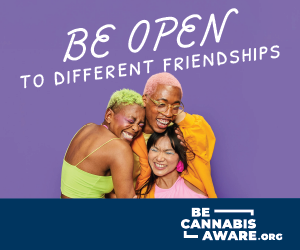
Be Cannabis Aware is here – a new campaign giving young people the facts about cannabis. Whether you're trying to understand the risks, curious about Minnesota’s new laws, or just want to stay informed, this campaign offers answers to your questions, tips for handling peer pressure, and ways to support your mental health.
At BeCannabisAware.org you'll find tons of free, useful information like:
- Straightforward guides for having open conversations with friends.
- Tips for staying grounded and taking care of your mental health.
- Reliable info to help you make informed decisions.
Check it out, share it, and start conversations that matter with the people you care about. Because when you’ve got the facts, you’ve got the power.
|
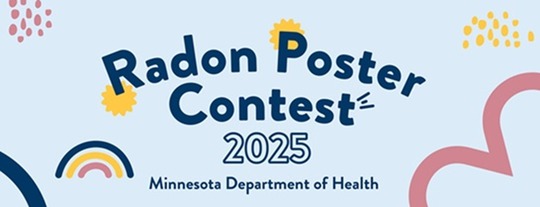
2025 Radon Poster Contest
MDH is hosting the 2025 Radon Poster Contest! Posters can be submitted now through Friday, Nov. 14. This offers a wonderful way for kids in grades 4-8 to get creative and learn about radon.
There are separate cash prizes for two grade categories: grades 4 – 6 and grades 7 – 8. First place in each category receives a $100 gift card.
Visit the MDH radon poster contest webpage for more information. If you have questions, please email the MDH indoor air unit at health.indoorair@state.mn.us.
Share your success stories
The Minnesota Partnership for Adolescent and Young Adult Health is seeking stories from community partners to share how they are engaging with the partnership.
These success stories will be used to:
- Understand the group’s collective impact.
- Continuously improve our support for the partnership.
- Showcase work to celebrate success, make connections, and inspire others!
This form has been added to the Minnesota Partnership for Adolescent Health webpage. Please share widely with your partners!
|