Regional data models: Mending Minnesota’s uneven patchwork of data capacity
Imagine if public health departments could more nimbly work together across county and regional borders, finding economies of scale in cross-cutting work and being more effective with Minnesotans’ hard-earned dollars.
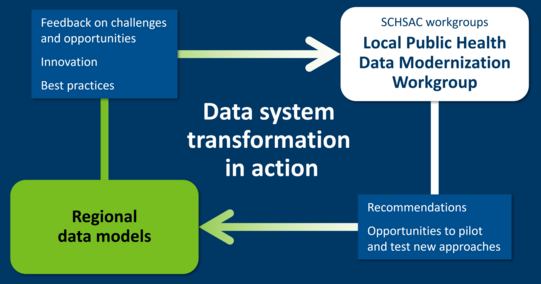
You don’t just have to use your imagination: This fall, Minnesota’s public health system will sustain two locally led regional models that are already working together to build data capacity across their member health departments, and other health departments will have the opportunity to join together and grow additional regional models.
These models can help Minnesota’s public health system fill in the “patchwork” of capacity for foundational work that varies so widely, often shaped by a community health board’s population size and geography.
Keep reading to learn about how Minnesota’s regional data models will help provide the staffing, knowledge, expertise, skills, and necessary infrastructure to increase an entire region’s ability to access, collect, use, manage, and share population health data: Regional data models: Mending Minnesota’s uneven patchwork of data capacity.
Walk the timeline from innovation to regional data models
Uncovering how regional models can help increase an entire region’s ability to access, collect, use, manage, and share population health data didn’t just happen overnight. Your colleagues have been innovating, testing, learning, and sharing lessons learned with each other to keep building on successes together and find ways around challenges.
Keep reading to view a full timeline of how we got from innovation projects to regional data models: Walk the timeline from innovation to regional data models.
Regional data models: What’s in it for me?
What’s in it for local public health? Among many other reasons, regional data models can provide local health departments with access to staff who have the knowledge and skills needed to effectively acquire, use, and share data internally among a department’s program areas and externally with local partners and community members.
What’s in it for MDH, Minnesota’s public health system, and Minnesotans? Regional models can help grow local capacity across the state to access, use, and share public health data, so that no matter where someone lives, they’re covered by a public health department that’s accessing, using, and sharing population health data effectively.
Learn more about how regional data models can help Minnesota’s public health departments, Minnesota’s public health system, and Minnesotans: Regional data models: Why?
Seven new local innovation projects kick off
Minnesota's regional data models grew out of locally led innovation projects supported by the Minnesota Infrastructure Fund.
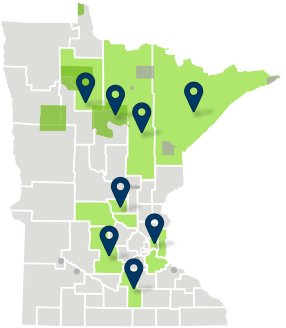
This summer, seven more new locally led innovation projects kicked off their work, joining eight innovation projects already up and running. These projects span every region of the state, working to identify, test, and expand new ways of building capacity in foundational public health responsibilities. Each innovation project is supported by the Minnesota Infrastructure Fund.
Learn more about Minnesota’s newest locally led innovation projects: Seven new local innovation projects kick off.
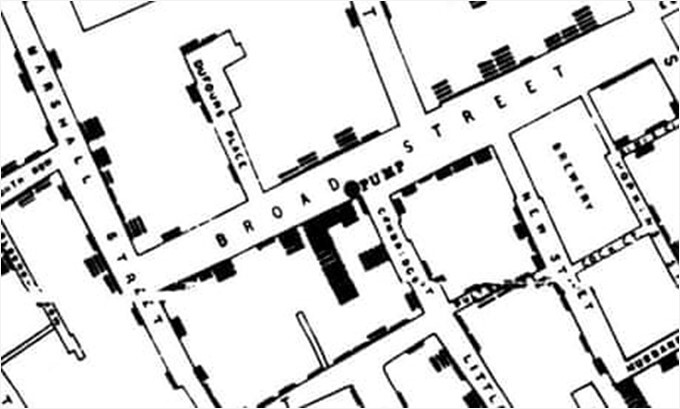
Innovation, data, and partnership go hand in hand in hand
Discovering penicillin, testing the first smallpox vaccines, John Snow stopping a cholera outbreak by removing a town pump handle: Those public health eureka moments? They didn’t just happen in a vacuum. These discoveries are firmly embedded in—and inseparable from—mounds of surrounding data, from months or years or sometimes decades of investigation.
Keep reading to learn more about how public health innovation can’t happen without data and partnership: Innovation, data, and partnership go hand in hand in hand.
|