|
Children and Youth with Special Health Needs News |
|
|
August 2025
View this as a webpage
Update to “Parent/Guardian Contact” choices in MEDSS
Beginning Oct. 1, all Minnesota Electronic Disease Surveillance System (MEDSS) events sent to local public health will have separate options for “Unable to Reach” and “Moved” in the “Parent/Guardian Contact” field in the MEDSS LPH Assessment Wizard. All MEDSS events sent to local public health prior to Oct. 1, 2025 will have the combined “Unable to Reach/Moved” option.
FAQ: When is documentation due in MEDSS?
Local public health should make their first attempt to follow up with a family within one month of the date the event was sent to local public health in MEDSS. Local public health should make at least three attempts to contact the family if they are unreachable.
Complete nursing follow-up documentation in MEDSS by the end of the quarter after the one in which the referral was made. For example, if the date the event was sent to local public health is July 15 (in quarter 3), the follow-up documentation should be submitted by Dec. 31 (the end of quarter 4).
Program updates
Birth Defects Monitoring and Analysis
Join us for Folic Acid Awareness Week 2025, happening Sept. 7-14!
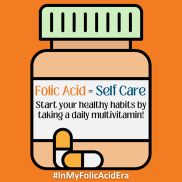
Folic Acid Awareness Week is a great opportunity to raise awareness about the role folic acid plays in preventing neural tube birth defects.
Utilize the National Birth Defects Prevention Network webpage for resources; share and like MDH social media throughout the week; and attend a special listening session and Q&A, described in the “upcoming webinars, trainings, and events” section below.
|
Coming in September for Fetal Alcohol Spectrum Disorder Awareness Month, our partners at Proof Alliance will be highlighting the stories of individuals and families impacted by fetal alcohol spectrum disorder; center the voices of lived experiences; and call for greater support, education and visibility. This year, they are focusing on fetal alcohol spectrum disorder in the classroom– highlighting the need for early recognition, informed educators and supportive learning environments.
Reaching teachers, parents, students, and advocates, Proof Alliance hopes to explore how understanding fetal alcohol spectrum disorder within educational systems can help impacted students reach their full potential.
|
Longitudinal Follow Up
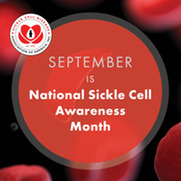
September is National Sickle Cell Awareness Month!
September is National Sickle Cell Awareness Month, designated by Congress to help focus attention on the need for research and treatment of sickle cell disease.
Visit Sickle Cell Foundation of Minnesota for more information and resources.
|
Follow Along Program
Invoicing - due Aug. 20
We encourage staff to invoice MDH every six months (e.g. half the annual award) in February and August, following the semi-annual data submission deadlines in January and July. Invoices reflect an amount for the general implementation of the program; community health boards are not expected to submit a budget by category of expense.
After completing bi-annual data reporting for the program, please submit your invoice using the data reporting survey, the separate invoice survey, or send your invoice by email to health.cyshn@state.mn.us no later than Aug. 20.
Index of standards - a tool to support ongoing implementation
The Follow Along Program index of standards is a self-assessment tool that defines local public health activities related to the coordination and delivery of community-level early childhood developmental and social-emotional outreach, screening, referral, and follow-up activities for families with young children. While the survey is optional, we encourage you to explore and complete it by the end of August. You have the option to download your responses as a PDF.
The next Intro to Ages and Stages Questionnaire (ASQ) training will be held Tuesday, Aug. 12, from 8:30 - 11:30 a.m. via Microsoft Teams. This training is intended for family home visitors who want an introduction to understanding the use and purpose of these developmental and social emotional screening tools. The training is also open to local public health staff implementing the Follow Along Program.
Please visit the MDH family home visiting training and professional development webpage under ‘current trainings’ more information and to register.
Aug. 19 – Rare Disease Advisory Council legislative debrief meeting
On Tuesday, Aug. 19 from 1:30 p.m. to 3:30 p.m., the Rare Disease Advisory Council will be hosting a legislative debrief. This event will inform continued efforts to advocate for policy changes that improve the quality of life for individuals with rare diseases in Minnesota and will also be an opportunity for the advisory council to listen to members of the rare disease community share any concerns they are experiencing in accessing quality care.
This event is open to patients and their families, patient advocacy groups, and physicians. Please register to attend. If you have any questions, forward them to Sumukha Terakanambi, Rare Disease Advisory Council policy consultant, at suterakanambi@gmail.com.
Sept. 4 – CYSHN condition follow-up virtual community of practice
The next community of practice meeting for Children and Youth with Special Health Needs (CYSHN) condition follow-up program contacts is Thursday, Sept. 4 from 9 - 10:30 a.m. The purpose of these meetings is to provide routine opportunities for LPH nurses who provide follow-up for children referred by CYSHN programs (Birth Defects, EHDI, Heritable Conditions, cCMV) to learn condition-specific information and discuss nursing practice. The meeting will include a presentation from staff at the Department of Human Services about Medical Assistance under the Tax Equity and Fiscal Responsibility Act (TEFRA) option and the state medical review team. We will be offering one contact hour of continuing education for attending. This meeting will not be recorded. The slides will be available after the presentation on the local public health partner resources webpage.
All current CYSHN condition follow-up local public health nurses are welcome to attend. Please register for this virtual, optional meeting. If you have any questions you would like to submit in advance, email them to dana.janowiak@state.mn.us.
Sept. 10 – Folic Acid Awareness Week podcast listening session
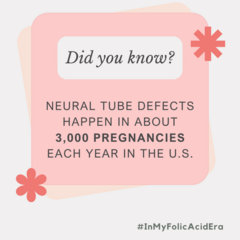
Please register to attend. All are welcome to join, including those who are not NBDPN members.
In this MotherToBaby podcast episode, Dr. Liz Marnik (@sciencewhizliz on Instagram), a scientist and popular social media communicator, will break down the basics, bust common misconceptions, and explain when and why folic acid matters. Whether you're planning a pregnancy or just curious about this powerhouse B-vitamin, you won’t want to miss this episode!
Sept. 16 and Sept. 23 – Charting the LifeCourse Good Life Groups hosted by Family Voices
Family Voices of MN is offering a series of Charting the LifeCourse Good Life Groups for Minnesota parents raising children with disabilities. Good Life Groups are collaborative learning groups where families use the "Charting the LifeCourse" framework to discuss, plan, and work towards achieving their vision of a fulfilling life for their family member with a disability. Families should plan to attend both sessions. Please register to attend.
Sept. 27 – Minneapolis Adult Congenital Heart Association walk for 1 in 100
|
On Saturday, Sept. 27 at 9 a.m., in Hyland Hills Park, Minneapolis, the Adult Congenital Heart Association is hosting its annual walk for the more than 2.5 million people living with congenital heart disease across the country. Since 1998, the association has been empowering and advocating for the 1 in 100 children and adults impacted by congenital heart disease.
If you are interested, register to join the walk or support a walker.
|
|
|
Resource corner
Toxic Free Kids program updates Chemicals of High Concern report
From lead in toys to mercury in skin-lightening products to formaldehyde in laundry detergent, many consumer products sold in Minnesota contain chemicals that can harm people’s health. Babies and children are particularly vulnerable to the health impacts of these toxic chemicals.
The 2025 Minnesota Chemicals of High Concern report contains an updated list of chemicals along with examples of how the Toxic Free Kids program is working to protect people, especially children, from negative health effects. Since the last Chemicals of High Concern update in 2022, the Toxic Free Kids program has listed 15 additional chemicals and removed 200, based on an extensive review of the latest toxicology research and statutory requirements.
Resources for transitioning children to kindergarten
The transition to kindergarten is an exciting and sensitive time for children and their families, and each experience the change differently. The Minnesota Department of Education’s kindergarten transitions webpage has tools and resources to support families, schools, and communities during this transition.
Technical support
-
Whether you need help troubleshooting or just have a quick question, the technical support contacts guide connects you to the right support. It is available on SharePoint under “Onboarding and Training” in the left-hand menu.
-
The local public health partner resources webpage also contains useful materials for CYSHN programs– including Birth Defects, EHDI, Heritable Conditions, and cCMV. You do not need a login to view or download materials. Some materials, like videos and Follow Along Program resources, are still only available on our SharePoint site.
Invoicing
|
Quarter 1
|
Quarter 2
|
Quarter 3
|
Quarter 4
|
|
Jan. 1 - March 31
|
April 1 - June 30
|
July 1 - Sept. 30
|
Oct. 1 - Dec. 31
|
Complete nursing follow-up documentation in MEDSS by the end of the quarter after the one in which the referral was made. For example, if the date the event was sent to local public health is July 15 (in quarter 3), the follow-up documentation should be submitted by Dec. 31 (the end of quarter 4). Invoice letters are sent to local public health by MDH in the month following the end of the quarter in which documentation was submitted or training was completed. So, in the example, the invoice letters would be sent in January.
Follow Along Program semi-annual data reports are due every 6 months. Data for quarters 1 and 2 are due July 31. Data for quarters 3 and 4 are due January 31. Invoices for quarters 1 and 2 are due August 20. Invoices for quarters 3 and 4 are due February 20. Semi-annual data reports must be received prior to the invoice being paid.
|
|
About the CYSHN newsletter
Children and Youth with Special Health Needs (CYSHN) section staff at MDH work together to champion the health and well-being of people living in Minnesota with special health needs and disabilities, from the earliest states of life through transition to adulthood.
As the Child and Family Health Division works to coordinate and collaborate on communication, this newsletter may evolve to include a broader focus, but the following CYSHN programs are the primary focus: Birth Defects; Early Hearing Detection and Intervention (EHDI); Heritable Conditions (HC); Congenital Cytomegalovirus (cCMV); Critical Congenital Heart Disease (CCHD); Neonatal Abstinence Syndrome (NAS); and the Follow Along Program (FAP).
|
|
|
|
|