ORHPC July Newsletter

ORHPC

View this as a webpage

July 2025

ORHPC Monthly Update


MDH and ORHPC News

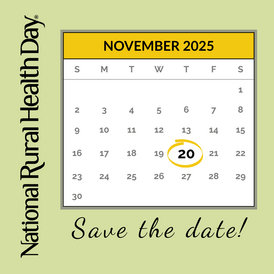
National Rural Health Day Save the Date Graphic

Save the Date:

National Rural Health Day

Mark your calendars for National Rural Health Day! It’s celebrated on Thursday, November 20 this year! This annual observance was founded by the National Organization of Rural Health (NOSORH) to honor the dedication and resilience of rural health professionals, organizations and communities nationwide. Join us in celebrating the #PowerOfRural.

Leading up to the day, the Office of Rural Health and Primary Care will be sending out resources for spreading the word and organizing local events. Please follow MDH (@mnhealth) on social media and share National Rural Health Day posts with your network!

You can learn more about National Rural Health Day and the Power of Rural by visiting powerofrural.org.


2025 Minnesota Rural Health Award Nominations

Do you know someone who has made a significant contribution to improving the health of people in Minnesota? We want to hear about them!

Nominations are now open for the 2025 Minnesota Rural Health Awards. Please make your nominations in the following categories by Tuesday, Sept. 30:

  • Hero Award – nominate an individual
  • Team Award – nominate a team or group of people
  • Lifetime Achievement Award – nominate an individual  

Nominees can have contributed to rural health in any capacity—in a paid position or as a volunteer, as a health care provider or administrator, through policy development or in practice. Areas of impact could include, but are not limited to, health care and health programs, rural health policy, legislation, rural health equity, improved patterns of health care delivery, cooperative efforts, achieving efficiencies to avoid duplication of services and reach common goals, education, and the lasting impact on people and areas served.

Minnesota’s 2025 award recipients will be announced on National Rural Health Day.

If you have any questions, please contact health.orhpc@state.mn.us.


Data Corner

Self-Care is Health Care

July 24th is International Self-Care Day. Self-care has become a bit of a buzz word in recent years, encompassing everything from treating yourself to a shopping trip to investing in an expensive skincare line or booking a spa day. But self-care is much more than a social media trend.

The World Health Organization’s working definition of self-care is: “The ability of individuals, families and communities to promote health, prevent disease, maintain health, and cope with illness and disability with or without the support of a health-care provider.” The Global Self-Care Federation believes that Self-care is Healthcare; it's not just a luxury. The #SelfCareIs campaign is an international movement to help people “optimize their health by managing common conditions through preventative self-care strategies,” empowering them to become better managers of their own health, and make appropriate choices for themselves, their families, and their community’s health. 

The Importance of Self-Care for Health Care Workers

How important is self-care for those who are providing health care for others? According to Self-Care Tips for Healthcare Professionals - Saint Mary's University of Minnesota: Health care can be a high-stress field, but recent data suggests that professionals in this industry currently face even more elevated risks to their mental health. A 2022 survey of frontline health workers in Minnesota found that approximately 70% of respondents were experiencing moderate or moderately severe depression. Further, 99.2% of respondents reported high levels of stress.

Mental wellbeing of frontline health workers post-pandemic: lessons learned and a way forward - PMC supports this, adding that an “impressive number of scientific publications have outlined how emerging problems added to the usual stressors of the medical profession, resulting in disorders such as post-traumatic stress, sleep problems, anxiety, depression, and burnout.”

One of ORHPC’s grant programs, Mental Health Grants for Health Care Professionals, supports projects that make self-care resources available to health care professionals, as well as other projects focused on mental health and wellbeing. Several grantee organizations have given employees access to self-care apps, created wellbeing spaces, and formed peer support groups that encourage self-care. Recognizing that self-care must be accompanied by supportive environments and systems, some grantees have tackled structural issues within health care, such as burdensome paperwork, and taken steps to enhance their organizational culture. Grantees have reported positive feedback from their health professional employees, and initial data show improved job retention.

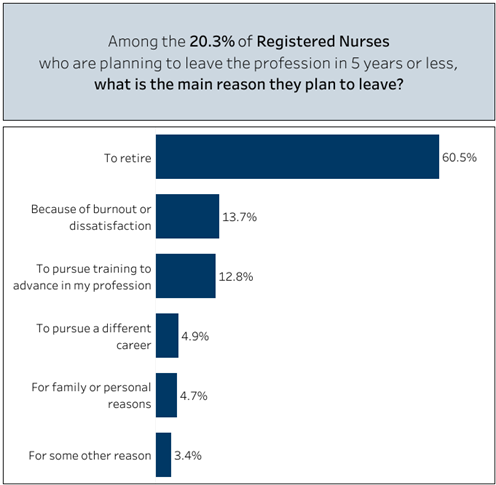
Graph showing reasons why nurses who plan to leave the profession in the next 5 years

Preventing Burnout in Nurses

ORHPC maintains data on 23 different licensed health care professionals in Minnesota including dentists, licensed social workers, pharmacists, physicians, psychologists and registered nurses (for the full list visit: Health Care Workforce Data: Count of Licensed Health Care Providers).

Registered nurses make up 45% of the licensed health care professionals ORHPC maintains data for. When asked how long registered nurses plan to work in their profession, (Health Care Workforce Data: Career Plans of Licensed Health Care Providers). Self-Care in Nurses - PMC states that “Most nurses view serving patients as their duty and give of themselves endlessly despite how they feel on any given day.”

Strategies for creating favorable working conditions go a long way toward addressing burnout before it happens. Building trust is key to a healthy, supportive environment – the lists below highlight some additional items to consider when addressing job satisfaction among nurses.

Favorable working conditions:

  • Trust in management
  • Supervisor support
  • Enough time to complete their work and be productive
  • Having uninterrupted breaks
  • Additional resources for new-to-practice clinicians
  • Creating a quiet space designated for meditation or reflection
  • Team communication improvement
  •  Increased scheduling control
  • Less required documentation
  • Electronic health records systems improvement

Source: CDC Study Finds Nurse Burnout Still On The Rise | NurseJournal.org

Practicing self-care and mindfulness:

  • Developing strong interpersonal relationships
  • Setting boundaries between work and personal life
  • Getting enough sleep
  • Care for physical and mental health
  • Seeking out regular therapy or assistant programs

Source: Top Tips From Nurses On Dealing With Burnout | NurseJournal.org

The CDC’s National Institute for Occupational Safety and Health (NIOSH) Impact Wellbeing campaign recognizes that while many hospitals have made strides to address health care worker wellbeing, it’s critical to go beyond encouraging self-care. Employers can support their nursing staff with favorable working conditions addressed through workplace policy and operational changes. Learn about the recommended actions for executive leadership in the Impact Wellbeing Guide: Taking Action to Improve Healthcare Worker Wellbeing (PDF).

Learn more about Self-care for health and well-being from the World Health Organization.

Grants & Funding

Firehouse Subs First Responder Grants

Ongoing applications accepted for up to $45,000

Grants for first responders and public safety organizations for life saving equipment (e.g., AEDs, vehicle extraction equipment, ATVs), public education (e.g., CPR training) and scholarships.

For more information, visit: Firehouse Grants Application. The grant portal opens at 9:00 am on Thursday, July 10.

Department of Veterans Affairs Staff Sergeant Parker Gordon Fox Suicide Prevention Grants

Application deadline: Friday, July 18

Grants of $100,000 to $750,000 for a grant period of one to two years.

Eligibility: Private institutions, tribes, community-based organizations, state and local governments.

The U.S. Department of Veterans Affairs will provide grants to provide, or coordinate the provision of, suicide prevention services to eligible veterans and their families. Services may include outreach, case management, and mental health screening, among others.

For more information, visit: Staff Sergeant Parker Gordon Fox Suicide Prevention Grant Program - Mental Health

Rural and Underserved Clinical Rotations Grant Program

Application deadline: 4:30 pm on Friday, July 25

The Rural and Underserved Clinical Rotations (RUCR) grant program awards health professional training site grants to eligible physician, physician assistant, advanced practice registered nurse, pharmacy, dentistry, dental therapy, and mental health professional programs to add rural and underserved rotations or clinical training experiences, such as credential or certificate rural tracks or other specialized training. For physician and dentist training, the expanded training must include rotations in primary care settings such as community clinics, hospitals, health maintenance organizations, or practices in rural communities.

For more information, visit: ORHPC Grants and Funding - Rural and Underserved Clinical Rotations Grant Program

Rural Primary Care Residency Training Grant Program

Letter of Intent deadline: 4:30 pm on Wednesday, July 30

The Rural Primary Care Residency Training Grant Program awards grants to eligible programs to plan, implement, and sustain rural primary care residency training programs. Grants support programs with costs such as planning and development, obtaining accreditation, recruiting and training residents and faculty, and improving training sites. The program is designed to increase training opportunities in rural Minnesota, with the goal of strengthening the rural primary care physician workforce.

For more information, visit: ORHPC Grants and Funding - Rural Primary Care Residency Training Program

Mental Health Grant for Health Care Professionals Program

Application deadline: 4:30 pm on Friday, August 1

The Mental Health Grants for Health Care Professionals program awards grants to health care entities for the purpose of establishing or expanding evidence-based or evidence-informed programs focused on improving the mental health of health care professionals. Grants are awarded to programs that address barriers to and stigma among health care professionals associated with seeking mental health care and substance use disorder services, encourage professionals to seek support and care, identify risk factors for mental health conditions and suicide, develop and make available resources to support health care professionals with self-care and resiliency, or identify and modify structural barriers in health care delivery that create unnecessary stress in the workplace.

For more information, visit: ORHPC Grants and Funding - Mental Health Grant for Health Care Professionals

Health Professionals Clinical Training Expansion Grant Program

Application deadline: 4:30 pm on Monday, August 4

The Health Professionals Clinical Training Expansion (HPCE) grant program, authorized by Minnesota Statutes awards grants to support the establishment or expansion of clinical training for eligible health professional training programs. Providing funding opportunities for clinical training programs will strengthen Minnesota’s health care workforce and increase access to primary care and mental health services for rural and underserved communities. This grant program funds activities associated with planning and implementing new clinical training programs and expanding the number of professionals trained through existing clinical training programs in rural and underserved areas in Minnesota.

For more information, visit: ORHPC Grants and Funding - Health Professionals Clinical Training Expansion Grant


Opportunities & Resources

ORHPC Grant and Loan Forgiveness Reviewers Needed

Are you interested in joining the Office of Rural Health and Primary Care (ORHPC) volunteer pool of reviewers? The ORHPC grant and loan forgiveness review process is an opportunity for participants to:

  • Help select the best applicants for funding to work on promoting health and advancing health equity across Minnesota
  • Meet and network with other people who work on promoting health and advancing health equity across Minnesota
  • Learn about some of the initiatives and projects happening at ORHPC to promote health and advance health equity
  • Learn more about State grants and how review processes work (especially if you are considering applying in the future!)
  • Practice using an equity lens

Reviewers for a program are asked to:

  • Review and score around 5-15 grant applications
  • Complete reviews within 2-4 weeks (Reviews generally take 30-60 minutes for each application)
  • Participate in a virtual review meeting to discuss their evaluations and make funding recommendations to ORHPC

To volunteer, please complete the ORHPC Grant and Loan Forgiveness Reviewer Interest Form to ensure staff have your contact information and areas of interest to connect with you when review opportunities become available. For more information, visit Rural Health and Primary Care Grant Reviewers.

Obstetric Hemorrhage Community of Learning: Now Enrolling Interested Hospitals

Obstetric hemorrhage remains a leading cause of preventable maternal morbidity and mortality in the United States. Timely recognition and response are critical to saving lives and improving maternal outcomes.

Guided by the Alliance for Innovation on Maternal Health (AIM) Obstetric Hemorrhage Patient Safety Bundle, this Minnesota Perinatal Quality Collaborative (MPQC) Obstetrical Hemorrhage Community of Learning runs from September 2025 to April 2026 and is tailored to meet the varying needs of Minnesota’s rural, urban, and suburban communities. This program was designed with equity in mind, recognizing that resources, staffing, and access vary across the state. 

More information and resources on this topic:


Important Dates

September 23-26

National Rural Health Association’s Rural Health Clinic and Critical Access Hospital Conferences

Rural Health Clinic Conference | National Rural Health Association

September 30

Deadline for Minnesota Rural Health Award Nominations

Online Nomination Form 2025 Minnesota Rural Health Awards

November 20

National Rural Health Day

Power of Rural


Other News

Study: Preventing Medical Debt among Rural Residents

The University of Minnesota Rural Health Research Center recently released Preventing Medical Debt among Rural Residents: Example Programs from Hospitals in Minnesota and Montana - Rural Health Information Hub. This study highlights how some rural hospitals are working to reduce medical debt for their patients and presents strategies from hospitals in Minnesota and Montana that aim to reduce patient medical debts through financial assistance programs and cost-cutting measures.

The Office of Rural Health and Primary Care (ORHPC) promotes access to quality health care for all Minnesotans. We work as partners with policymakers, providers, and rural and underserved urban communities to ensure a continuum of core health services throughout the state.

651-201-3838

health.orhpc@state.mn.us