MN One Health Antibiotic Stewardship Collaborative Newsletter: June 2025

Minnesota One Health Antibiotic Stewardship Collaborative

Minnesota One Health Antibiotic Stewardship Collaborative Newsletter

One Health banner

June 2025
View this as a webpage

Greetings! Summer has arrived in Minnesota and with that comes an event that many people look forward to all year - the Minnesota State Fair. Also known as the "Great Minnesota Get-Together," the 2025 State Fair runs from Aug. 21 through Labor Day and brings together thousands of people from all over the world in a one-of-a-kind celebration of all things Minnesota. MOHASC will once again be hosting a booth in the Eco Experience building, and we can't wait to share our passion for One Health antibiotic stewardship with fairgoers. Keep reading for more details on this year's MOHASC State Fair Booth titled "Join the Fight Against Superbugs: A One Health Approach to Antibiotic Stewardship". We hope to see you there!

MOHASC members work together to promote judicious antibiotic use and stewardship and to reduce the impact of antibiotic-resistant pathogens across the One Health spectrum. If you’re not already a member and are interested in being a part of these efforts, complete this brief MOHASC Partner Information Form indicating your interests. There are exciting things happening and we hope you’ll join us!

In this issue:

Stewardship trivia? You betcha!

Quiz Icon

On average, how many fairgoers do MOHASC volunteers typically interact with during the Minnesota State Fair,
our largest public outreach event of the year?


A) 1,500

B) 3,000

C) 5,500

D) 8,000

The answer is at the bottom of this newsletter.

Partner Spotlight

Training the Next Generation of Stewardship Leaders

PGY2

MOHASC and the Minnesota Department of Health (MDH) are proud to partner with M Health Fairview and Abbott Northwestern to offer a Public Health and One Health Antibiotic Stewardship Elective to Year 2 pharmacy practice residents each year.

This residency is designed to transition Year 1 graduates from general practice to specialized practice focused on the care of patients with infectious diseases. Residency graduates are equipped to participate as integral members of interdisciplinary teams caring for patients with infectious diseases and assuming responsibility for their pharmaceutical care.

The public health and One Health antibiotic stewardship experience hosted at MDH is an elective rotation. During this learning experience, residents are exposed to daily work at MDH and learn how clinical antibiotic stewardship is supported at the public health level. Residents join discussions regarding infectious disease public health and gain proficiency in the following areas through literature review, topic discussion, and project experience:

  • Minnesota One Health approach to antibiotic resistance and antibiotic stewardship.
  • National-level antibiotic use patterns.
  • Challenges and opportunities for improvement of antibiotic prescribing.

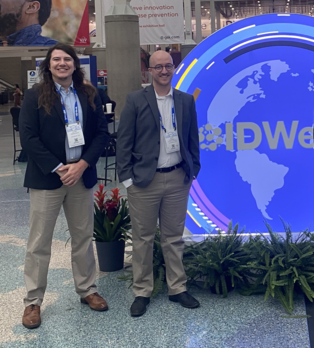
MOHASC and MDH recently hosted residents Jesse Dennison and Nate Campbell on this elective rotation. Jesse is a PGY2 Infectious Diseases Pharmacy Resident at M Health Fairview - University of Minnesota Medical Center. He completed his PGY1 pharmacy residency at Freeman Health System in Joplin, Missouri, and completed his PharmD at the University of Kansas School of Pharmacy in 2023. Following his completion of PGY2, Jesse is planning to pursue a position as an antimicrobial stewardship pharmacist at a large academic health center.

Nate is also a PGY2 Infectious Diseases Pharmacy Resident at M Health Fairview - University of Minnesota Medical Center. As an infectious disease pharmacist, he works on the front lines of antimicrobial stewardship in human health, but prior to his time with MOHASC he had not had much experience with antimicrobial stewardship from a One Health perspective. Over the past year, he's had the privilege to participate in multiple MOHASC events - volunteering at the state fair booth, attending the annual conference, and most recently completing the two-week rotation at MDH. Nate says it has been a great experience to collaborate with MOHASC and learn more about antimicrobial stewardship from a One Health perspective. He has picked up information that he'll be able to apply throughout his career in infectious diseases.


MOHASC Updates

MSF

Join our fight against superbugs at the Minnesota State Fair

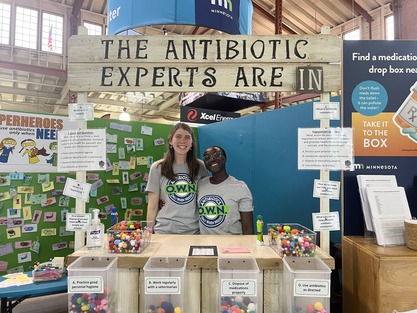
Calling all health heroes! Head over to the Eco Experience Building at the Minnesota State Fair (Aug. 21 – Sept. 1) and check out our MOHASC booth—it’s all about how we keep antibiotics working for people, animals, and the environment.

You will:

  • Learn how antibiotics help us—and how overusing them can create scary superbugs.
  • Find out how tossing meds in the trash (or worse, down the drain!) can pollute Minnesota’s lakes and rivers.
  • Meet real-life experts from human, animal, and environmental health ready to share their super-knowledge!

Then, gear up for action:

  • Sign the antibiotic stewardship pledge.
  • Try your luck at the “Question of the Day” and get your BINGO card stamped.
  • Grab a “Superheroes Fight Superbugs” temporary tattoo and show off your support.
  • Snag a magnet that reminds you to “Take it to the Box”—the safe way to dispose of leftover meds!

Be a health hero and help us fight superbugs and keep our water clean!


MOHASC One Health Exchange at Zollman Zoo

Zollman Zoo


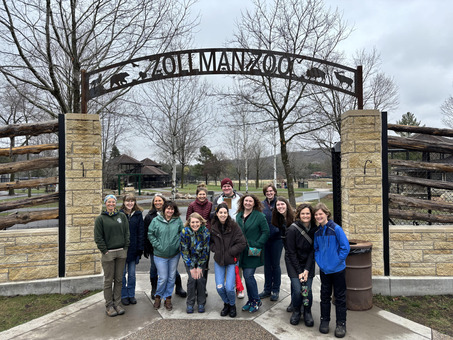
MOHASC members recently had the chance to experience a behind-the-scenes tour of Zollman Zoo near Rochester, Minnesota. The Zollman Zoo houses over 30 species of animals native to Minnesota.

Attendees learned about how antibiotics are used judiciously in the zoo setting and also how the zoo implements infection prevention and control practices to prevent infections from happening in the first place. Thank you to the Zollman Zoo for hosting this exciting One Health antibiotic stewardship opportunity!


One Health banner icon

In the News

Antibiotic Use and Stewardship in Minnesota: MDH Releases 2025 Update on Progress and Opportunities

The Antibiotic Use and Stewardship in Minnesota: 2025 Update on Progress and Opportunities (PDF) summarizes data that MDH uses to describe the state of antibiotic use and stewardship in Minnesota. The report includes current and past measures of outpatient and hospital antibiotic use and metrics. It covers who prescribes and receives antibiotics in Minnesota. The report also outlines what we know about prescribing disparities at the national level and an exploration of trends in Minnesota. The antibiotic stewardship program data show trends in hospital and nursing home core element implementation, as well as data on outpatient stewardship practices.

This report aims to inform public health education initiatives and partner-driven statewide objectives around antibiotic use by outlining opportunities for the agency and clinical partners to improve antibiotic prescribing and stewardship programs.


APIC Veterinary Medicine IPC Council Launched
APIC Logo

The Veterinary Medicine Infection Prevention and Control (IPC) Council is the first of its kind as an animal health group to be officially recognized by the Association for Professionals in Infection Control and Epidemiology (APIC).

APIC is the leading multidisciplinary professional association for infection preventionists (IPs) with more than 15,000 members in 48 countries. Their mission is to advance the science and practice of infection prevention and control. The Veterinary Medicine IPC Council is happy to join forces with APIC to provide the veterinary IPC community a central space to collaborate, exchange knowledge, and ask questions. The Council is working to provide professionals with a one stop shop for all things veterinary IPC.

The Veterinary Medicine IPC Council is comprised of professionals from a variety of backgrounds dedicated to improving and learning about the field of veterinary IPC. Professionals may originate from different disciplines and facilities including small and large animal companion clinics/hospitals, veterinary academia, production animal, wildlife rehabilitation, zoos, shelters, sanctuaries, research, education, public health, and human health care.

Goals for the Council include:

  • Standardize veterinary IPC terminology and best practices.
  • Identify gaps and create resources and guidance documents.
  • Explore research opportunities to improve and create evidence-based practices and protocols.
  • Create training programs and education designed to train veterinary technicians to excel and become a leader in the field of veterinary IPC.
  • Develop a certification program for those interested in furthering their career in the field of veterinary IPC.
  • Be inclusive of all aspects of animal care including companion animal, food animal, wildlife rehabilitation, zoos, shelters, sanctuaries, research, and other facilities where animals may be present.

Interested in joining the Veterinary Medicine IPC Council?

Details regarding APIC membership can be found at APIC: About Membership.

Once you become an APIC member, you will have access to the Veterinary IPC Council and all the benefits of being a part of this community!

One Health banner icon

Current Research

Effective mitigation of an outbreak of New Delhi metallo-β-lactamase–producing Escherichia coli infections in a small animal veterinary teaching hospital

DeStefano, I., Fellman, C. L., Bergeron, A. C., Golato, L. M., Doron, S., Cumming, M., Brown, C. M., Leaf, J., Dietrich, J., Wagner, R., & Cole, S. D.

The objective of this study was to describe infection prevention and control (IPC) interventions implemented in response to an outbreak of New Delhi metallo-β-lactamase (NDM)–producing carbapenem-resistant Enterobacterales (CRE) infections in a veterinary teaching hospital. A multimodal intervention was introduced that included environmental surveillance, point-prevalence surveillance of hospitalized dogs and cats, mandatory education/training about CRE, alterations in personal protective equipment protocols, increased environmental cleaning/disinfection, workflow modifications, and expert consultation. Both clinical infections and patient colonization with CRE declined by use of a multimodal IPC strategy. However, inpatient colonization rates declined more slowly, suggesting ongoing intrafacility transmission and/or unidentified environmental reservoirs that took longer to resolve.

Citation:

DeStefano, I., Fellman, C. L., Bergeron, A. C., Golato, L. M., Doron, S., Cumming, M., Brown, C. M., Leaf, J., Dietrich, J., Wagner, R., & Cole, S. D. (2025). Effective mitigation of an outbreak of New Delhi metallo-β-lactamase–producing Escherichia coli infections in a small animal veterinary teaching hospital. Journal of the American Veterinary Medical Association (published online ahead of print 2025). Retrieved June 11, 2025, from https://doi.org/10.2460/javma.24.09.0572

One Health banner icon

Upcoming Events & Opportunities

Call for One Health Papers at Frontiers in Medicine

The integration of One Health into health care professions education has received substantial attention in light of global health crises such as the COVID-19 pandemic. This approach has been increasingly recognized by international coalitions like the G7 and G20, who have integrated One Health strategies into their pandemic prevention policies. The most recent definition of One Health post-COVID stresses the critical need for interdisciplinary collaboration and education to tackle health challenges at the human-animal-ecosystem interface, and advance toward the UN Sustainable Development Goals (SDG) for a sustainable planet.

This research topic aims to stimulate discussion around developing and refining educational programs incorporating the One Health approach in health care fields such as medicine, veterinary science, and public health. This collection will consider interprofessional education as it provides a pedagogical platform to deliver One Health to students across areas of expertise. We welcome diverse perspectives and innovations for health professions education with reference to the SDG framework, to prepare students to tackle threats posed by zoonoses with pandemic potential.

To explore interdisciplinary education for One Health, contributions are encouraged on the following key areas:

  • Development of curricula, workshops, and other training methods to incorporate One Health principles in health professions education.
  • Interdisciplinary contributions to the education of health professionals for One Health and the UN’s Sustainable Development Goals.
  • Development of digital health competencies related to artificial intelligence in disease forecasting and surveillance and drug development.
  • Training health students for antimicrobial stewardship, including green chemistry and sustainable practices.
  • Addressing neglected tropical diseases and the impact of climate change on zoonoses within health professions curricula.

The manuscript summary submission deadline is July 31, and the manuscript submission deadline is Oct. 31.

You can learn more about this opportunity at One Health, Pandemic Prevention, Climate Health Education: The Importance of Interprofessional Education Pedagogy.

Trivia Answer!

Quiz Icon

D) 8,000

On average, MOHASC volunteers interact with approximately 8,000 fairgoers about One Health antibiotic stewardship at our booth during the Minnesota State Fair.

Attendees are able to engage with experts from diverse fields, show their commitment to responsible antibiotic use by signing an antibiotic stewardship pledge, have their Eco Experience BINGO card stamped after answering our antibiotic stewardship trivia question, proudly display one of our "Superheroes Fight Superbugs" temporary tattoos, and take home a magnet that reminds them to “Take it to the Box”—the safe way to dispose of leftover meds!


Handy Links