|
View this as a webpage
Medical Assistance for Breast or Cervical Cancer
Join our June 11 webinar from 12:10 to 1 p.m. to learn about Medical Assistance for Breast or Cervical Cancer (MA-BC).
Sage Program and Department of Human Services staff will present on the basics of MA-BC, eligibility criteria, how patients are enrolled in the program, how to renew ongoing MA-BC, and what forms are needed. Additionally, we will review options for people who aren’t eligible for Medical Assistance.
Join us online for our quarterly office hours
Join our Office Hours on July 23 from 12:10 to 1 p.m. for a brief Sage Program overview and Q&A time. Office Hours will be informal with a focus on Sage Program eligibility criteria, covered services, form completion, follow-up, and billing. Sage Office Hours are intended for new clinic staff or clinic staff who need a refresher on the Sage Program.
-
Program eligibility criteria is defined and reviewed.
-
Sage covered services (both screening and diagnostic) are reviewed and explained.
-
The required forms are reviewed.
-
The process for following up on an abnormal screening result is explained.
-
Billing information is provided.
What we know now
Proposed federal funding cuts could significantly impact breast and cervical cancer screening in Minnesota. Among the most concerning proposed cuts are a 37% reduction to the National Institutes of Health (NIH) funding and the entire elimination of the National Breast and Cervical Cancer Early Detection Program (NBCCEDP) at the Centers for Disease Control and Prevention (CDC).
The Sage Program, Minnesota’s NBCCEDP, helps keep people healthy by removing financial barriers and ensuring access to breast and cervical cancer screenings for those who qualify. While the full impact of these cuts is yet to be determined, potential changes include:
- Lack of state data on cancer incidence and mortality.
- Reduced support for local communities and clinics working to make it easier for Minnesotans to get cancer screening and treatment.
- Lack of guidance on best practices for increasing access and decreasing barriers to screening.
- Fewer evidence-based programs to increase cancer screening rates.
Public health is a tightly connected ecosystem. When a single federal program is cut, there is a ripple effect, impacting not only that program’s services, but also the state and local systems that depend on it. These disruptions can delay prevention efforts and strain already limited resources at the community level.
Impact of Sage in Minnesota
Since its inception in 1991, Sage has:
- Served 173,013 clients for breast and cervical cancer
- Completed 667,916 cycles of breast and cervical cancer screening and diagnostics
- Diagnosed 3,128 cases of breast cancer
- Diagnosed 124 cases of cervical cancer
This work is made possible through grants from the CDC. Without this federal funding, Sage’s ability to support health care providers and community organizations to provide access to life-saving cancer screening services could be severely limited or disappear altogether.
We know this kind of uncertainty is difficult and can have negative impacts on your work. We will continue to assess the situation and communicate impacts as we know more.
Now available on the Sage website
You can download the updated 2025 Sage Provider Manual from our website at Sage Program Resources for Providers and Professionals. This is a great resource for clinic staff to learn in-depth about the Sage Program.
Please complete our short survey
Sage would like to know which clinics are currently offering HPV self-collection or are interested in offering it for their patients. Once we have a better understanding of how many clinics are offering this to their patients or are interested, we will work to start reimbursing for in-clinic HPV self-collection at a later date.
Learn more about exciting work being done at the University of Minnesota Masonic Cancer Center and three Minneapolis clinics to increase cervical cancer screening in the Somali community using HPV self-collection: Cervical cancer self-collect screening a gamechanger for healthcare access — Sahan Journal.
Sage is modernizing to improve service delivery
Sage is working to modernize businesses practices and processes allowing for streamlined electronic data submission by clinic partners. We hear and understand that it is sometimes difficult to administer our program due to the manual processes, paper forms, and faxes. Please reach out to Ann Reid if you have any questions or would like to learn more.
The Sage Modernization Team has six clinics engaged in the pilot project:
-
Neighborhood Health Source
-
Scenic Rivers Health System
-
Southside Community Health Services
As a result of the discovery process and the realization that required changes to Electronic Health Record (EHR) systems will take more time than anticipated, the scope of the pilot has changed to include Direct Data Entry and ePDF exchange options. The MDH DEX and Koble options will be available later, but will be part of a separate phase or initiative.
The technical team will roll out the new data exchange options in the following order:
Phase 1 – Ongoing (Next Update June 2025): New Sage Portal/ Direct Data Entry into the following Sage Forms: Enrollment, Visit Summary, Breast Imaging Summary, Breast Abnormal, Cervical PAP, Cervical Abnormal, and the SagePlus Form.
Phase 2 – September 2025: New Sage Portal/ ePDF Form Submissions/ Clinic Dashboard that gives status of submitted forms (i.e. pending, approved).
We look forward to keeping you updated on the project progress, again, please feel free to contact us with any questions.
– The Sage Modernization Project Team
2025 Race for the Cure update
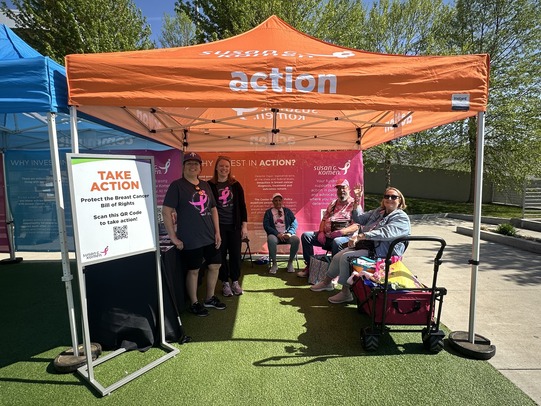
It takes a village to fight breast cancer, and those who participated in this year’s Minnesota Race for the Cure helped raise critical funds that will invest in breakthrough research to prevent and cure breast cancer, eliminate inequitable barriers to quality care, and provide patients’ direct support in their treatment journey.
This year’s Race, which was located at Viking Lakes in Eagan, raised over $413,000!
The Sage Program had an information booth and connected with community members about getting screened for breast and cervical cancer, and how the program benefited those who were diagnosed with cancer.
Susan G. Komen is the world’s leading nonprofit breast cancer organization, working to save lives and end breast cancer forever. Komen has an unmatched, comprehensive 360-degree approach to fighting this disease across all fronts and supporting millions of people in the U.S. and in countries worldwide. Komen advocates for patients, drives research breakthroughs, improves access to high-quality care, offers direct patient support and empowers people with trustworthy information.
To learn more visit komen.org or call 1-877 GO KOMEN. Connect with them on social at www.komen.org/contact-us/follow-us/.
Billing Department: Reminders
-
Submit forms by fax or email: Did you know you can submit forms to Sage via fax or email? Faxing or sending forms attached to an email are Sage’s preferred methods of receiving forms and results.
-
Claim processing delays: You may have noticed claims with date of service starting 1/1/2025 have not yet adjudicated. Due to staffing constraints, we are currently working hard to enter forms and reports for services 1/1/2025 to current. Please do not resubmit paperwork if you have already submitted as this creates additional backlog and may further delay claim processing. As a reminder, Sage has a timely filing limit of 120 days from date of service. The date when forms are received by Sage is what counts toward this deadline, so current processing delays will not adversely impact the timely filing requirement.
-
Ensure forms are complete: We are receiving enrollment forms missing key information, particularly page 4, and key patient demographics including address and household income. Imaging and Pap forms have also been missing required screening and diagnostic results. Please check all forms for completeness before submitting to Sage.
Cancer Screening Quality Improvement (CSQI): Success Story
As a result of the partnership with the CSQI Program and Minnesota Association of Community Health Centers, the Open Door Health Center (ODHC) team has rebounded from low CRC screening rates in Q1 & Q2 2024, to screening rates that are improving each quarter with trailing year April 2025 data showing a 10.1% improvement.
ODHC staff have collaborated with local partners on outreach events and successfully implemented a small media awareness campaign. The March 2025 Colorectal Cancer Screening campaign included 200 ads placed over four radio stations and ran boosted social media. The social media campaign had 35,217 views and reached 11,110 accounts that are central to their intended audience.
Care gaps identification and outreach are now executed weekly, with clinical staff reporting greater confidence in tracking and workflows. Improved PDSA (plan, do, study, act) and SOP (statement of purpose) templates were developed and implemented with accompanying staff training. The QI department also created a monthly internal newsletter. March 2025 included a Colorectal Cancer focus. Additional activities included creating an organization-wide Integrated Calendar with cancer screening awareness efforts scheduled throughout the 2025 activity cycle.
Minnesota Cancer Alliance Update
The Minnesota Cancer Alliance is partnering with member organizations to raise awareness during National Men’s Health Week (June 9-15). To find resources and a social media toolkit, visit the MCA Resources page.
Some of the cancers that most often affect men are prostate, colorectal, lung, and melanoma skin cancer. Knowing about these cancers and what you can do to help prevent them or find them early (when they are small, haven't spread, and might be easier to treat) may help save your life.
You can learn more about the most common cancers in Minnesota men at Cancer in Minnesota - MN Dept. of Health.
Learn more about what you can do to reduce your cancer risk at Cancer Risk and Prevention | Cancer Causes | Stay Healthy | American Cancer Society.
Help the Minnesota Cancer Alliance spread awareness by liking and resharing social media posts at #MensHealthWeekMN.
|