Communications Toolkit: Mental Health Awareness Month
To help promote Mental Health Awareness Month, the Substance Abuse and Mental Health Services Administration (SAMHSA) has comprehensive communications resources available for anyone to use. The toolkit includes key messages and themes, social media content, best practices for discussing mental health, and resources for increasing awareness about mental health in May and beyond.
SAMHSA created a one-stop-shop for the SAMHSA Mental Health Awareness Month Toolkit on their website, along with many other resources to use throughout the year.
|
Maternal Mental Health Hotline
MCHB Maternal Mental Health Awareness Week is May 5-11. Spread the word about the Health Resources and Services Administration’s HRSA National Maternal Mental Health Hotline (1-833-TLC-MAMA)—a free and confidential service offering 24/7 support via call or text to new and expecting moms and their loved ones. The Hotline’s trained counselors help women and their families needing emotional support during or after pregnancy.
Share the Hotline with someone who is currently pregnant or postpartum, their loved ones, or caregivers—the Hotline is here for them. Support is available in English and Spanish. You can use text telephone (TTY) or another relay service to contact the Hotline, which also offers interpreters who can support over 60 languages.
Use the MAMA Hotline Partner Toolkit or order a limited number of free printed products: MCHB Hotline Promotional Materials Order Form.
|
Rural Hospital Technical Assistance Finder
The Federal Office of Rural Health Policy (FORHP) funds a variety of technical assistance (TA) centers that offer support in areas such as financial consultation, quality improvement and service expansion. Now, there’s a streamlined way to connect rural hospitals with these free TA programs through the new Rural Hospital Technical Assistance Finder.
This easy-to-use tool allows users to search by facility type, geographic location, and specific technical assistance needs. This makes it easier than ever to identify relevant FORHP-funded programs for which you may be eligible.
Check out the new tool at FORHP Rural Hospital Technical Assistance Finder.
Toolkit: Communicating More Effectively About Vaccines
Develop more effective messaging around vaccines with the toolkit created by the Public Health Communications Collaborative (PHCC). Through a series of focus groups, the PHCC learned which messages were more or less effective, and why. A series of recommendations and sample messages were designed to be tailored to your specific audience.
The toolkit is available to download at Communicating More Effectively About Vaccines - Public Health Communications Collaborative.
Rural Health Capital Resources Training Series
Looking to secure funding for rural health development? The National Organization of State Offices of Rural Health (NOSORH) Rural Health Capital Resources Training Series 2025 is here to help!
Led by national experts in community development finance, federal funding programs, healthcare collaborations, and rural philanthropy, this free, virtual series provides actionable insights and proven strategies for securing funding and building impactful partnerships.
Who should attend?
Health and community development professionals who serve rural communities, including:
- State Office of Rural Health, Primary Care Office, and nonprofit organization staff
- Community Development Finance Institution (CDFI) and community development professionals
- Clinic or hospital staff aiming to collaborate across industries
- Organizations with identified community needs
Series objectives:
- Understand the types of capital resources available to support rural health needs for infrastructure and community health needs
- Think critically about the use of partnerships and collaboration to develop fundable projects, stack capital, and achieve successful project outcomes
- Apply key learnings from this training to further individual project work and organizational objectives
Session information:
This free series features three live sessions (recordings will be available online for later viewing):
-
101: Rural Health Capital Resources Overview
Tuesday, May 6 from 1:30-3:00 pm
Discover the basics of federal, state, and private sources of capital for rural health and learn how capital resources are used in rural settings to achieve community health improvement goals.
-
102: Rural Health Capital Resources - Accessing Expertise
Tuesday, May 13 from 1:30-3:00 pm
Explore how to access federal, state, and private capital sources to support rural health initiatives, and learn practical strategies for using these resources to achieve meaningful community health improvements.
-
103: The World of Rural Philanthropy: How to Effectively Engage & Partner
Wednesday, June 18 from 11:00-12:30 pm
Gain an overview of rural-serving philanthropy and gain practical lessons for engaging and building long-term partnerships with rural funders.
Registration:
Register now for this free training at Rural Health Capital Resources Training Series.
For more information or support, contact Chelsea Culpon, NOSORH Rural Health Capital Resources Consultant, at cculpon@nosorh.org.
Minnesota Public Health Association 2025 Annual Conference
May 15
The Minnesota Public Health Association (MPHA)’s Annual Conference will be held May 15-16 in Duluth to address “Resilient Communities: Advancing Health Equity through Collective Action, Policy, and Partnerships.” A virtual component will also be available.
Learn more and register by May 8 at Minnesota Public Health Association.
Save the Date: National Rural Health Day
November 20
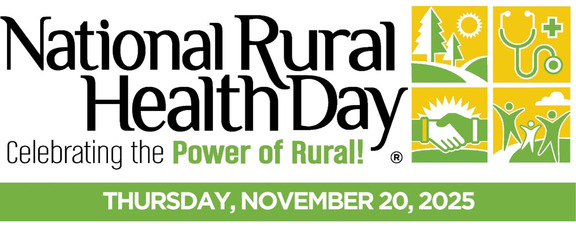
Please plan to join in celebrating the #PowerOfRural on Thursday, November 20, for National Rural Health Day (NRHD) — an annual observance founded to honor the dedication and resilience of rural health professionals, organizations, and communities across the country. National Rural Health Day shines a national spotlight on rural America's unique healthcare challenges, and celebrates the innovative solutions, strong partnerships, and unwavering commitment that help address them.
To help you get started, NOSORH has launched the Power of Rural Social Press Kit with logos, sample posts, graphics, and other resources to support your NRHD outreach.
Explore the kit: 2025 Power of Rural Promotional Toolkit
Learn more and get inspired: powerofrural.org
|