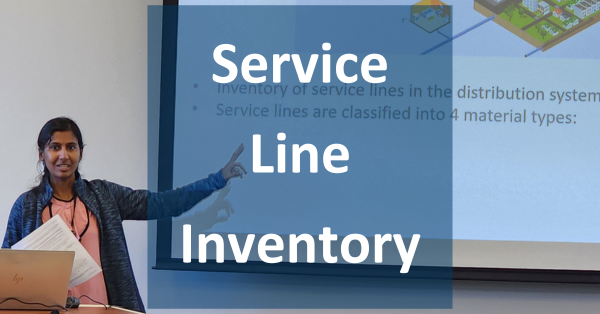
 Deadline to apply for service line inventory technical assistance extended until March 28
The Minnesota Department of Health (MDH) is now accepting applications for the Service Line Inventory Technical Assistance program. This program is intended to help community water systems determine the material type for any remaining unknowns that were reported on the initial service line inventory, using records review and/or in-home visual inspections.
Only a community water system staff member or elected official may complete this application.
Applications must be received by MDH by 4:30 p.m. on Friday, March 28, 2025.
 Summary of updates to 2024 Consumer Confidence Report
Beginning in April, MDH will release the link for your annual consumer confidence reports (CCRs). According to U.S. Environmental Protection Agency (EPA) rule, CCRs must be completed and certified by July 1 of each year. You may notice there are a few changes to this year's CCRs when you are reviewing and providing information.
Changes include:
-
New Service Line Material Inventory section: This section provides a summary of the information that systems provided to the state for the 2024 service line inventory. If you have made updates to your inventory, you may change the dates and update your numbers for lead, galvanized needing replacement, and unknown material. The Lead Inventory Tracking Tool (LITT) may not reflect the updated information until the service line inventory update deadline of Oct. 1, 2025. Systems must include a general description of how the status of lead service lines was determined in each community. Systems with a population greater than 50,000 must also include a link to their inventory information available on their website.
-
Fifth Unregulated Contaminant Monitoring Rule (UCMR5)/Emerging Contaminants data. Per EPA rule, UCMR5/emerging contaminants will be included. PFAS and lithium sampling results will be automatically included. The UCMR5 public notice requirement is met by including results in the CCR.
-
Lead and Copper Rule Revision (LCRR) – Range of detected results column. Per EPA rule, MDH added a column for the range of detected results, which gives the lowest and highest values of lead and copper results for the time period.
The revised CCR rule will impact systems’ work beginning in 2027. Drinking Water Protection is working to review the new rule and will provide updates to systems.
Read more: EPA Fact Sheet Summarizes the details of the Final CCR Rule Revision
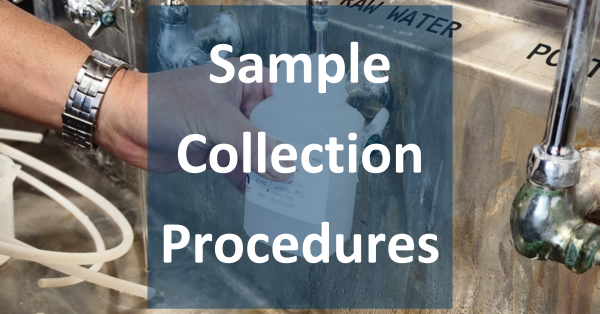 Avoid common sample collection procedure mistakes
Samples can be rejected by the Public Health Lab for a variety of reasons. Avoid these common mistakes to help prevent your system from receiving a violation due to a canceled sample:
- Improper sample collection (air bubbles, expired preservatives, cracked or leaking containers).
- Temperature (samples received either too warm or evidence of freezing).
- Samples received out of hold time.
- Incorrect address on label.
If samples can be re-collected within the compliance period, MDH will re-issue sample bottles and forms. If outside of the sample period, per EPA authority, a public right of information Tier 3 Monitoring and Reporting (M&R) violation must be issued. Tier 3 violations require that public notice is provided within one year of the violation, typically completed by the inclusion in the next consumer confidence report.
Please note: If you are sampling too close to the end of your assigned monitoring period and your sample is compromised, you run the risk of receiving a violation. Any sample that is not submitted on time and successfully analyzed by the lab is subject to an M&R violation.
Read more: Guidance for successful sample submission
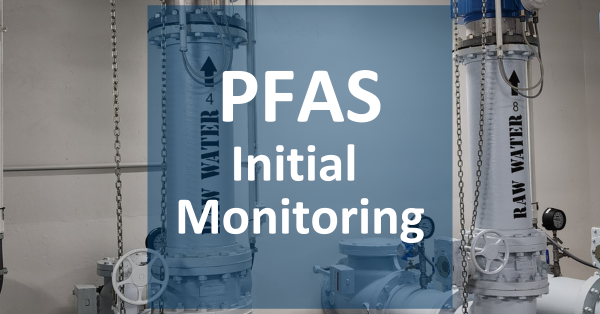 MDH-funded testing continues for PFAS sampling
Most community water systems in Minnesota have already been tested for PFAS, and this testing continues. In February alone, MDH contractor WSP sampled more than 400 systems in Minnesota.
MDH continues to assist community water systems with getting their initial required PFAS monitoring samples completed before the April 10, 2027, deadline. This sampling will determine the baseline monitoring schedule for each system to comply with the PFAS rule. Please be on the lookout for a communication from WSP to schedule a time for your sampling.
|