|
Children and Youth with Special Health Needs News |
|
|
View this as a webpage
Dec. 2024
Save the date!
 |
|
Mark your calendars for the CYSHN Local Public Health Conference, happening , annual event will offer valuable opportunities for learning, networking, and collaboration. Details about the location and registration will be shared soon– stay tuned! |
CYSHN condition follow-up community of practice meetings
Beginning in 2025, the CYSHN section will host regular community of practice meetings for CYSHN condition follow-up program contacts. The purpose of these meetings is to provide routine opportunities for LPH nurses who follow-up on birth defects, early hearing detection and intervention, heritable conditions, and congenital cytomegalovirus cases to learn condition-specific information and discuss nursing practice. All current CYSHN condition follow-up program contacts will receive an invitation via email. Community of practice meetings are optional and virtual.
Community of practice meetings in 2025 will be held from 9 - 10:30 a.m. on Mar. 6 and Sept. 4.
CYSHN condition follow-up assessment data
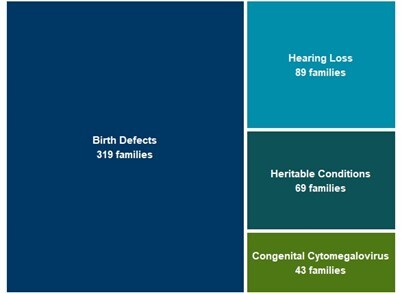
Between January 1 and June 30, 2024, CYSHN condition follow-up staff from local public health completed assessments with 520 Minnesota families, slightly exceeding the number of assessments completed in the same period in 2023.
Of these families, 319 were assessed for birth defects, 89 for hearing loss, 69 for heritable conditions, and 43 for cCMV. This data highlights the essential role that local public health plays in CYSHN condition follow-up, ensuring timely support for families.
|
New onboarding process for CYSHN LPH program contacts
In an effort to improve the onboarding experience for CYSHN LPH programs, a new onboarding process has been developed for both CYSHN condition follow-up and Follow Along Program using a REDCap survey. New LPH program contacts can email health.cyshn@state.mn.us to initiate onboarding. You can find the Onboarding Quick Reference for CYSHN Follow-up Programs on the CYSHN LPH Partner Resources SharePoint.
Program-specific updates
Birth defects monitoring and analysis
Birth Defects Awareness Month
This January, MDH is joining the CDC and national partners in celebrating Birth Defects Awareness Month with the theme “Every Journey Matters.” Help raise awareness, share resources within your communities, and honor each family's unique journey.
Visit CDC’s Birth Defects Awareness Month webpage for more information and a social media toolkit.
|
Longitudinal follow up
Now recruiting families for focus groups!
MDH is working with an outside vendor, RTI International, on a quality improvement project aimed at enhancing the newborn screening system for all Minnesota infants and their families. We are now recruiting families to participate in focus groups. Families with children diagnosed with congenital CMV through newborn screening received a letter in late November inviting them to participate in the focus groups. Letters were sent out in English, Spanish, and Somali. If families have questions, please direct them to the newborn screening propel webpage or email health.cyshn@state.mn.us.
Systems transformation
Webinar: "Introduction to Size Inclusive Pediatric Health"
During this one-hour webinar on Dec. 17 at noon, presenters Selena Salfen and Claire Weiss will discuss how size stigma can harm both physical and mental health. Participants will discover why addressing size stigma is important for providing trauma-informed and patient-centered care for youth. Participants will also receive resources for further learning, tips on creating size inclusive healthcare environments, and a better understanding of how to support people in larger bodies.
Please register for this webinar hosted by the pediatric care coordination: community of practice.
Family support organization collective gathering
The Family Support Organization Collaborative gathering is an opportunity to network with other professionals who support families of children and youth with special health needs and disabilities, learn about resources, and share real life experiences.
On Wednesday, Dec. 18 at 11 a.m., the gathering will focus on engaging families with children and youth with special health needs and disabilities in culturally diverse communities featuring staff from Multicultural Autism Action Network. This nonprofit organization was founded by parents of autistic children from multicultural communities. Their mission is to share knowledge, education, and support to families of children with disabilities in multicultural communities resulting in better outcomes for their kids. They will highlight their work engaging culturally diverse communities, specifically using short cartoons as a tool for communicating with communities that prioritize oral communication over written communication.
Follow Along Program
In July 2023, CYSHN received funding from the Healthy Beginnings, Healthy Families Act to redesign the Follow Along Program. An approach to this redesign includes convening two teams: the community engagement team and community connectors. Recently, in partnership with Minnesota Management and Budget, the two groups completed summary reports of their work in the past year.
For more information about the community engagement team or community connectors, please contact Michele Kvikstad at michele.kvikstad@state.mn.us.
Community engagement team
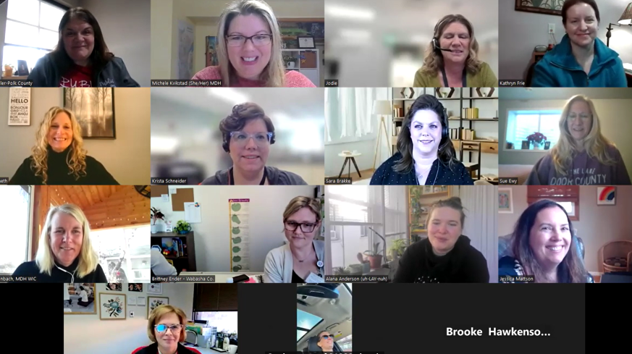
The community engagement team consists of about 30 members who bring diverse languages, cultures, and perspectives to monthly meetings. In their final survey, the community engagement team shared feedback which emphasized the importance of flexibility and individualization during program implementation; improving the administrative and paperwork burden for families of young children through a digital platform / mobile app; and developing other strategies for connecting families with resources.
Community connectors
The community connectors include organizations that represent and serve several cultural groups throughout the state. The members have been successful in identifying some of the challenges families face when trying to access and participate in the Follow Along Program. Some priorities identified include timely communication; use of plain/family language; continued partnerships and increased collaboration with organizations; and better utilization of existing resources. FAP is working closely with local public health teams to create strategies that address these findings.
New invoicing process
Follow Along Program is a part of the CYSHN grant agreement as of Oct. 1, 2024. Invoices will be submitted twice per year and associated with program reporting, in January and July. Invoices will reflect an amount for the general implementation of the program; CHBs will not be expected to submit a budget by category of expense.
> Follow Along Program Toolkit
> Category: FAP General Information
The first invoicing cycle is one quarter, Oct. 1 – Dec. 31, 2024, meaning MDH would anticipate that you invoice for one fourth of the annual amount awarded.
Going forward, invoice cycles will be for six months (e.g. Jan. 1—Jun. 30 and Jul. 1—Dec. 31). We encourage you to invoice every six months (e.g. half the annual award) to coincide with data reporting. If your CHB is not implementing the Follow Along Program for any period, you should not invoice MDH for that period. You can invoice for a portion of the six months or resume invoicing MDH when you begin implementing the program again.
After completing bi-annual data reporting for the program, submit completed invoices via upload to the same survey that is used for data or to health.cyshn@state.mn.us within 30 days. The link to the data / invoice survey and a detailed invoicing calendar will be shared the week of Dec. 9.
On Dec. 17 at 2 p.m., an invoicing office hour will be held. This office hour is intended for financial staff at local public health that may have questions about the new invoicing process for FAP. If you are interested in learning more about the invoicing process, please register to attend.
|
|
|
Resource corner
DHS removes immigration status eligibility requirement for MinnesotaCare
As of Nov. 12, immigration status is no longer a barrier to accessing MinnesotaCare. The Minnesota Department of Human Services officially opened MinnesotaCare to undocumented people living in the state, and applications can be submitted now. Expanded eligibility for these Minnesotans will reduce uninsured rates, increase preventive and early health care use in lieu of emergency room visits, lower costs, decrease uncompensated care, and improve health outcomes.
More information about eligibility requirements is available on the MinnesotaCare webpage.
Refugee and immigrant resources
The early learning services section at the new Department of Children, Youth, and Families recently shared the language resources below for local public health and school personnel who are working to support students and families.
Refugee and immigrant helpline
The Refugee and Immigrant Helpline offers free assistance connecting with local resources, getting referrals to resettlement network services, and answering questions. Assistance is available in 13 languages.
Information for newcomers in Minnesota
The information for newcomers in Minnesota flyer lists phone numbers to find assistance with legal services, food, health, school enrollment, and more. This flyer is available in English, French, Somali, and Spanish. Please note that the web link at the bottom of this flyer is broken. Instead, visit the Minnesota Council on Latino Affairs’ Information for Newcomers webpage for more information.
The state of Minnesota has also recently updated a welcome guide for newcomers available in English and Spanish. It includes important information to help newcomers settle in. For questions about this welcome guide, contact dhs.rpo.outreach@state.mn.us.
|
Children's Minnesota grand rounds sessions
Every Thursday at 8 a.m., Children’s Minnesota hosts a live Zoom grand rounds session for attendees to learn about current topics and trends in pediatrics. If you would like a calendar invite, please email education@childrensmn.org and request to be added to the distribution list.
|
Office of the Foster Youth Ombudsperson advisory board openings
The Advisory Board for the Office of the Foster Youth Ombudsperson will have several seats opening in January 2025. Applications are now open through the Secretary of State’s office. Open seats include roles for:
- Adults formerly in the foster care system.
- Attorney who works in the juvenile court system or family court.
- Nonprofit professional.
- Youth who is currently in the foster care system or was recently in the foster care system.
As part of the founding board, members have a unique opportunity to help shape a new agency. Meetings are held monthly. Board members are compensated for their work.
New pediatric down syndrome clinics opening in Minnesota
The Down Syndrome Association of Minnesota has been actively collaborating with healthcare providers to expand and enhance comprehensive care for individuals with down syndrome. The Children's Down Syndrome Clinic officially opened its doors on Oct. 18 and Gillette's Down Syndrome Clinic opened its doors on Nov. 15. These new clinics, along with M Health Fairview's pediatric clinic, provide high-quality healthcare options for patients with down syndrome.
More information about the clinics including clinic locations, hours, providers, and appointment requests can be found on the Association’s website.
Invoicing
Invoicing is completed according to the following schedule:
|
Date work/training completed
|
Complete documentation by
|
Invoicing month
|
|
Jan. 1 to Mar. 31
|
Mar. 31
|
Apr.
|
|
Apr. 1 to Jun. 30
|
Jun. 30*
|
Jul.*
|
|
Jul. 1 to Sept. 30
|
Sept. 30
|
Oct.
|
|
Oct. 1 to Dec. 31
|
Dec. 31*
|
Jan.*
|
*Follow Along Program invoicing (every 6 months to coincide with data reporting).
MDH job opportunities
|
|
About the CYSHN newsletter
The Children and Youth with Special Health Needs (CYSHN) Section at the Minnesota Department of Health works to achieve public health policies that will provide more positive health outcomes and better serve children and youth with special health needs and their families throughout Minnesota.
As the Child and Family Health Division works to coordinate and collaborate on communication, this newsletter may evolve to include a broader focus but the following CYSHN programs are the primary focus: Birth Defects; Early Hearing Detection and Intervention (EHDI); Heritable Conditions (HC); Congenital Cytomegalovirus (cCMV); Critical Congenital Heart Disease (CCHD); and Follow Along Program (FAP).
|
|
|
|
|