|
View this as a webpage
Aug. 2024
Grief and loss support grant concluded
Star Legacy has been a grantee providing grief and loss support for all infant deaths and stillbirths in Minnesota since 2019. The grant agreement that the Minnesota Department of Health (MDH) has with Star Legacy ended on July 31, 2024. MDH will no longer be asking Star Legacy to do individual follow-up for families experiencing an infant loss or stillbirth.
Another request for proposals is in progress and MDH hopes to be able to continue supporting families who have experienced an infant loss or stillbirth with this funding. Families may still benefit from Star Legacy’s services and local public health staff are encouraged to continue to make referrals to the organization.
Welcome back, Dana!
We are delighted to welcome back Dana, our local public health nurse consultant, who recently returned from parental leave. Dana joined our team just a few months ago and is excited to reconnect with and support our county-level public health staff. Please join us in extending a warm welcome back to Dana as she resumes her role in enhancing public health initiatives across our communities.
Dana will be reaching out to CYSHN key contacts in the coming weeks to meet virtually on Teams. The purpose of these meetings will be to provide introductions and solicit feedback about your experience as a key contact.
Email Dana with any questions at dana.janowiak@state.mn.us.
Birth Defects Monitoring and Analysis
Join a Folic Acid Awareness Week podcast listening session!
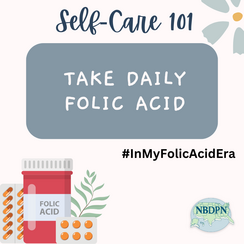
MDH and the National Birth Defects Prevention Network (NBDPN) are hosting a Folic Acid Awareness Week podcast listening session at 2 p.m. on Tues., Sept. 10.
The podcast will be recorded by Mother to Baby and feature Dr. Shannon Clark. Dr. Clark will also be available for a short Q&A as part of the listening session.
Up to 70% of neural tube defects in infants can be prevented by taking folic acid daily before becoming pregnant and during early pregnancy. Since about 40% of all pregnancies in the U.S. are unplanned, CDC recommends that people who may become pregnant take at least 400 mcgs of folic acid each day. Some people only start taking a multivitamin when they get pregnant, but it is important to also take a daily vitamin with 400 mcgs of folic acid before pregnancy to prevent birth defects like spina bifida and anencephaly.
Registration is required for the listening session. A messaging toolkit for Folic Acid Awareness Week is also available on the NBDPN website.
|
Longitudinal Follow Up
September is Sickle Cell Awareness Month!
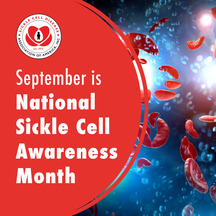
Sickle Cell Awareness Month is held every September to raise awareness and attention for sickle cell disease. The goal is to drive research and treatment options to give those affected by it a better quality of life. Sickle cell disease is the most common inherited blood disorder in the United States and affects approximately 100,000 Americans. In 2023, 20 hemoglobinopathy (sickle cell) referrals were made to local public health through longitudinal follow-up.
Visit the Sickle Cell Awareness Month webpage for information on national awareness efforts and the Sickle Cell Foundation of Minnesota website to learn more about sickle cell disease.
|
Improving the newborn screening system: newborn screening propel
In June 2024, MDH began working with an outside vendor to develop and implement a quality improvement project aimed at enhancing the newborn screening system for all Minnesota infants and their children. They will be conducting focus groups with providers, including local public health, who work with infants identified with congenital cytomegalovirus and their families/caregivers. They will also be conducting focus groups and administering a survey for families and caregivers.
Additional information will be available on the newborn screening propel webpage within the next couple of months.
Preliminary Mental Health Collaboration Hub data is now available
The Mental Health Collaboration Hub (“the hub”) is a statewide virtual networking center aimed at helping children and youth who are boarding in hospitals and emergency departments get connected to safe living and mental health treatment settings. It is a collaborative center where health care and mental health staff, professionals, and providers can coordinate and network with each other while working to reduce the number of children and youth in boarding situations. Funding for the hub’s development is provided by the CFH CYSHN Section through the federal Pediatric Mental Health Care Access Program of the Health Resources and Services Administration.
In a recent press release, preliminary data highlighted the positive impact of the hub on hundreds of children. Initial findings from October 2023 to January 2024 indicate a 55% decrease in the number of days children or youth boarded in a hospital (24 fewer days). Moreover, approximately 80% of youth in the hub’s virtual community were discharged in under 45 days.
Early Childhood Mental Health Consultation opportunity for local public health staff
Early Childhood Mental Health Consultation is a collaboration between MDH and the Department of Human Services (DHS) to provide reflective consultation practice free of charge. The collaboration focuses on helping early childhood providers, such as local public health staff, support caregivers, and parents in promoting healthy social and emotional development in their children.
The service is provided by professionals (consultants) who have training and expertise in early childhood development, early childhood mental health, family systems, consultation, and trauma. The consultants are also attentive to the needs and experiences of diverse communities.
Through a relationship-based approach, consultants address the needs of local public health provider’s needs through reflection and professional development. Consultants aim to help providers feel supported so they can better connect with young children and their families, thereby improving the social and emotional health of all.
Consultation group members co-create a plan with their assigned consultant that will include reflective consultation and additional early childhood mental health learning opportunities.
You are invited to register to participate in an upcoming mental health consultation group.
Follow Along Program
Follow Along Program (FAP) grant and onboarding changes
Follow Along Program grant funding is being moved from the Title V maternal and child health block grant to the CYSHN condition follow up grant agreement. All community health boards (CHBs), except those not currently implementing FAP, will have their CYSHN condition follow-up grant amended to include FAP requirements and funding.
Additionally, we plan to include FAP in the New LPH Contact for CYSHN Follow-up onboarding process. The process is currently used to update and onboard CYSHN key contacts with MDH, including receiving onboarding materials, email notifications, and MEDSS software access. New Follow Along Program staff will be able to complete this same process, except they will receive access to FAP data software instead of MEDSS.
More information about the changes is available on the CYSHN local public health SharePoint site. If you have any questions, open office hours will be available September 4, 2024. You can also email questions to health.cyshn@state.mn.us.
Community Engagement Team opportunity
The community engagement team makes recommendations and provides feedback to inform Follow Along Program updates. We are seeking new members (families and caregivers, community members, and Tribal nations that support young children) to join the community engagement team. As a participant, you would attend, engage, and share perspectives at monthly 2-hour meetings online. You would also participate in activities outside of meetings, such as filling out surveys or providing written input on documents and materials.
A flyer with additional information is available on the FAP SharePoint site. You or any families you serve are able to fill out the survey to indicate your interest.
|