|
View this as a webpage
July 2024
The Minnesota Department of Health (MDH) and the University of Minnesota (UMN) are leading a model jail practices learning community that focuses on improving the quantity and quality of parent-child contact for the children of incarcerated parents to increase child and family wellbeing. The learning community brings together local county jails and community partners to learn best practices, share resources and work to reduce the negative effects of parental incarceration on children and families in their counties. Each quarter, this newsletter will highlight a pillar of project and showcase a success story in Minnesota.
Environmental changes: Improving visitation spaces
An estimated 1 out of 6 youth in Minnesota have an incarcerated parent. Visiting a parent in jail is an essential way for children to maintain and strengthen relationships within their family. Research has also shown that a child visiting has a positive impact on reducing recidivism and improving public safety. The experience, though, can be intimidating or even frightening for children if jails are not thinking about the space from the perspective of a child. Jails can follow some simple best practices to make a visit safe and meaningful.
Evaluate the current secure visiting area
UMN, in partnership with University Extension educators, practitioners, and corrections professionals, created a survey tool to help evaluate entry and meeting areas. It offers a simple way for jail administrators to view their information and facilities for families in a different way. Some examples of questions:
- Are visiting hours and the process for visiting easy to find on the website?
- Is it easy to find the visiting space in the facility?
- Are there dedicated spaces for children (smaller chairs)?
- Are there books or toys available in the visiting room?
Consider changes
Based on the results of the survey, prioritize changes. Some efforts, like providing a variety of children’s books, are relatively simple. Others, like moving a secure doorway, may need to occur when other capital improvements are happening at a facility. Let the observations guide conversation on improving the visiting experience and reducing stress and confusion for children and families affected by incarceration.
While jails and prisons must be primarily concerned with safety and security, taking steps to support family visitors can have positive consequences for correctional facilities, including more positive interactions between staff and visitors, and inmates and staff.
Renville County Jail is a 72-bed facility in Olivia, Minnesota, with limited jail space and no room is left unused. To begin their transformation, Renville County Jail started out with UMN's environmental surveys to assess their current situation. Jail Administrator Ned Wohlman knew it would be a challenge to create a family-friendly visitation space, but he and his staff were driven to do what is right for the children.
Renville had been discussing this type of project for years as they have worked hard to provide a unique approach to family visits since they opened the jail in 2008. The addition of Community Re-entry Specialist Coury Popowski and involvement in MDH’s model jail practices learning community provided the final catalyst to build a plan. The biggest obstacle for Renville is a common one for most jails: assessing the very limited number of possible spaces for a secure family visiting room.
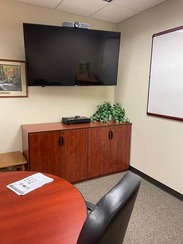
A small conference room was selected. Adding an entirely new secure entrance was cost prohibitive and would have delayed the project for quite some time. Instead, they repurposed the existing secure public entrance which changed from a one-way secure door, a door you could go out of but not in, to a total secure door which requires the dispatch center to activate. With this change, the conference room adjacent to this entrance became a secure setting for family friendly visitation.
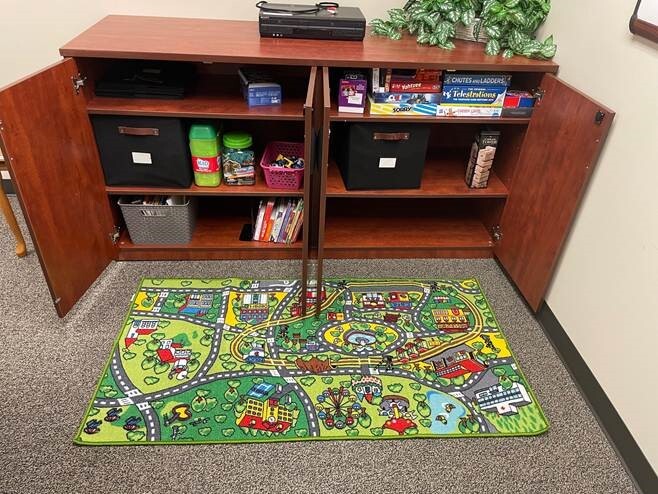
Only a handful of room furnishing were needed, including cabinets and chairs. Wohlman describes the family visitation room as “a very non-jail like setting,” yet completely safe and secure without having a uniformed officer present. The new space allows for visits with youth and provides enough space for younger children to play.
|
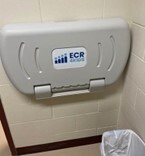
Accommodations for families have also extended into the public bathroom spaces, offering a baby changing station.
Wohlman and Popowski noted that unless a facility is building a new building, jails need to determine the ideal location and functionality of the space, create a budget, and then just do it!
Though the impact of a family-friendly visiting space is difficult to gauge immediately, Wohlman is sure it will make a difference. It’s the kids that will decide if this is a good value. He has heard firsthand from 25-year-olds from the community about the power of jail visits they experienced when they were children of incarcerated parents. A family-friendly space can only help to restore families and relationships.
Of the 14 participating county jail partners in the model jail practices learning community, 11 have completed the environmental scan and are beginning to implement select environmental changes.
|
|