|
Minnesota Partnership for Adolescent and Young Adult Health |
|
|
View this as a webpage
June 2024
 Minnesota Partnership for Adolescent and Young Adult Health (MNPAH) created an action plan to guide adolescent and young adult health in Minnesota. This collaboratively developed plan was created to motivate, engage, and inspire action. It recognizes the important contributions and amazing ideas that exist across our great state. Each month this newsletter will highlight a priority from the plan and showcase an adolescent health partner in Minnesota.
In this edition
All young people and their families deserve the freedom to thrive and the supports to pursue their healthiest lives. Yet these opportunities are not equally available to everyone. This newsletter focuses on our priority to create health equity.
MNPAH recognizes the role that structural racism and bias play in health disparities. We embrace the challenge of eliminating personal and structural bias through systems reform while honoring the strengths and assets young people bring to our collective efforts.
The resources, experiences, and opportunities we provide to young people must be consistent regardless of:
- Their race, ethnicity, culture, or faith.
- The place they live.
- The economic status and health of their family.
- Their sexual orientation or gender identity.
- Their placement in a justice, foster care, or health care system.
- Their immigration status.
Disparities in Minnesota are among some of the highest in the country. The goal of this priority is to recognize the impact of structural racism and bias and to expand partnerships – in both systems and communities. Action steps propose adopting a health in all policy lens, changes to our systems that eliminate bias, reforms our work, and diversify our professional community.
Action Steps
- Intentionally recognize and address populations who are marginalized when planning any youth-focused program or policy.
- Support and promote the unique strengths, assets, and social capital of every community.
- Adopt a Health in All Policy perspective, which incorporates health considerations into decision making across sectors and policy areas affecting young people.
- Recognize and address both individual bias and racism as well as structural bias and racism in public health (and all) systems.
- Ensure staff, decision makers and leadership reflect and represent populations served.
- Ensure that basic needs and social environmental factors that negatively impact the health of young people (shelter, food security, safety, education, livable wages, and transportation) are met and promote protective factors that lead to positive health outcomes.
- Use trauma-informed care strategies to provide effective care and support when working with young people and their families.
The MNPAH equitable and supportive systems webpage has Minnesota-specific resources with program examples and guides to get started.
|
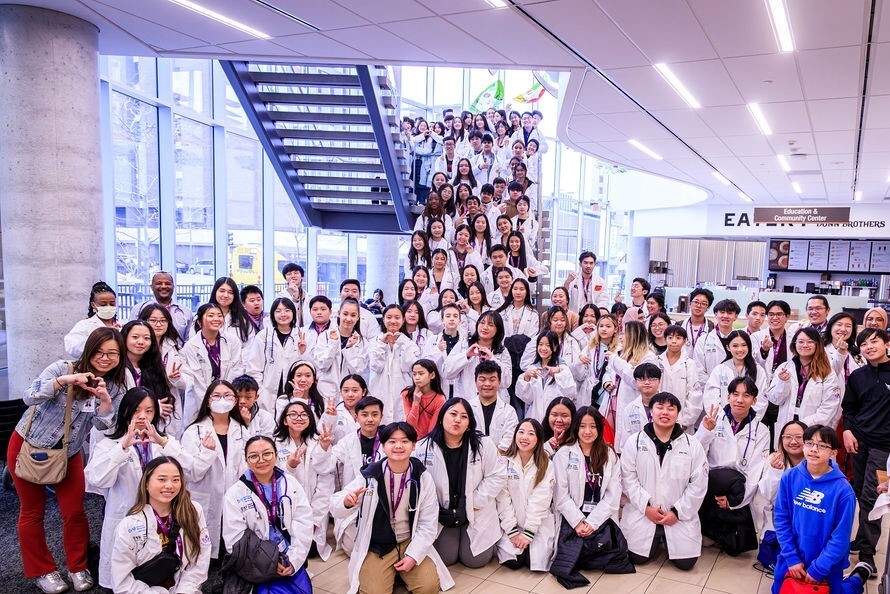 The best careers in healthcare are within reach for today’s 12–18-year-old students. That is the core message and the purpose of the Hennepin Healthcare Talent Garden.
This philanthropically funded program is a collaboration between Hennepin Healthcare, local schools, parents, volunteers, medical and nursing students, and donors. The Talent Garden provides experiences, information, and contacts to young people from historically underrepresented groups who are interested in careers as physicians, dentists, nurses, and advanced practice providers.
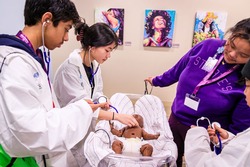
Four times per school year, the Talent Garden hosts a Saturday Youth Summit for middle and high school students with an interest in these careers. At each event, a hundred young people will have an opportunity to meet with a panel of medical professionals, plus try their hand at real tools and techniques of healthcare. Practicing a simulated blood draw, trying CPR, operating an ultrasound, performing simulated dental procedures are some of the activities at these events.
Attending a Youth Summit qualifies high school juniors and seniors to apply for a Talent Garden Summer Internship. These unique, six-week paid internships provide college-bound youth with 11 days of EMS training and 12 days of shadowing medical professionals, along with a wealth of experiences and contacts.
|
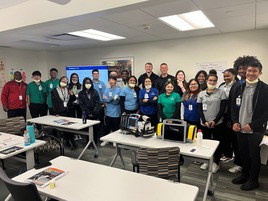
To learn more, view a short video about Talent Garden’s Internship program and find youth summit dates and registration links.
If you are interested in volunteering or would like to know more about the summer internship program, write Hennepin Healthcare at TalentGarden@hcmed.org.
|
June is Pride Month: Amazing.org LGBTQ educator toolkit
Pride month is a time for LGBTQ+ folks to gather and celebrate their freedom to live authentically. The LGBTQ+ community deserve affirmed, safe, supported, joyful, and healthy lives. Youth-serving professionals can support all youth this pride month and beyond by learning more about gender and sexuality and sharing resources with their students. Amaze.org features a LGBTQ Toolkit for educators to support conversations about gender, family life, sexual health and more.
Celebrating Juneteenth
“Juneteenth is an important opportunity for communities across the state and nation to celebrate freedom, recognize the history and contributions of Black Americans, and recommit to building a more just and equitable society for everyone,” said Governor Walz when he proclaimed the state holiday. This year, the University of Minnesota (UMN) presents the third annual Juneteenth Celebration and Commemorative March: We are the Noise: The Echoes of Our Ancestors. Find additional Juneteenth events across Minnesota on the UMN website.
Juneteenth marks the revelation the enslaved people of Texas had that they were free. Juneteenth is the day they truly learned that slavery had been abolished, and they had been declared free for over two years. The announcement on June 19, 1865, came over two years after President Abraham Lincoln's Emancipation Proclamation went into effect in 1863, and two months after General Lee's surrender in April 1865.
|
|
Minnesota Health Equity Networks Training: Minnesota Demographics
Join the Minnesota Health Equity Networks on June 6 from 10 - 11:30 a.m. for a training on Minnesota Demographics. Have you ever wished you knew more about state demographics and the ways you can access the data you need? Minnesota State Demographer Susan Brower will help explain statewide demographic trends and how demographic shifts bring about new social and economic realities. She will also share how to get specific data needed for grant applications, presentations, and reports that will better explain and illustrate the population intersections that affect your communities. The presentation will include information on helpful links and resources and an opportunity to get your questions about state population data answered. Don’t miss this valuable training!
Date: Thurs., June 6
Time: 10 – 11:30 a.m.
Registration link
TALK: Toolkit for Adolescent Care - June Learning Series
Join the Minnesota Department of Health (MDH) for a professional development series in partnership with the Healthy Youth Development - Prevention Research Center, developers of the TALK: Toolkit for Adolescent Care. TALK helps primary care providers give their adolescent patients high quality preventive care through good communication about psychosocial and sexual health topics. This 4-part lunch and learn series helps providers start and sustain friendly conversation with teens and their families using Motivational Interviewing skills and evidence-based TALK guides developed at UMN's HYD - PRC.
Questions? Contact Jill Farris at farrisj@umn.edu. Certificates of attendance will be available for participants to file with their accrediting agency. *This training is restricted to professionals that live or practice in Minnesota.
Audience: Providers, PHN, RN, and clinical staff, and others associated with adolescent care. Must be a Minnesota resident or practice in Minnesota.
Date: June 7, 14, 21 & 28, 2024
Time: Noon – 1 p.m.
Registration link
|
What’s new with youth in 2024? The state of adolescent sexual health in Minnesota
Sponsored by: University of Minnesota Healthy Youth Development - Prevention Research Center
Understanding current adolescent sexual health data and statistics is an essential part of our work as professionals. In these sessions, participants will review the most current statistics on the sexual health of Minnesota youth, including pregnancy, birth and STI statistics, trends in adolescent pregnancy and sexual behaviors, and how Minnesota measures up regionally and nationally. We'll also examine Minnesota Student Survey data on trading sex and sexual exploitation, and closely examine health disparities among the young people in Minnesota.
In Person
Date: Tuesday, June 11
Time: 9 a.m. – noon
Location: Robert J. Jones Urban Research and Outreach-Engagement Center (UROC), 2001 Plymouth Ave N, Minneapolis, MN 55411
Registration link (in person)
Webinar
Date: Thursday, June 13
Time: 10 – 11:30 a.m.
Registration link (virtual)
2024 Gillette Children's Pediatric to Adult Health Care Transition Summit
The Transition Summit brings together leading experts, stakeholders, healthcare professionals, and others to share best practices, exchange knowledge, and drive advancement in the field of health care transition for youth with special health needs.
Date: Thurs., June 13
Time: 8:15 a.m. - 4:45 p.m.
Location: Hybrid/Holiday Inn & Suites, St. Cloud, MN
Registration link
2024 Summer Institute in Adolescent Health: Cultivating Adolescent Well-being in the Digital Age
The 2024 Summer Institute in Adolescent Health explores adolescent well-being in the digital age.
Date: Mon., July 22 – Wed., July 24
Time: 9 a.m. - 4 p.m.
Location: Como Zoo and Conservatory, St. Paul, MN
Registration link
|
|
Youth suicide prevention learning collaborative grant request for proposals due June 7
MDH is requesting proposals from organization to develop effective systems for identifying and responding to youth with a potential mental health concern or suicide risk, and connecting youth to the most appropriate services and supports as early as possible. The lead organization will do this by creating a mental health referral pathway to care, a series of actions or steps taken after identifying a youth with a potential mental health issue. Grantees and community partners will assess and build community capacity to identify gaps in services ensure more seamless access to mental health supports for youth and their families. To learn more about this opportunity, visit the Youth Suicide Prevention Learning Collaborative Request for Proposals webpage.
|
|
The Minnesota Partnership for Adolescent and Young Adult Health
This collaboratively developed plan was designed to support community-based efforts – whether led by health systems, youth-serving organizations, or young people – with a unifying vision, and collectively agreed-upon priorities to motivate, engage, and inspire action. If your agency has a program that you would like featured or an event or resource you’d like to share with this network, please send it to us at Health.AdolescentHealth@state.mn.us.
|
|
|
|
|
|