|
Children and Youth with Special Health Needs News |
|
|
View this as a webpage
Thank you, local public health partners, for your continued collaboration and work to improve health outcomes for children and youth with special health needs throughout the state of Minnesota.
The purpose of this quarterly newsletter is to bring together information for our partners in local public health in one centralized location. Please look for our next quarterly newsletter in June 2024 or visit the CYSHN LPH Partner Resources SharePoint webpage for previous newsletters.
Registration for the Local Public Health conference is now open!
The conference will start at 11:30 a.m. on Thursday, May 2 and conclude by 12:30 p.m. on Friday, May 3, at Breezy Point Resort in Breezy Point, MN. This event presents an invaluable opportunity for local and tribal public health staff that support of birth defects monitoring, newborn screening conditions, and the Follow Along program to collaborate, learn, and connect.
Take a moment to register for the conference before April 18. Please only register once. You will receive a confirmation email upon registering. There is no registration fee, and MDH will cover food and lodging for up to three staff per county. We recommend that one key contact, one Follow Along program contact, and another staff member involved with children and youth with special health needs programming attend.
A draft schedule and additional details will be available on the CYSHN LPH Partner Resources SharePoint webpage soon. Thank you for your continued partnership and dedication to children and youth with special health needs.
|
Pre-register for a book study breakout session
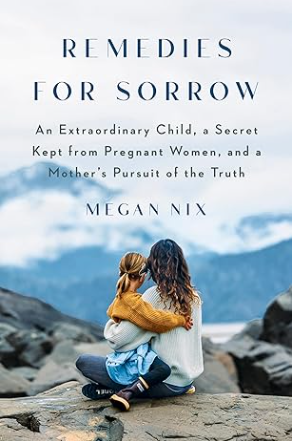
On May 3, during the CYSHN Local Public Health Conference, a book study breakout session will be offered at 8 a.m. Attendees who choose to attend this breakout study will have the opportunity to reflect on and discuss Remedies for Sorrow by Megan Nix. This book is a memoir about a mother’s love for her daughter with congenital CMV and her journey to break the silence about this risk to pregnant people.
To participate in this session, you will need to read the book prior to attending. Copies of the book will be loaned to 24 registrants at no cost, but you are also welcome to use your own copy. You can sign up to participate in this session and choose to have the book mailed to you as part of the conference registration form.
|
MEDSS/LPH assessment wizard change
After adoption is complete, the birth mother's information becomes confidential.
When we know that a child has been adopted or a surrogate was used, the birth mother’s name will no longer be visible in the local public health assessment wizard. Please continue to use the information in the “Secondary Contact Information” section to reach out to the family. You can let us know of an adoption by using the local public health critical update check box.
Program-specific Updates
Birth Defects Monitoring and Analysis
CHSTRONG KIDS survey mailing to begin
The CHSTRONG KIDS survey is being sent to Minnesota families of children with congenital heart defects (CHDs). CHSTRONG stands for "Congenital Heart Survey To Recognize Outcomes, Needs, and well-beinG." The survey, based on a similar survey of adults born with CHD, has been created by CDC in partnership with MDH, the Massachusetts Department of Health, and the Boston University School of Public Health. It asks questions about both the caregiver and the child born with CHD regarding their healthcare use, education, social experiences, and quality of life.
The survey should take about 20 minutes to complete. As a thank you, we send each family a $5 gift card to keep whether or not they complete the survey. If they send us their completed survey, we will send another $20 gift card.
We are asking families that receive a survey in the mail to please consider filling it out. However, responses are not required. Learn more about the survey on the CHSTRONG KIDS survey webpage.
|
Longitudinal Follow Up
Duchenne muscular dystrophy approved for newborn screening
Minnesota Commissioner of Health Dr. Brooke Cunningham approved the addition of Duchenne muscular dystrophy (DMD) to the Minnesota Newborn Screening panel. A recent MDH press release states that screening for DMD among newborns allows families and medical specialists to tailor care based on approved treatments available for children at certain ages. Based on the birth rate in Minnesota, it is estimated that nine newborns will be detected each year and receive early treatment and intervention.
Public Health Lab begins Krabbe disease screening
Krabbe disease is a rare, genetic condition in which the newborn cannot fully break down certain fats. There is no cure for Krabbe disease, but treatment can help manage symptoms and improve quality of life. Currently, the only treatment is a stem cell transplant, which is ideally performed before a baby identified with infantile Krabbe disease is 30 days old.
Based on the birthrate in Minnesota, it is estimated that up to one newborn may be detected every 1-2 years. If you have questions or need additional information about any of the CYSHN follow-up conditions, please email health.cyshn@state.mn.us or call
651-201-3650.
Congenital CMV webinar recordings now available
Recordings of both “All Hands on Deck! Supporting the Development of Children with Congenital CMV” and “All Aboard! Impacts of Congenital CMV in Early Childhood Special Education in Minnesota” are now available.
The webinars were developed in partnership with Minnesota Low Incidence Projects and are designed for Minnesota practitioners and other professionals working with and supporting children and their families, especially in educational/childcare settings.
|
Follow Along Program
Community Connector grant update
The Follow Along Program has successfully finalized contracts with eight community connector organizations as part of the Follow Along program redesign.
New funds from the MN Legislature are driving the development of culturally and linguistically inclusive resources and strategies for families participating in the program. Each community connector organization is dedicated to providing these essential resources to families with young children and increasing navigation support of the Follow Along program.
Participating organizations will meet in a community of learning regularly between March 2024 and June 2025, the end of the grant period.
Autism spectrum disorder professional development series
With a grant from CDC, the MN Act Early team from the University of Minnesota is planning a monthly professional development series in collaboration with the MDH Follow Along Program. The goal of this series is to support early developmental monitoring, developmental screening, early signs of autism spectrum disorder, provide connections to resources, and identification of developmental disabilities in young children (birth to age 5).
Sessions will typically take place on the first Monday of each month from 2 – 3 p.m. Please register in advance for these meetings.
|
|
|
Resource Corner
New Help Me Connect provider stories
Learn from local early childhood navigators as they share about their work supporting families with young children and using Help Me Connect as a tool to find state and local programs in their communities. Three new videos highlight the relationship between a trusted professional and a parent/guardian as a key component to supporting families and their connections to services.
Toxic Free Kids program
Through the Toxic Free Kids program, MDH is working to identify and communicate the potential for hazardous chemical exposures which could be harmful to human health, particularly to vulnerable or susceptible populations, such as children and pregnant women. This program works on updating lists of chemicals of high concern and priority chemicals established by Minnesota statute 116.9401. This program also coordinates community outreach and engagement activities to educate the public, vulnerable and susceptible populations about chemical exposures and potential for negative health effects.
Minnesota Thrives mental health resources
Creating thriving communities takes everyone. Despite our connected world, silos and information gaps remain. MN Thrives is a database of Minnesota well-being and resilience initiatives. MN Thrives can be a valuable resource to help spread strategies across communities.
Transition framework tool
Developed by E1MN and transition leaders statewide, Minnesota’s new transition framework defines high-quality transition programming for youth with disabilities and those who support them.
The Transition/Pre-ETS Inventory is a tool that can completed with youth, family, and other support team members. It allows for the identification and prioritization of the youth’s strengths and needs, and which learning stage or stages they are at within each of the Transition/Pre-ETS topics.
Each topic in the inventory is located under that same topic in the ‘support youth’ section of the Youth in Transition toolkit where professionals can learn more information about the topic and get ideas for activities to do with the youth related to that topic.
2022 National Survey of Children's Health data
The 2022 National Survey of Children’s Health (NSCH) data brief features the prevalence and measurement of the newly finalized National Outcome Measure on ‘Healthy and Ready to Learn.’ The NSCH provides the only national and state-level measure of young children’s readiness to start kindergarten within the context of influential health, behavioral, family, and community-level factors.
Additional Learning Resources:
Invoicing
CYSHN follow-up invoicing is completed according to the following schedule:
Date Work/Training Completed
|
Complete Documentation by
|
|
|
|
|
|
|
|
|
|
|
|
|
|
|
|
|
|
Follow Along Program Title V invoicing information is available on the Title V MCH block grantee information webpage.
|
|
About the CYSHN Newsletter
The Children and Youth with Special Health Needs (CYSHN) Section at the Minnesota Department of Health (MDH) works to achieve public health policies that will provide more positive health outcomes and better serve children and youth with special health needs and their families throughout Minnesota.
As the Child and Family Health (CFH) Division works to coordinate and collaborate on communication, this newsletter may evolve to include a broader focus but will begin with these CYSHN programs as the primary focus: Birth Defects; Early Hearing Detection and Intervention (EHDI); Heritable Conditions (HC); Congenital Cytomegalovirus (cCMV); Critical Congenital Heart Disease (CCHD); and Follow Along Program (FAP).
The CYSHN Local Public Health Conference is supported by the Health Resources and Services Administration (HRSA) of the U.S. Department of Health and Human Services (HHS) as part of an award totaling $369,000 with 0% financed with non-governmental sources. The contents are those of the author(s) and do not necessarily represent the official views of, nor an endorsement, by HRSA, HHS, or the U.S. Government. For more information, please visit HRSA.gov.
|
|
|
|
|