Overdose Prevention Resources
Naloxone Portal
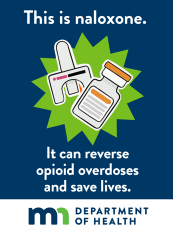
In the 2023 legislative session, the Minnesota Legislature mandated the carrying of naloxone, an opioid antagonist that reverses opioid overdoses, by select groups in the state. The naloxone portal aims to increase naloxone access through these groups as an intervention to prevent opioid overdose deaths in Minnesota.
Mandated groups:
- Schools
- Corrections
- Law Enforcement
- Substance Use Disorder Treatment Programs
- Sober homes
The groups listed above are encouraged to sign up for the naloxone portal if they have not already.
|
|
 |
LPH Settlement Guide Updates
MDH has recently updated the LPH Settlement Guide webpage. This resource was developed to be a resource for local public health as they convene stakeholders around settlement fund decisions and implement strategies to lessen the harms of the overdose epidemic. Minnesota has the chance to use settlement funds to save lives and prevent lifelong harms from drug misuse. To do this, settlement funds should be spent on effective interventions that are based on evidence. Settlement funds present a critical opportunity to work in synergy with other available resources. Maximizing the impact of the settlement funds will require coordination and thoughtful utilization.
Featured Resource: This Health Equity Checklist (PDF), developed by NACCHO and the Legal Action Center, provides health equity considerations for local health departments as they guide their community in deciding how to spend settlement funds. While Minnesota has one of the lowest overall overdose mortality rates in the country, it has some of the highest race rate disparities in overdose mortality. This indicates the importance for communities to take a health equity approach to spending opioid settlement funds. To learn more about race rate disparities in Minnesota, visit Differences in Rates of Drug Overdose Deaths by Race - MN Dept. of Health (state.mn.us)
MDH plans on updating this webpage continually with new resources and content. If there are additional resources you would like to see related to opioid settlement funding, please let us know at health.drugodprev@state.mn.us.
What should communities know about drug checking?
New Minnesota laws established in the 2023 legislative session include the legalization of drug checking equipment. Drug checking is an evidence-informed harm reduction strategy in which a small sample of drugs or residue is analyzed using various drug testing technologies to identify chemical components in the sample.
-
Drug checking programs fill a gap in our existing knowledge of the overdose crisis by providing data that can serve as an “early warning system”. Providing community drug checking data to public health, public safety, healthcare, and harm reduction agencies helps them identify and respond to emerging threats in ever-changing local drug supplies.
-
The goal of drug checking is never to guarantee the safety of a substance. Drug checking gives people information to make better choices to reduce their overdose risk.
New Cannabis Resources
Explore MDH’s new online resources about the health effects of cannabis. The “Cannabis and Your Health” webpage provides information on reducing potential harms from cannabis use. Additionally, view the updated “Preventing Unintentional Poisonings from Cannabis Products” page to learn more about safe storage and what to do when someone consumes too much THC or reacts badly to a cannabis product.
MDH efforts will focus on cannabis use prevention, and recovery. Funding will also support education and awareness around adverse health effects of cannabis use, with a focus on youth and people who are pregnant, may become pregnant, or are breastfeeding. Additionally, MDH will support training for the Family Home Visiting program and provide grants to local and tribal public health for educational materials, prevention efforts, harm reduction, and community engagement.
New report on gender affirming care available
The Minnesota Department of Health has released the Gender Affirming Care Report (PDF). The report was prepared as part of Governor Walz’s Executive Order to protect the rights of Minnesota’s LGBTQIA+ community.
Gender affirming care is a process that aims to improve well-being in transgender and gender-diverse people by aligning a person’s physical characteristics with their gender identity through a variety of treatments. This type of care is associated with improved physical and mental health outcomes, which is especially important because transgender and gender-diverse adults experience health disparities when it comes mental health and substance use.
|