Resource
COVID-19 community levels and when to wear a mask
As COVID-19 continues to spread in our communities, it can be helpful to review COVID-19 prevention recommendations.
Because of how the virus spreads, wearing a mask continues to be an important way to prevent infection. Wearing a mask may also prevent the spread of other respiratory infections, such as flu (influenza).
When the CDC: COVID-19 community level is high, everyone should wear a mask in indoor public settings.
When the COVID-19 community level in your county is medium or low, the decision to wear a mask should be based on the following considerations:
-
Personal risk factors and health conditions. If you are immunocompromised or at high risk for severe disease from COVID-19, when the CDC community level is medium you should wear a mask indoors in public and may want to consider wearing a mask in crowded outdoor settings. You should also consider wearing a mask even when the community level is low. You may want to ask your health care provider for advice on when to wear a mask and any additional COVID-19 precautions you should take.
-
Risk factors of others around you. If you live or frequently interact with someone who is immunocompromised or at high risk for severe disease from COVID-19, consider wearing a mask around them, regardless of the COVID-19 community level.
-
Settings where people at increased risk gather. People in settings where those at increased risk of severe illness gather should consider wearing masks, regardless of the CDC COVID-19 community level, especially if the setting is crowded.
-
Vaccination status. If you are not vaccinated, especially if you do not have a history of prior COVID-19 infection, consider wearing a mask in public indoor settings, regardless of the community level.
-
Personal preference. You may choose to wear a mask at any time based on your personal preference, even if others around you are not wearing masks or the CDC COVID-19 community level in your area is medium or low.
Using This Resource
- If a client is at high risk for severe disease from COVID-19 because of an existing condition or their age, ask if they know how to look up the CDC COVID-19 Community level for their county. If not, offer to show them how. Explain that knowing their community level can help them make informed decisions about increasing their protection from COVID-19.
- Ask clients if they feel comfortable wearing a mask in public. Having that conversation can be a way to remind them that masking remains a good option for protecting their community members, especially those at risk for severe illness.
- To find a list of factors that may put someone at higher risk for severe illness from COVID-19, visit CDC: People with Certain Medical Conditions.
- Learn more about types of masks you can wear for better protection at Masks: COVID-19.
For additional information on COVID-19 protection like what to do if you are exposed to someone with COVID-19 or if you test positive, see Protect Yourself and Others.
Mask guidance for shelter providers
CDC Guidance on Management of COVID-19 in Homeless Service Sites recommends shelters always offer high-quality masks/respirators to all residents and staff as a strategy for everyday operations.
When COVID-19 community levels are high or when facility-specific risk is high (e.g., COVID-19 is spreading in the facility), universal indoor masking is recommended, regardless of vaccination status.
If your shelter needs more PPE (e.g., masks, gloves), contact the MDH Highly Impacted Settings Team at Health.R-congregate@state.mn.us.
Vaccine Uptake
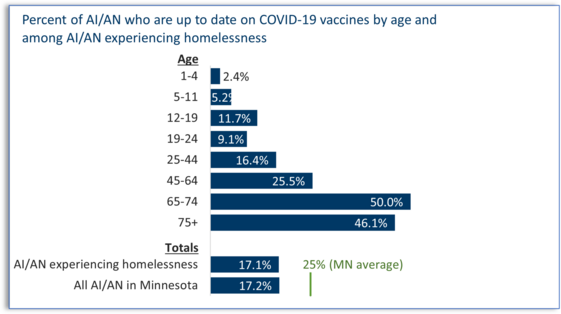
The chart below reflects current reported vaccination rates for people in Minnesota who identify as American Indian or Alaska Native (AI/AN) who are up to date on COVID-19 vaccines (17.2%) and for AI/AN experiencing homelessness who are up to date on COVID-19 vaccines (17.1%).
The green line at the bottom of the chart reflects the statewide rate for all Minnesotans who are up to date on COVID-19 vaccines (25%).
The rates below for AI/AN who are up to date on COVID-19 vaccines are both lower than the current statewide average for Minnesotans up to date.
For details on the COVID-19 vaccine data above as well as more COVID-19 vaccination data for Minnesota, visit the COVID-19 Vaccine Data Situation Update.
For national vaccine data by race and ethnicity, visit the Centers for Disease Control and Prevention (CDC) COVID Data Tracker.
Everyone age 6 months and older should get an updated (bivalent) booster when they are due! COVID-19 vaccines continue to work very well at reducing the risk of severe illness, hospitalization, and death, but data suggest that protection against COVID-19 infection becomes less over time.
A booster shot is given when protection from the original vaccination begins to decrease. This additional dose of vaccine can help get protection back up to a higher level.
Host a vaccine clinic
Request a vaccination event through MDH by submitting the COVID-19 Vaccination Request Form for Congregate Settings. The form is open for use by staff at congregate settings, such as shelters, transitional and supportive housing facilities, and day centers, as well as food shelves and outreach programs.
COVID-19 Recovery Initiatives
Renewing Medical Assistance and MinnesotaCare
Medical Assistance and MinnesotaCare renewals were paused during the pandemic to help Minnesotans access care during a global pandemic and maintain high insurance coverage rates in the state.
According to federal law, a renewal process will be restarted, and people must have their eligibility reviewed once a year to ensure they still qualify for these programs.
That means one in four Minnesotans will need to have their eligibility for their public health insurance reviewed to ensure they can keep the coverage. They must complete the renewal process to keep their insurance and avoid gaps in coverage.
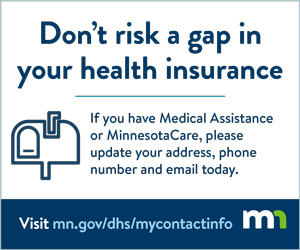
Since the renewal process is paper-based and relies on postal mail, it is critical for enrollees to update their contact information, including their phone number, email, and home address, if they have moved in the last three years.
Request for Proposal
Community-Based Organizations serving students experiencing homelessness
The Minnesota Department of Education (MDE) invites applicants to apply for a grant opportunity through the American Rescue Plan: Homeless Children and Youth Act. This grant program is for Community-Based Organizations (CBOs) serving students experiencing homelessness in partnership with public school districts and charter schools. Grant funds support wraparound services to prevent and end homelessness to:
- Increase outreach and identification of children and youth experiencing homelessness as defined above and who have been impacted by COVID-19 and/or have chronic absenteeism and/or are at risk of dropping out.
- Provide homeless children and youth with wraparound services in light of the challenges of the COVID-19 pandemic, including academic supports, trauma informed care, social-emotional support, and mental health services.
- Assist in addressing the needs of children and youth experiencing homelessness to enable their enrollment and attendance in school and full participation in school activities.
Applicants must demonstrate a successful history of working directly with public school districts and charter schools. For application materials and more information, visit the MDE Request for Proposals webpage. If you have questions about this grant, contact program specialist Leigh.Schleicher@state.mn.us or call Leigh at 651-582-8326.
Applications are due April 21, 2023 by 5:00 pm Central Time.
|