Interaction of water activity and pH
It is sometimes hard to know which food products and ingredients in your retail food establishment are TCS foods. We can use the detailed definition in Minnesota food code that went into effect on Jan. 1 to help identify TCS foods. The definition of TCS food is based on:
- pH, a measure of acidity or alkalinity
- Water activity (aw)
- Interaction of pH and aw
- Heat treatment
- Packaging
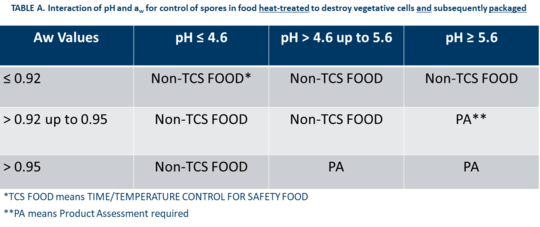
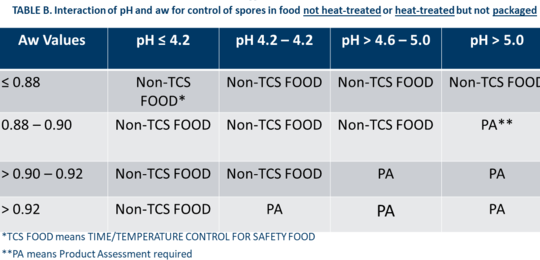
Table A and Table B, which are part of the definition, show if a food is TCS based on the interaction of pH and water activity (aw). For foods with certain combinations of pH and water activity, we need more information to make the call. In those cases, you need to send a sample of the food to a testing lab. This is called a "product assessment."
Table A is used for foods that have been packaged after receiving a heat treatment. Based on a food's pH and water activity (aw), the food is designated as TCS food, non-TCS food, or in need of product assessment to make the determination.
Table B is used for foods that have not received a heat treatment, or that have been packaged after receiving a heat treatment. Based on a food's pH and water activity (aw), the food is designated as TCS food, non-TCS food, or in need of product assessment to make the determination.
Control time and temperature to keep TCS foods safe
When you know which of the food products or ingredients in your establishment are TCS foods, the persons in charge and employees can keep them safe by controlling both the time and temperature.
You can control time through:
- Cold holding ready-to-eat TCS food no longer than seven days.
- Cooling TCS food quickly.
- Reheating TCS food quickly.
You can control temperature by keeping TCS food out of the temperature danger zone. The temperature danger zone is the temperature range in which disease causing bacteria grow best in TCS food.
- The temperature danger zone is between 41°F and 135°F.
- TCS food must pass through the temperature danger zone as quickly as possible when being cooled or reheated.
- Keep hot food hot (135°F or above) and cold food cold (41°or below). Always use a thermometer to check internal food temperatures.
Review your menu and food flows
When you consider adding new items to your menu or changing how you make your food, think about whether you are working with TCS food. Identify what foods might be TCS foods and what steps you will take to keep the TCS foods safe.
Common examples of TCS foods include:
- Eggs, milk, meat or poultry.
- Cooked rice, potatoes and pasta.
- Raw seed sprouts, cut melons, cut tomatoes and cut leafy greens.
- Mixtures including cut tomatoes or garlic-in-oil, unless modified to prevent growth of disease-causing bacteria or formation of toxins.
If you are not sure if a food is a TCS food, a safe starting point is to handle it as if it is TCS.
If you want to make a product, such as salsa or salad dressing, in-house, you may need a product assessment in order to determine if it is a TCS food. Talk with your inspector to help decide if product assessment is necessary.
Learn more about TCS food
|