PWDU-FSP Update June 27, 2019

MDH logo

Partnership and Workforce Development – Food Safety Partnership Update

View this as a webpage

View past Updates via RSS Feed

June 27, 2019

Note from the Editor

Food Safety Partnership of Minnesota

During the Food Safety Partnership of Minnesota meeting on March 13, we answered questions about new or changed food safety requirements for retail food establishments. Topics ranged from Employee Health to Wild Mushroom Harvester, and we are following up with detailed guidance and additional resources. Several questions also touched on specific food products, including the popular fermented tea beverage, kombucha.

Our Rules in Brief series continues here with an article about kombucha brewed up by our food safety regulation experts. Read on to better understand the process, public health risks, and how Minnesota food code requirements apply to this food product.

We will continue to bring you these short articles to help you learn about:

  • What has changed?
  • How does the new rule protect the public's health?
  • How can retail food establishment operators meet the requirements?

Also in this issue, don't miss the rollout of the Food Safety for Food Donation guide from Minnesota Department of Health and our sister agency, Minnesota Department of Agriculture. This and other resources are part of a nationwide effort to reduce food waste and provide safe, healthy food for everyone in our communities.

Sarah and the PWDU team 

Rules in Brief: Kombucha

Kombucha is not TCS


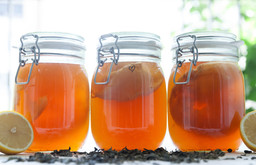
Kombucha is a fermented drink made by combining water, sugar, tea leaves, and a starter called SCOBY (Symbiotic Culture of Bacteria and Yeast). None of these are time/temperature control for safety food (TCS) ingredients.


kombucha

Process steps for brewing kombucha include:

  1. Boiling
  2. Preparation
  3. Cooling
  4. Fermentation
  5. Cold storage

During the seven to ten day fermentation step, the product, which is not TCS food, is left out at room temperature. After brewing, the finished product is refrigerated for quality purposes to control pH and alcohol levels.

Kombucha is a low risk to public health

Since kombucha is made with non-TCS ingredients and remains non-TCS during and after brewing, it is a low risk to public health.

Due to the interaction of pH and water activity of kombucha, it does not support growth of disease-causing microorganisms. When working with kombucha, as with all ready-to-eat foods, it is important for employees to prevent contamination from hands by avoiding bare hand contact, practice proper handwashing, and stay home if experiencing vomiting or diarrhea.

No special food code requirements for making kombucha

All of the process steps for making kombucha meet Minnesota food code requirements. Making it does not require HACCP, pre-approval, or written procedures and plans maintained on-site.

Important steps when making kombucha:

  • Verify final pH using a pH meter. A final pH of 4.6 or less must be reached to prevent the growth of Clostridium botulinum, which causes botulism.
  • Sterilize bottles prior to bottling.
  • Store bottled kombucha at 41°F or below to prevent further fermentation.

Food Safety for Food Donation Guide

If you are part of the network connecting neighbors in need with food that might otherwise go to waste, check out the Food Safety for Food Donation guide (PDF) from MDH and MDA.

Guide helps clarify retail food requirements

The purpose of the guide is to help individuals and groups understand and meet the requirements for licensing and operation of food banks, food shelves and onsite feeding locations. Topics include:

  • How to get started
  • Who can donate?
  • Food products to donate or accept
  • Keeping food safe
  • Resource links

Keep food safe for neighbors in need

One important section of the guide provides information and resources for keeping food safe.

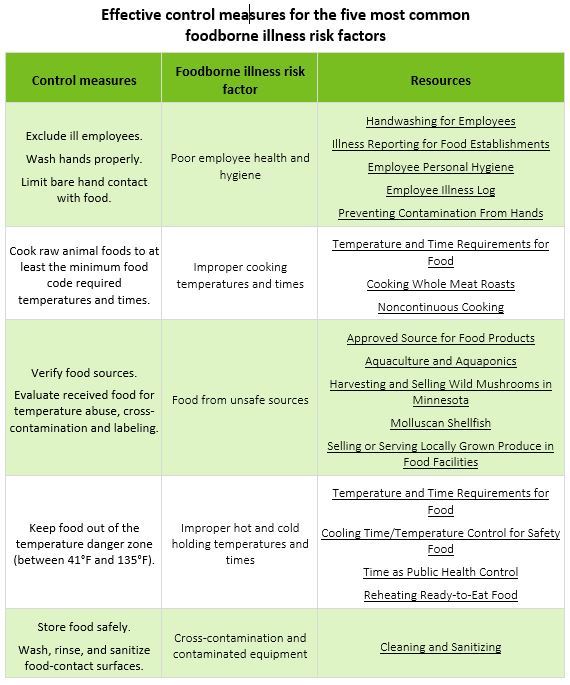
A handy table identifies proven control measures for the top five foodborne illness risk factors as identified by the U.S. Food and Drug Administration (FDA) and U.S. Centers for Disease Control and Prevention (CDC). Applicable fact sheets, posters and logs developed by MDH and MDA are linked as well.

Control measures, risk factors, resources

Click on the image to open a PDF copy of the Food Safety for Food Donation document, then use the hyperlinks in the Resources column to access food safety resources from MDH and MDA.


Thanks to our many partners

This guide has been revised and updated with input from more than 25 individuals from across Minnesota, including Carver County, Catholic Charities, Citizens Into Action, City of Minneapolis, Hennepin County Environment and Energy – Waste Reduction and Recycling, Minnesota Department of Human Services, MDA Dairy and Meat Inspection Division, MDA Food and Feed Safety Division, MDH Food, Pools, and Lodging Services, MDH Environmental Surveillance and Assessment, National Resources Defense Council/Tomorrow’s Table, Second Harvest Heartland, Twin Cities Food Justice, and U of M Extension Food Safety Team.

MealConnect from Feeding America

If your retail food establishment has surplus food that you would like to donate rather than discard, you might be interested in MealConnectTM.

To source more meals and help end hunger in America, Feeding America has created MealConnectTM, a technology platform that makes it easier than ever to connect donors with surplus food to the local Feeding America member food banks and their partners. - About MealConnectTM