Error Proofing
Birth Certificate, ROP, and Social Security Card
By Julie Lippert
May has arrived and it’s time to share the process District One Hospital uses and find to be successful regarding the Birth Certificate process.
As birth registrars, it’s important to make it a priority to visit every family regarding the birth certificate, social security card and Recognition of Parentage (ROP) if needed. Keeping my visit in the five- to 10-minute time frame is important.
Julie Lippert
Guest Contributor
District One Hospital
Allina Health
|
These are the tools that I use when I go into the patient’s room to visit:
1) Birth Certificate Worksheet
2) MDH Medical Portion-Birth Certificate Information
3) Social Security Card, Birth Certificate, my business card printed on the District One Hospital part of Allina Health letterhead which is a take home piece for each family.
4) Parent Verification printed from the MR&C.
5) Minnesota Voluntary Recognition of Parentage form printed from the MR&C if applicable
6) Minnesota Voluntary Spouse's Non-parentage form printed from the MR&C if applicable
7) The Power of Two: Minnesota ROP DVD for all first time parents to watch if applicable.
Again I do find it very important to have five to 10 minutes with every family before I file their baby’s birth certificate. During the visit I’m able to determine what each family’s needs are with regard to the birth certificate. Maybe theirs is a straightforward married birth certificate, single birth certificate with or without the addition of the Minnesota Voluntary Recognition of Parentage and/or Minnesota Voluntary Spouse’s Non-parentage Statement (SNPS) forms.
During the conversation I tell them that the Social Security card will arrive addressed to their baby in two to three weeks. If they don’t receive the Social Security card by the time the baby is two months old, I ask them to call me and I’ll help them with what they need to take to the Social Security Administration office in Mankato or Rochester to get the Social Security Card.
"I'm very passionate about the work that I do as a Birth Registrar." - Julie Lippert
If they don’t receive the Social Security card then I give them the Social Security Administration Publication No. 05-10514 form plus the Social Security Patient Information/Hospital/Medical Clinic Information form. I also ask the parents when they are discharged from District One Hospital that they should go to their local post office and add their new baby's name to the list of people receiving mail at their address.
Then I shift the conversation to the process for buying the birth certificate. I have them look at the Parent Verification form from MR&C for any corrections. Then I tell them in one to two weeks they’ll receive from the Rice County Recorder’s office a Parent Notice with the information that will be on their child's birth certificate. If they see any mistakes they should call me and I’ll correct the mistakes. If everything is correct, I instruct them to take the Parent Notice, $26 and picture identification to the Rice County Recorder’s office and purchase the birth certificate.
The Rice County Recorder’s office also prints off another Parent Notice for them to again confirm that everything is correct prior to the purchase. If the parents have purchased their baby’s birth certificate and see a mistake, then there is an amendment form to fill out along with a $40 fee to correct the birth certificate and another $26 fee for a corrected birth certificate.
I clearly point out they could have a $92 birth certificate if they aren’t careful. I am also very clear with each family that I am their contact person regarding the birth certificate and Social Security card if they should have questions once they are discharged from District One Hospital.
There are families that, upon discharge from District One Hospital, go directly to the Rice County Recorder’s Office and purchase their child's birth certificate. Thanks to the Minnesota Department of Health for the incredible MR&C software that allows this to happen.
Indeed I’m very passionate about the work that I do as a Birth Registrar. It is my very strong feeling that teaching families about the process plays a huge role in our success. On every birth certificate day I remind myself that “Quality is the Bridge to Excellence!”
(Editor's note: thanks to Julie Lippert from
District One Hospital for her excellent birth registration work and for taking
the time to share some of her tips. We welcome articles and ideas from other
stakeholder users, too. Please contact editor John Marino in OVR Field Services at john.marino@state.mn.us if you would like to
contribute to this newsletter.)
Minnesota Death Data Delivery Project
National Quality Improvement Effort Underway
The Minnesota Department of Health, Office of Vital Records (OVR) is participating in a Robert Wood Johnson Foundation Quality Improvement Forum. OVR is leading one of four projects designed to bring quality improvement for the effectiveness and efficiency of prioritized programs across federal, state and local levels.
OVR’s goal is to improve the accuracy and timeliness of vital record death data so that the cause of death can be shared in real time with customers. Efforts will bring local public health agencies coded death data sooner and in doing so, also bring closure to families by satisfying their needs for certificates that have both fact and cause of death recorded.
The Minnesota effort will replicate North Carolina’s Data Utilization Project to bring death data to local public health providers sooner. Minnesota will replicate lessons learned to achieve a broader goal of providing complete death data to customers in real time. The project will examine the death registration process from the death event to ICD10 coded records to the availability of real-time (preliminary) data. It will work to identify waste in the process, eliminate re-work, reduce cycle time, minimize costs, and improve quality.
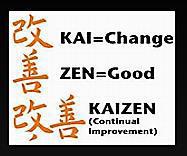
The QI Forum will be convening a rapid-improvement "kaizen"
event, May 18-22, 2015. Kaizen is a Japanese term that means change for the
good. The project brings contracted facilitators, other jurisdictional
subject-matter expertise, and stakeholder representation to OVR and its staff
to examine process and implement improvements in both the short term and long term.
Representatives from the Association of State and Territorial
Health Officials (ASTHO), the CDC’s National Center for Health Statistics
(NCHS), and the National Association of Health Systems and Information Services
(NAPHSIS) will be on-site.
"Hard Stop" policy
Organizations like the March of Dimes, the American Congress
of Obstetricians and Gynecologists (ACOG), the Joint Commission on Hospital
Accreditation, and the Centers for Medicare and Medicaid Services are
collaborating to improve birth outcomes by using data from birth records. One outcome from this collaboration are guidelines for scheduling
inductions and cesarean sections to reduce the number of early elective
deliveries.
These guidelines were created with the intent to
discourage intentional delivery of infants at less than 39 weeks of gestation without documented medical reasons. The initiative prohibits scheduling an
induction of labor or a cesarean delivery at less than 39 weeks unless certain
criteria are met. Hospitals call it a “hard stop” policy because the delivery scheduler should
stop and question or look for documentation of a medical need before putting
a patient’s induction or cesarean section procedure on the schedule.
As part of this program, the Minnesota Department of Health
(MDH) and the Minnesota Department of Human Services (DHS) worked together to
create a process for recording and reporting births at less than 39-weeks of
gestation. Using the MR&C system, hospitals complete birth records
including the obstetric estimate of gestational
age in completed weeks.
When the gestational age is less than 39 completed weeks and the
labor was induced or the baby was delivered by a cesarean section without a
trial of labor, the hospital birth registrar must indicate if a “hard stop”
process was used to schedule the delivery. To help register this information
accurately, look for documentation or ask if the delivery was scheduled
early for a medical reason, or did the provider obtain the required approval
prior to scheduling the procedure? If the answer is “yes” to either
question, the response in MR&C should also be “yes.”
The Maternity & Newborn Activity report that
prints from MR&C is used to track responses to birth data, including the
“hard stop” question. MR&C birth registrar users can print this report for
hospital management or providers to show how their facility compares to the
rest of the state.
|