|
September, 2025
Communities of Practice: District Literacy Lead and Local Certified Facilitators

Monthly communities of practice (CoPs) are offered through the Regional Literacy Network (RLN) for all District Literacy Leads and Local Certified Facilitators. These monthly sessions provide a collaborative space where participants connect to exchange knowledge, solve problems, and grow expertise. Through ongoing discussions and shared learning, CoPs foster continuous improvement and cross-district connection.
Contact your Regional Literacy Network Lead for more information and registration.
|
Recent updates to the Minnesota READ Act now allow districts to use Literacy Aid to support the purchase of evidence-based materials, which is expanded to include curricular resources on the Partially Aligned list. READ Act Curricular Resources provides the updated information on Highly Aligned and Partially Aligned materials.
Districts are strongly encouraged to review READ Act curriculum reports and rubrics to guide implementation efforts. Adoption of materials on the Partially Aligned list will require additional district planning to ensure implementation fully meets READ Act evidence-based practices aligned to structured literacy.
For more information visit READ Act Curricular Resources webpage.
|
Literacy screening is required in grades K-3 this year. For students in grades K-3, screening is universal and is required for all students in fall, winter, and spring. In grades 4-12, screening is required for any student not demonstrating grade level reading skills.
Details about K-3 screening can be found at Screening Guidance K-3.
Details about 4-12 screening can be found at Screening Guidance 4-12.
|
|
 |

The Minnesota State Legislature seeks to have every child reading at or above grade level every year, beginning in kindergarten, and to support multilingual learners and students receiving special education services in achieving their individualized reading goals in order to meet grade-level benchmarks. To meet this goal, each district or charter school must provide teachers and instructional support staff with responsibility for teaching reading with training on evidence-based reading instruction that is approved by the Minnesota Department of Education. Minn. Stat. 120B.12, subd.4 (2004)
|
Starting in the 2026-2027 school year, a paraprofessional or other unlicensed person, including a volunteer, must complete evidence-based training developed under the READ Act and offered at no cost through the regional literacy networks as required by Minnesota Statutes 2024, section 120B.124, subdivision 4.
Format: 4 sessions, 2 hours per session, live (in person)
Content:
- Session 1, Structured Literacy Theoretical Frameworks
- Session 2, Phonemic Awareness
- Session 3, Phonics
- Session 4, Vocabulary and Comprehension
Additional Option for PreK READ Act Volunteer and Paraprofessional training
Volunteers and paraprofessionals who regularly provide literacy instruction in Voluntary Prekindergarten (VPK), Early Childhood Special Education (ECSE), and School Readiness programs are required by the READ Act to receive training on evidence-based structured literacy instruction. These volunteers and paraprofessionals can complete the PSLT or MDE approved Cox Campus courses to fulfill this training requirement. Approved courses are available of the Support Staff PD webpage. All courses can be accessed on Cox Campus; staff will need to initially register to access the training. Courses are online and free.
For more information visit the Support Staff Professional Development webpage.
NEW registrations for professional development for Phase 1 educators will be paused starting October 1, 2025. This pause will allow the launch of professional development for Phase 2 educators. More information about Phase 2 PD will be published in October.
All requests for Phase 1 PD submitted before October 1, 2025 will be processed and forwarded to the training vendor. Phase 1 PD requests will be processed again starting December 1, 2025.
This pause does not affect any trainings already scheduled or paraprofessional training.
For more information visit the Phase 1 Professional Development webpage.
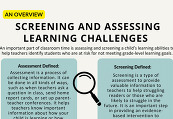
The National Center on Improving Literacy has a great infographic, titled Understanding Screening: Overall Screening and Assessment, that explains how reading screening helps identify students at risk for reading difficulties and provides information on how families can work with schools to support their child's reading success.
For more information visit the National Center on Improving Literacy webpage.
|

September marks National Literacy Month, a time to celebrate the power of reading and promote access to literacy for learners of all ages. Across our state, schools, libraries, and community organizations are working together to ensure every individual has the tools they need to succeed through strong literacy skills.
We encourage families, educators, and community members to explore resources and get involved. The National Center for Improving Literacy (NCIL) offers evidence-based tools and information to support literacy development at home and in the classroom.
For more information visit the National Center on Improving Literacy website.
Let’s work together to build a stronger, more literate future for all!
#NationalLiteracyMonth #ReadTogether #LiteracyMatters
|
Back to top
|