|
September 2024
Ideas and Suggestions for Restorative Practitioners
Deepen Your Practice
The Talking Piece is an ancient technology. Its simplicity can be profound. The way a talking piece is used varies with community and culture – the Carcross-Tagish and Dahka T’lingit First Nations people send the talking piece around to the left in the direction of the sun. Other cultures may send it to the right, or they may place the talking piece in the center for any one to pick up should they be moved to speak.
I learned to send it to the left, and that the talking piece is just that – a talking piece. If I don’t have it, I do not speak. Learning this was a relief for I am an extrovert by nature, and I grew up in a large family where people had to interrupt to be heard. In circle, I was seen, and I was offered the opportunity to be heard, to speak. So much easier.
The talking piece went around in order – it was not tossed to someone who may or may not be ready to speak, or was the tosser’s best friend. So much more welcoming.
And marvel of marvels, it offered space to people – adults and children – who seldom spoke, and they spoke. So many more voices.
I also realized that sending the talking piece around in order helped to flatten the hierarchy. Superintendents have to wait, just like the educational aide or the third grader, until the talking piece comes to them. My positional authority as an MDE representative was diffused by waiting. So much more equitable.
By waiting, I heard the wisdom of the group. By waiting, I relaxed. By waiting, I let go of the majority culture expectations of control and entered into the support of the community.
I now pass the talking piece to Grace Yang, Restorative Practices Consultant and the team at the Equity, Diversity and Inclusion Center. Ua Tsaug! – Nancy Riestenberg
First Steps: A Restorative Practices Overview Workshop
Register for First Steps: An RP Overview. In this introductory session, explore the foundational principles of restorative philosophy, including what restorative practices are and what they are not. Through experiential learning, using circle, dyads and written reflection, participants can explore how their personal restorative impulses show up in the world. All in-person workshops will be held at the Minnesota Department of Education.
- In-Person, Friday, October 4, from 9 a.m.to 4 p.m.
- Online, Tuesday, December 10, from 9 a.m. to 4 p.m.
- Online, Tuesday, February 11, from 9 a.m. to 4 p.m.
- In-Person, Wednesday, April 23, from 9 a.m. to 4 p.m.
- In-Person, Thursday, May 15, from 9 a.m. to 4 p.m.
District Circle of Support 2024-25
School districts and charter schools may apply for the District Circle of Support 2024-25, an RP whole school implementation community of practice. The bi-monthly District of Support (DCS) will be co-kept by Grace Yang and Minnesota restorative practitioners in schools. The circles will meet online, bi-monthly, from 9-11 a.m. the second Wednesday of the month; November 13, January 8, March 12 and May 14. Up to two members of a district implementation team may attend. The DCS is limited to 10 districts.
Restorative Educators Affinity Space for Indigenous and People of Color
The Equity Diversity and Inclusion Center will offer optional virtual bi-monthly circles to restorative educators who are Indigenous and People of Color with the intention of connecting, learning, building, and healing together. The circles will provide a structure for powerful conversations that build awareness, knowledge, and spur action for racial equity and justice. Individuals who do not identity as BIPOC but embrace restorative practices in pursuit of equity may also participate. This will be an opportunity to learn each other’s stories, to build restorative practices in service of equity, to strengthen belonging for all members of the school community. These circles will meet virtually from 9-11 a.m., November 19, January 21, March 18, and May 20.
If you are interested, register for the Restorative Educators Affinity Space for Indigenous and People of Color to receive more information.
Top of page
Retrieve Your Learnings
Read about The Talking Piece: A Story to bring forth the knowledge and experience of teachers.
Build Your Knowledge
The talking piece in many cultures is a sacred object, an object that has profound meaning to the community. Here is a circle, common in circle trainings, for exploring objects of meaning. Hold this circle for new and returning staff at the beginning of the school year, to help people get to know each other on a personal level, and to get to know the meaning of a talking piece.
Staff Circle: Object of Meaning
Set up: Send an invitation to the participants to bring an object of meaning to the circle. “Please bring with you an object that has personal meaning to you. What size object? A stone the size of your thumb is not too small, but a stuffed full size Shetland pony is perhaps too big.”
Supplies needed include note cards and markers, a centerpiece and a talking piece. For ideas on how to hold circles with a large staff, see Circle for the Adult Community, Page 5.
Circle Outline for the Keeper
Welcome: I invite you to take a moment to pay attention to the sounds in the room. Stop, center your body, breathe, and listen. (Remain silent for 45 seconds to a minute).
Guidelines: Here are our Circle Guidelines: respect the talking piece (when you have the talking piece you may speak, and when you don’t, you may listen), talk and listen with respect and from the heart, take the time you need knowing that others need time, what is shared stays, what is learned leaves, expect non-closure, and you may pass.
Opening: Share your name and the pronouns that make you feel seen and one thing you saw or heard on the way to this circle today.
Round 1: Share the name of a friend or a student that you admire and the value that you associate with that person. Write the name and the value on the cards in the center of the circle. We will take a bit of time for you to think. Toss your marker on to the center piece so I know that you are done. Share what you have on your card. When you are finished sharing, set the card around the center piece. I will start, "My name…. and my value…"
Round 2: You were invited to bring an object of meaning to the circle. If you brought it, wonderful, get it out to share. If you did not remember to bring an object, you can describe it for us. We will go around and share an object of meaning – something that you have that is significant or important in your life. What is the story of your object of meaning?
Round 3: The talking piece invites us to speak with respect and speak from the heart or to be silent with care. The respect and the heart come in part from the meaning of the talking piece, both for the keeper and for the members of the circle. If you could give a talking piece to an adult or student, to invite them to circle, what would that object be and who would you give it to?
Final round: What happened in this circle?
Close: To close, here is a quote about the talking piece from the book, Circle Forward:
“The talking piece is a powerful equalizer. It gives every participant an equal opportunity to speak and carries an implicit assumption that every participant has something important to offer the group. As it passes physically from hand to hand, the talking piece weaves a connecting thread among the members of the circle."
Thank you for being in circle!
Getting Acquainted with Restorative Practitioner: Oscar Reed
One of the first circle trainers in Minnesota is Oscar Reed. Upon retiring from professional football in 1975 (he played for the Vikings through 3 Super Bowls), Oscar returned to Minnesota. With teammate Jim Marshall, they founded a community organization, The Link, to help youth on the Northside of Minneapolis who were struggling with poverty, homelessness, getting victimized by crime or recruited into criminal activity.
He attended an early circle training and held one of the first RP circle trainings in a school at Seward Montessori in 1999. With Jamie Williams and Chuck Robertson, he founded The Restorative Way. Together, they trained thousands of people in Minnesota, Colorado, and Florida. For about 10 years he was the keeper of Boys2Men, a circle of young Black men in the St. Louis Park School District. He facilitated trainings, community building circles, circles to repair harm and circles for crimes of severe violence. His stories of circles with students helped other educators imagine how they might be restorative too.
The son of civil rights activists in Memphis, Tennessee, Oscar got a scholarship to college and came to Minnesota to play professional football. That he decided to remain in Minnesota is a gift to the state. Through it all, Oscar holds fast to the value that his father taught him when he was growing up: Compassion. He never sits in a circle without saying that word.
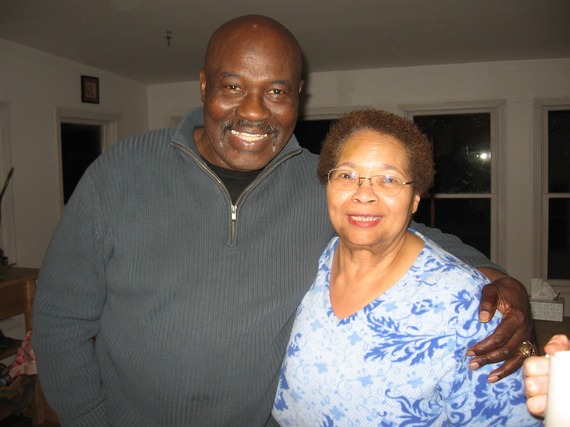 A photo of Oscar Reed and Alice Lynch.
Top of page
Resources
2024 School Behavioral Health Conference
The Minnesota School Behavioral Health Conference is in its 7th year, bringing together collaborating partners and providers to build a school behavioral health framework of community, practice, and support. Attendees include schools, community mental health and substance use providers, advocates, consumers, policy makers, Tribal Nations, and county and state government. Attendees come to network and learn about the latest developments and best practices related to supporting students with behavioral health disorders.
This conference seeks to offer attendees purposeful tools and techniques to implement and produce a positive impact on behavioral health and mental wellness specifically related to:
- Evidence based supports for students’ and families’ emotional health and well being
- Tools for school staff and behavioral health providers
- Resources for school wide efforts to reduce stigma and support positive school climate
- Resources to support behavioral health and educational systems
To view the Conference Schedule of Sessions, Keynote Speaker, and register for the conference – please visit the Minnesota School Behavioral Health Conference website.
Minnesota Department of Education Model Bullying Policy
The Minnesota Department of Education’s Equity, Diversity, and Inclusion Center has developed the Model Bullying Policy in accordance with Minnesota Statute, section 121A.031. The purpose of the policy is to provide guidance for schools and districts so that they understand what their obligations are under Minnesota law to respond to and address bullying. Schools and districts are invited to use this Model Bullying Policy and to adopt it as their own to ensure that all required components of the policy are fulfilled under Minnesota law. Districts are encouraged to add to the Model Bullying Policy to include specifics of their processes, procedures, and additional supports. The model policy is available on the MDE website.
Mental Health Trainings for Licensed School Mental Health Clinicians/Practitioners
The Project AWARE team in the Minnesota Department of Education's Equity, Diversity and Inclusion (EDI) Center is hosting free, virtual CBITS and/or Bounce Back trainings in August and September. Eligible participants are Minnesota licensed school mental health clinicians/practitioners who want to be trained in and have the capacity to deliver the intervention(s) for the intended aged students. Participants should have a familiarity with childhood trauma, group therapy and cognitive behavioral therapy. See the registration link below for further information. Those interested in attending should register for the Summer 2024 CBITS & Bounce Back Training. Spots are available on a first come, first served basis. There is an option to sign up for a wait list if an offering is full. For assistance with questions, email Emily Denight Kelly, Project AWARE Lead Trainer.
Nonexclusionary Discipline (NED) 101 Offerings
An introductory-level discussion about what nonexclusionary discipline is, the importance of fostering a sense of belonging, and understanding "root causes" as a way to address behaviors.
Note: The in-person session will take place at the MDE building. Details will be sent to all registered participants. The session will be cancelled if there are fewer than 10 registrants.
12th Annual Restoring Hope Circle Keeper's Summit
Register for the Restoring Hope Circle Keeper's Summit, which is open to Circle Keepers for relaxation, rejuvenation, and connection. Monday, Sept. 30, 3 p.m., through Thursday, Oct. 3, 3 p.m. The summit will take place at Timber Bay Camp, 18955 Woodland Rd, Onamia, MN 56359.
The Restoring Hope Circle Keeper’s Summit is coordinated by Sharon Hendrichs, 507-227-6858 and Julie Marthaler, 320-226-0586. Email them at restoringhopeconveners@gmail.com.
Further Information
For further information about Restorative Practices, visit MDE's RP webpage or contact Grace Yang, 651-582-8777, Minnesota Department of Education.
Top of page
|