|
|
Updates from State Library Services
 Supercharge Even More Storytimes
Beginning October 2, State Library Services is
offering free, online, research-based training for anyone who provides
storytime in a library. All experience levels are welcome! Whether new to
storytimes or seasoned providers, Supercharged Storytimes for All, a six-week
online course, offers knowledge to deepen and enhance anyone’s storytime
practice. OCLC put together an eight-minute video that provides an
overview of the research behind Supercharged Storytimes and the four key
elements: interactivity, intentionality, assessment and community of practice. Because
OCLC has recently expanded the content, with input from early literacy expert
Saroj Ghoting (among others), even those who participated in Supercharged
Storytimes in 2015 will gain knowledge from this iteration.
Storytime providers, including librarians, paraprofessionals,
and volunteers, from Minnesota will collaborate in a dynamic online learning
community to explore:
- Strategies for emphasizing six early literacy components,
- Ways to engage parents and caregivers in their children’s early literacy,
- Approaches to storytime assessment,
- Supercharging storytimes through an equity lens,
- Growing intentionality and building peer community.
Course participants will acquire knowledge and
skills through live webinars presented by trainers from across the state. In
between live sessions, they’ll have time to put their learning into practice by
using tools and resources introduced in each session, to plan their storytimes,
deliver the storytime with intentionality, and then reflect with each other through
peer discussion forums.
While it is best to attend the webinars live, they
will be recorded and can be accessed at a later date/time.
We estimate that coursework will be an average of three hours/week to attend live sessions and apply the learning in between. We
encourage all participants to gain supervisor support to assure sufficient time
to devote to this course. The outcome of a more impactful library storytime is
an asset to the whole library/library system in advocating for the value of
libraries in early childhood development.
Register today for Supercharged Storytimes for All.
Contact Jen
Verbrugge (651-582-8356) if you have any questions or for more information.
|
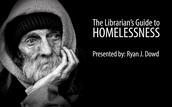 Work Confidently with Homeless
Patrons
The Minnesota
Department of Education is committed to supporting the state’s Heading Home Together plan, and
library staff training is one of our goals. All library administrators, staff,
board members, and volunteers now have free year-long access to “Practical Tips
for Homeless Patrons,” an online, self-paced tutorial presented by Ryan Dowd,
the author of “The Librarian’s Guide to Homelessness.”
Through the course, participants will gain insights into the mind of a person
experiencing homelessness—how they communicate, likely experiences that color
their worldview, and possible triggers to behavior escalation. Through an
empathy lens, library staff and volunteers will also gain tips and tricks for
welcoming, serving, and supporting homeless patrons.
To take the
training, follow the enrollment steps on the Niche
Academy website. Contact Jen Verbrugge
(651-582-8356) if you have access issues or other questions.
|
 Join Girls Who Code Partnership and Launch a FREE Club
State Library Services is partnering with Girls Who Code to bring free computer science opportunities to elementary, middle, and high school girls (and boys) across Minnesota. We would love for your school or library to host a club!
Girls Who Code Clubs are no-cost afterschool programs for girls in grades 3-5 or grades 6-12 to join a fellowship of supportive peers and use computer science to change the world. The program targets girls, but no one is excluded from participating, so boys are welcome too. Clubs are led by facilitators who can be teachers, librarians, parents, or volunteers from any background or field. No prior knowledge is required; many facilitators have no technical experience and learn to code alongside their club members. Read through an overview of the curriculum for both age groups, and then attend a Girls Who Code webinar to help you learn more. You can also contact Leah Larson (651-582-8604) if you have questions about how to get started.
*Important Note: To receive partnership benefits when you register your club, it is important that you indicate that State Library Services is your partner. Please list “Minnesota State Library Services” as your partner affiliation on the application’s page titled “About Your Club” for the following question: Is your Club affiliated with a Girls Who Code Community Partner (school districts, library systems, nonprofit organization, afterschool networks, etc.)?
|
 Library Construction Grant
Applications Available
The Library
Construction Grant program is accepting applications for
competitive grants. The program provides public libraries with funding for
renovation, construction, and improvement projects that result in more
accessible library facilities. Projects may:
- Remove architectural barriers from a library building or site,
- Remediate conditions hazardous to health or safety,
- Renovate or expand an existing building for use as a library,
- Construct a new library.
The 2018 Minnesota Legislature allocated a total of
$1,000,000 to the program. In addition, approximately $400,000 of the allocation
from the 2017 bonding bill is available to award as grants, for a total of
$1,400,000. If more funds become available, we will update the amount.
Application forms and instructions are available on the Minnesota
Department of Education’s Grants Management site. Scroll to
Library Construction Grant opportunity. Completed applications are due via
email by Friday, October 26, 2018, at 3:30 p.m. For more information, please contact Emily Kissane (651-582-8508).
|
|
|
Updates from our Partners
 Meet Up with Other Library Staff Serving
Youth in New Ulm
On Saturday, October 6, 8-11 a.m., join other library staff working
with kids at this unique professional
development meet-up. Get together with area colleagues to share experiences
and ideas. Potential topics include using Ebooks Minnesota, successful school
and public library collaborations, and building your local networks. The
agenda will be refined by the registered participants. Library staff working
with youth from all kinds of libraries are welcome to participate in this no-cost
event.
After the meet-up, plan to go out for an optional lunch and tourism in
beautiful New Ulm.
The event is sponsored by Traverse des Sioux Library Cooperative in
partnership with State Library Services. Up to three continuing education contact
hours are available. Contact Ann
Hokanson (507-625-6169) for more information.
|
 Participate in Lights on Afterschool – October 25
Lights On Afterschool (LOA) is the only nationwide event celebrating afterschool programs and their important role in the lives of children, families, and communities. This year, afterschool-library partnerships are celebrated as an official theme for LOA 2018, which takes place on October 25. This is a great opportunity to showcase an afterschool or summer program that you run out of your library, highlight a partnership you already have, or embark on a new partnership with an afterschool program in your community. The Space Science Institute’s National Center for Interactive Learning (NCIL) provides interactive STEM exhibits, programming, and training to public libraries nationwide through its Science‐Technology Activities and Resources Library Network (STAR Net), and is a sponsor of LOA this year. You can watch their recorded webinar to learn more about LOA, and how your library can participate. Register your LOA event today to begin receiving emails full of expert advice, free resources, and the chance to win giveaway prizes.
|
Brush Up on Minnesota’s Public Library
Building Stats
The 2018 Library Journal
architectural feature will be published in the November 15, 2018, issue. It
will collect data for finished public and academic library projects—new builds
and renovations/additions—completed between July 1, 2017, and June 30, 2018, only. If you have not submitted your library’s construction projects yet,
please complete the architectural questionnaire for Public Libraries or Academic Libraries by Wednesday, September 12.
Public libraries are places
and spaces where people can relax, work, meet, learn, connect, and create.
Total Minnesota public library square footage in 2017 was 8,559,412, bigger
than the Mall of America (7,900,000 square feet).
Minnesota’s public libraries
come in all sizes. Hanksa Public Library, built in 1915, is Minnesota’s
smallest library (403 square feet). Hennepin County Library’s Minneapolis
Central Library, built in 2006, is Minnesota’s largest library (406,354 square feet).
The average public library size is 16,493 square feet and the median size is
5,625 square feet.
Minnesota
had four newly built libraries in the late 19th century. Taylors Falls Public
Library, Minnesota’s oldest library building, was built in 1857. Few libraries
were built during the Depression and WWII. There was a library building boom
during the 1990s and 2000s. Libraries did not report remodeling projects until
the 1970s. There has been a remodeling boom since 2010—especially to incorporate
new technology. Eighteen percent of Minnesota’s public library buildings were
renovated in the past five years compared with a national average of 21
percent.
Minnesota had 66 Carnegie libraries. 48 are still standing and 25 of
those continue to house public libraries. Of the 18 lost libraries, one burned
down and the rest were demolished.
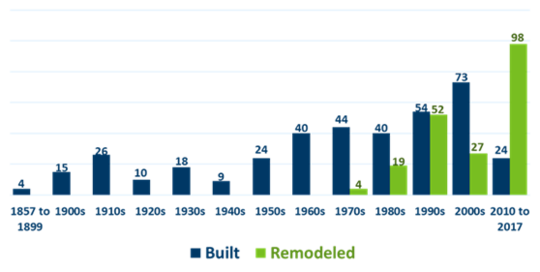 Source: Minnesota Public Library Report
|
|
 State Library Services, a division of the Minnesota Department of Education (MDE), partners with libraries to achieve equity and excellence in our collective work for Minnesotans. Division staff are consultants who help libraries plan, develop and implement high-quality services that address community needs. State Library Services administers federal grant, state aid, and state grant programs that benefit all types of libraries.
|
|
|
|