|
Having trouble viewing this email? View it as a Web page.
October 1, 2026
October Weed of the Month: Autumn Olive
A single autumn olive plant can produce 60,000 fruits each year
By Julia Dellick, Minnesota Department of Agriculture: Autumn olive (Elaeagnus umbellata) is a large, fast-growing, invasive, deciduous shrub. It was introduced to the United States in the 1800s and became a popular ornamental plant due to its attractive foliage and showy flowers. The plant was then used for windbreaks, erosion control, wildlife habitats, and forest restoration as it grows quickly and can tolerate poor quality soils. Unfortunately, since autumn olive easily spreads and invades fields, forest edges, roadsides, and other disturbed areas, it is no longer recommended for these purposes.
Autumn olive can be identified by its leaves, which are 2-4 inches long and taper at the ends. They are grayish green with distinctive silvery scales on the underside of the leaves. Autumn olive blooms in clusters of one to eight bell-shaped flowers. The flowers are cream to pale-yellow and bloom from April to June. In the fall, the plant produces red fleshy berries that are speckled with silver and contain a single oblong seed.
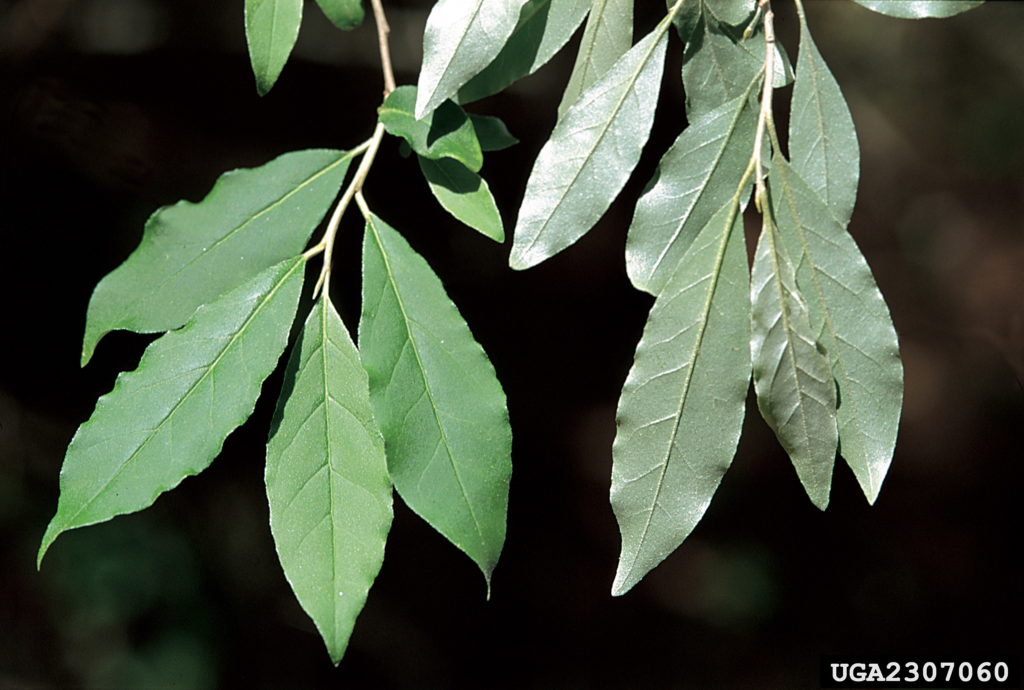
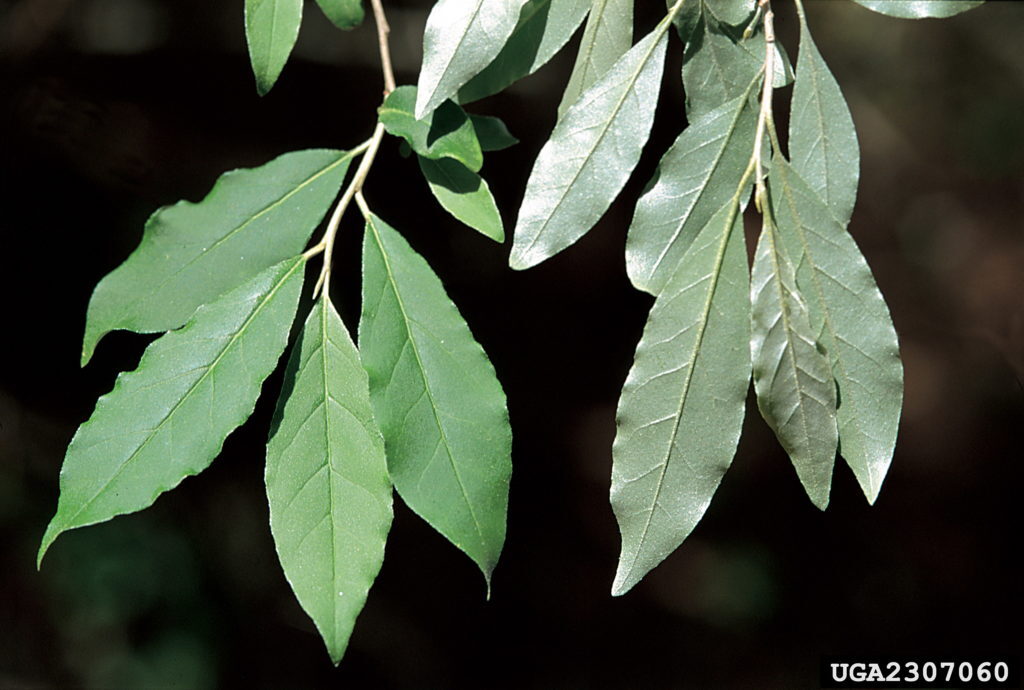 Autumn olive leaves are a grayish-green on top with silvery scales underneath. Photo by James Miller, USDA Forest Service, via bugwood.org.
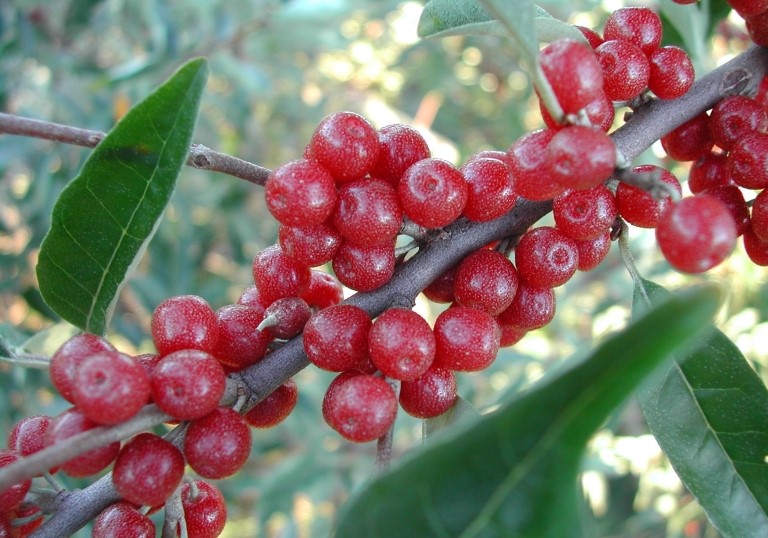
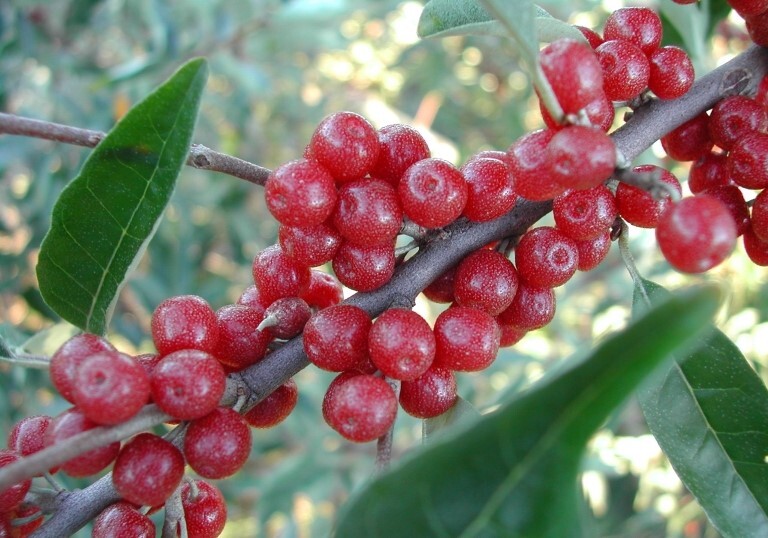 Autumn olive berries are red with silvery speckles. Pennsylvania Department of Conservation and Natural Resources - Forestry, via Bugwood.org
Autumn olive spreads aggressively because it produces large amounts of fruit. A single mature plant can produce around 60,000 fruits each year, weighing as much as 80 pounds altogether! Birds and other wildlife eat the fruits and spread the seeds to new areas. Once established, the invasive shrub outcompetes native plants by shading them out and changing soil chemistry. Autumn olive changes the soil chemistry by increasing nitrogen levels in the soil which can negatively impact plants adapted to low-nutrient environments, including prairie species.
Autumn olive is classified as a Restricted Noxious Weed in Minnesota. The sale of this plant is prohibited in Minnesota and transportation is only allowed when in compliance with Minnesota Statute 18.82. Although restricted noxious weeds are not required to be controlled or eradicated by law, landowners are strongly encouraged to manage these invasive plants on their properties to reduce spread into new areas.
Plants can be removed by digging or hand-pulling if small enough. Cut stumps will resprout unless treated with herbicide. For herbicide recommendations, contact your local University of Minnesota Extension office.
For more information about autumn olive, check out the Woody Invasives of the Great Lakes Collaborative webpage.
 |
|
To learn more, listen and subscribe to Smarty Plants, a podcast produced by the MDA that explores the invasive insects and noxious weeds that threaten Minnesota’s natural and agricultural resources. |
MEDIA: Contact Allen Sommerfeld, MDA Communications, allen.sommerfeld@state.mn.us
|