|
September 14, 2026
Fall Cleanup in the Vegetable Garden
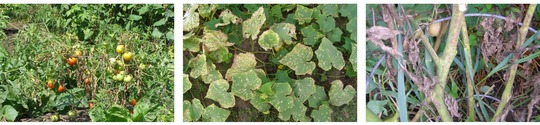 Garden cucumbers and tomatoes showing symptoms of leaf spot diseases should be removed from the garden and composted.
Cleaning up a vegetable garden in the fall is one good way to prevent plant pathogens from surviving the winter and causing problems the following summer. Most plant diseases are caused by fungal plant pathogens, but some are caused by bacteria or viruses. Fungi, bacteria, and a few viruses can survive from one season to the next in infected plant material. To prevent this, remove all plants that suffered from a plant disease this year shortly after harvest.
Infected plants can be composted, but the compost needs to heat up and completely break down plant matter into a soil-like material for disease-causing organisms to be killed. If compost from your backyard compost pile doesn’t meet these criteria, it is still okay to use the compost but consider using it near non-vegetable plants. Many plant pathogens can only infect one or a few plant families, so using compost that may contain tomato leaf spot fungi under lilac bushes will not result in tomato leaf spots on lilacs.
Some plant pathogens can survive on tools or other garden equipment like stakes and trellises. It is important to clean off all soil and plant debris before storing garden supplies for the winter. Metal or plastic tools can be disinfected by spraying them with a 10% household bleach solution or 70% rubbing alcohol. Bleach is corrosive to metal, so it is important to rinse metal surfaces treated with bleach with clean water before storing them. Avoid using bleach on cutting tools like knives and pruners.
Natural products, like wooden stakes or bamboo poles, can also harbor plant pathogens but are harder to clean. Soak wood or bamboo in a 10% household bleach solution for half an hour for best results. Even with this treatment, disinfectant may not reach all pathogens in these naturally porous materials. If plant disease had a significant impact on garden plants supported by wood or bamboo structures, it is best to discard them and start with new materials next year.
That’s a Wrap on the State Fair!
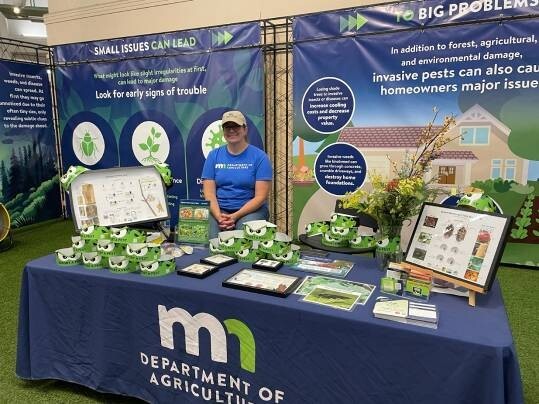
Fairgoers got a close-up look at the tiny world of plant pests through our microscope, discovering fascinating insects, plant diseases, and other specimens they may never have noticed before. Attendees also had the opportunity to submit questions for our Smarty Plants podcast. Watch for an upcoming episode where our experts will answer some of the questions we received at the fair.
If you missed the opportunity to submit a question at the State Fair, you can still send us your ideas. We’d also love to hear what plant health, pests, diseases, invasive species, or other topics you’d like to see covered in a future issue of the Plant Pest Insider.
What would you like to learn more about? Submit your questions and topic ideas, and your suggestion could help shape a future Smarty Plants episode or Plant Pest Insider article.
First Detection of the Two-Spotted Cotton Leafhopper in Minnesota
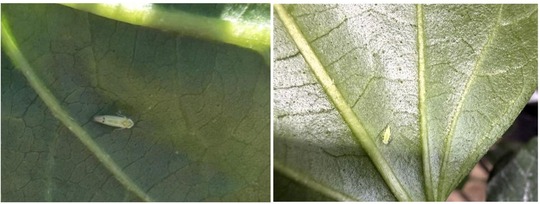
Photos, left to right: An adult two-spotted leafhopper on hibiscus leaf. Two-spotted leafhopper nymph on hibiscus leaf.
The two-spotted cotton leafhopper, Amrasca biguttula, was detected in Minnesota for the first time. Detections occurred on hibiscus plants shipped from Florida and sold at multiple large retail stores. It is important to note that these were detections and do not mean the insect is established in Minnesota. It is unlikely that this insect will be able to overwinter in the state.
This leafhopper was first found in North America in Puerto Rico in 2023 and then in Florida in 2024. It has since spread to several southeastern states. This leafhopper is a pest of both agriculture crops such as cotton, okra, eggplant, sunflower, and soybean, as well as ornamental hibiscus. Damage symptoms of two-spotted cotton leafhopper include leaf curling, yellowing, sometimes what is referred to as “hopper burn,” and reduced yields.
Two-spotted cotton leafhopper adults are small, pale green insects with yellowish-green wings. They can be distinguished from other leafhoppers by a characteristic black spot at the end of each wing. Nymphs are more difficult to identify because they do not have the spots and may require a specialist to confirm their identity. Both adults and nymphs exhibit characteristic sideways hopping movements and may hop quickly when disturbed.
If you think you have found a two-spotted leafhopper, please contact the Minnesota Department of Agriculture through Report a Pest.
New Smarty Plants Episode - EAB: There is No Silver Bullet
Smarty Plants is a podcast exploring invasive insects and noxious weeds that threaten Minnesota’s natural and agricultural resources.
Emerald ash borer (EAB) was first detected in Minnesota in 2009. Over the last 17 years of management efforts, EAB has kept everyone on their toes as we have prepared for its inevitable arrival throughout Minnesota. EAB experts Jonathan Osthus and Mark Abrahamson join this episode of Smarty Plants giving a look back when EAB first arrived and what has transpired since.
Subscribe to Smarty Plants today so you don’t miss an episode!
In the Field: Emerald Ash Borer Biocontrol
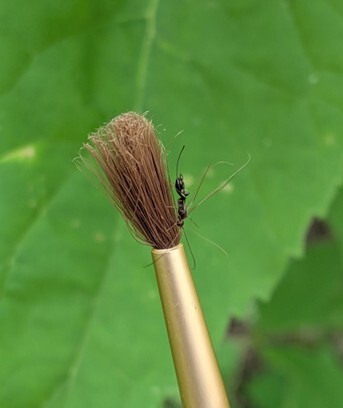
Spathius galinae, the largest wasp species released by the MDA, on a paint brush.
Since 2010, Minnesota has released over 750,000 parasitoid wasps to control emerald ash borer populations at the landscape level. The parasitoids are reared and supplied by the USDA EAB Parasitoid Rearing Facility in Brighton, MI.
The MDA is currently releasing three species of parasitoid wasps: Oobius agrili (a parasitoid of EAB eggs on the outside of the tree), Tetrastichus planipennisi (a parasitoid of EAB larvae found under the bark), and Spathius galinae (a parasitoid of EAB larvae found under the bark). Each wasp underwent rigorous host specificity testing by the USDA.
The wasps need EAB to complete their lifecycle and cannot persist in the environment without EAB. The wasps also lack stingers and do not harm humans. The goal of this project is not to eradicate EAB but to use these natural predators to reduce EAB populations to levels that are less likely to kill trees across the landscape. These parasitoids will not save individual or large, mature ash trees but they may help protect the next generation of young ash trees in the forest.
Biocontrol releases have concluded for the 2026 season. A total of 16,895 parasitoids were released across the state at 5 locations: Myre-Big Island State Park in Albert Lea, Rice Lake State Park in Owatonna, St. Croix State Park in Hinckley, Birch Meadow Park in Elk River and Ki Chi Saga County Park in Lindstrom.
Visit Biological Control of Emerald Ash Borer for more information.
September Weed of the Month: Creeping Meadow Foxtail
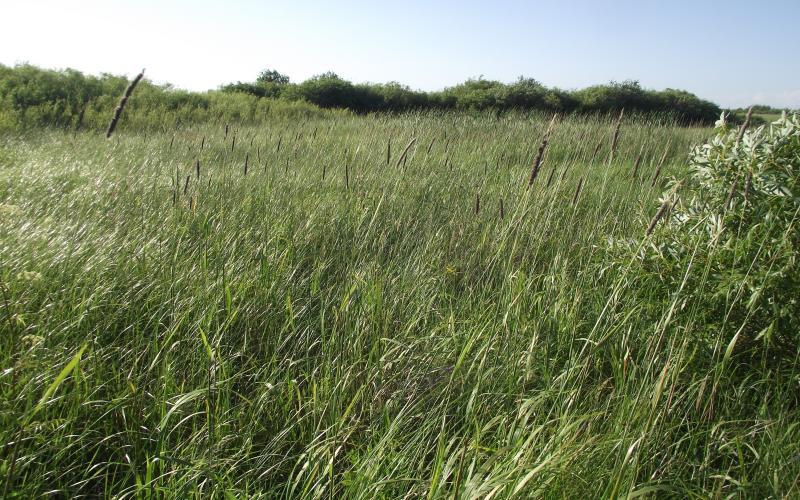 Creeping meadow foxtail can create dense monocultures that outcompete native species. Photo by Minnesota Department of Natural Resources.
Creeping meadow foxtail often escapes its intended planting
By Maya Sarkar, Minnesota Department of Agriculture: An invasive grass species crept on to the noxious weed list in 2026 and it’s quite a creep… well, it’s creeping meadow foxtail (Alopecurus arundinaceus). With an expansive native range across Eurasia, creeping meadow foxtail was introduced to North America in the late 1800s or early 1900s. It was imported as a forage grass for pastures because it was fast growing and provided food for livestock. It was also used in erosion control and soil stabilization plantings due to its aggressive underground stem growth and water tolerance. Unfortunately, like many imported species prized for their aggressive growth and tolerance of unfavorable conditions, it has become a problem. Many states in the western United States now consider creeping meadow foxtail as an invasive species. Read more
Help Protect Minnesota Forests from Invasive Pests
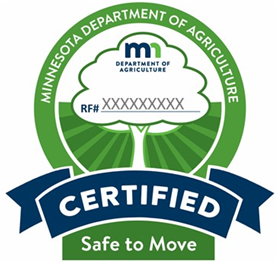
Look for the MDA certified logo.
Moving untreated firewood can spread harmful pests like emerald ash borer, spongy moth, and Asian longhorned beetle, species that have destroyed millions of trees across the United States. Even native pests like carpenter ants and bark beetles can hitch a ride on firewood and cause problems for homeowners.
Help stop the spread:
- Buy firewood where you burn it! Locally sourced wood is less likely to carry invasive pests.
- Use MDA certified firewood with the official seal. View the list of Certified Firewood Producers in Minnesota.
- Avoid transporting hardwood firewood across county or state lines. It is illegal to move hardwood firewood out of Minnesota quarantined counties unless it is MDA certified. Violations can result in fines of up to $7,500 per day.
Visit the MDA's Buying Firewood webpage for more information.
Explore the Minnesota Grown Directory
As autumn approaches, it’s the perfect time to enjoy Minnesota-grown sweet corn, pumpkins, and other seasonal favorites. The Minnesota Grown Directory connects you with farmers markets, farm stands, orchards, pumpkin patches, and other local producers throughout the state.
Find fresh, locally grown products while supporting Minnesota farmers and growers. Visit MinnesotaGrown.com to explore the directory and find Minnesota-grown favorites for your fall season.
|