|
Having trouble viewing this email? View it as a Web page.
June 2, 2026
June Weed of the Month: Stiltgrass
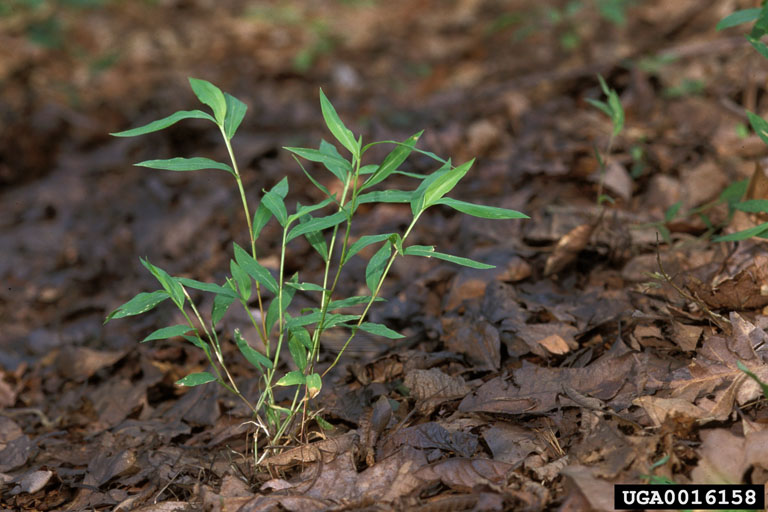
Stiltgrass can be found growing along forest edges, wetlands, and disturbed areas
By Julia Delick, Minnesota Department of Agriculture: Stiltgrass was added to the Minnesota Noxious Weed list in January 2026. It is listed as a Prohibited Eradicate noxious weed, meaning all above and below ground parts of the plant must be destroyed and no transportation, propagation, or sale of this plant is allowed.
Stiltgrass is an annual plant that forms dense tangled mats, usually 1 to 3 feet high. After the growing season, the grass dies back, forming abundant dry thatch. It was originally used as packing material for imported goods from Asia. Stiltgrass was first identified in Tennessee in 1919 and has since spread throughout the eastern United States and westward to Texas. Stiltgrass is not yet reported in Minnesota, but some populations have been found nearby in La Crosse, WI.
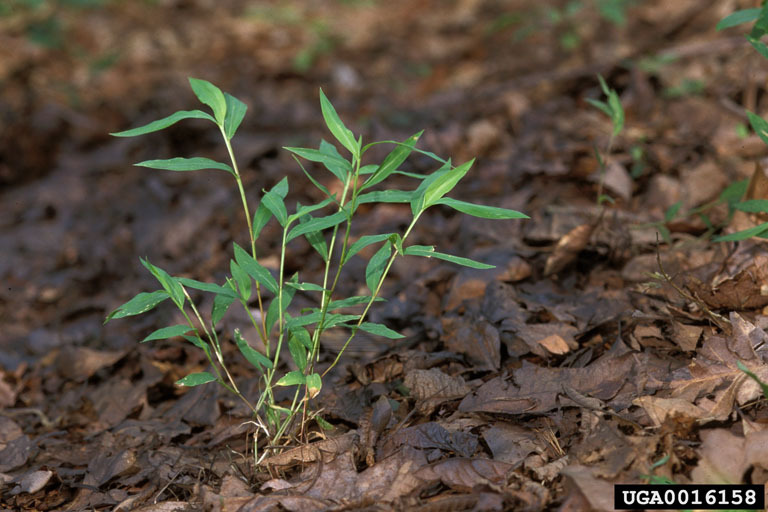 Stiltgrass has long and narrow leaves with smooth edges. James H. Miller & Ted Bodner, Southern Weed Science Society, Bugwood.org
Plant Description
Stiltgrass leaves are relatively small, growing 1 to 3 inches long. They are narrow, with smooth edges and have a shiny silver line running down the middle of the leaf located slightly off-center. The stems are a light-green to reddish-purple color, smooth, and cylindrical.
The lower stems are often raised off the ground by roots or “stilts”, which give the plant its common name. The plants typically flower from late summer into early fall. Flower spikes range from 1 to 3 inches long and are covered with multiple small flowers, each measuring up to a quarter inch in length.
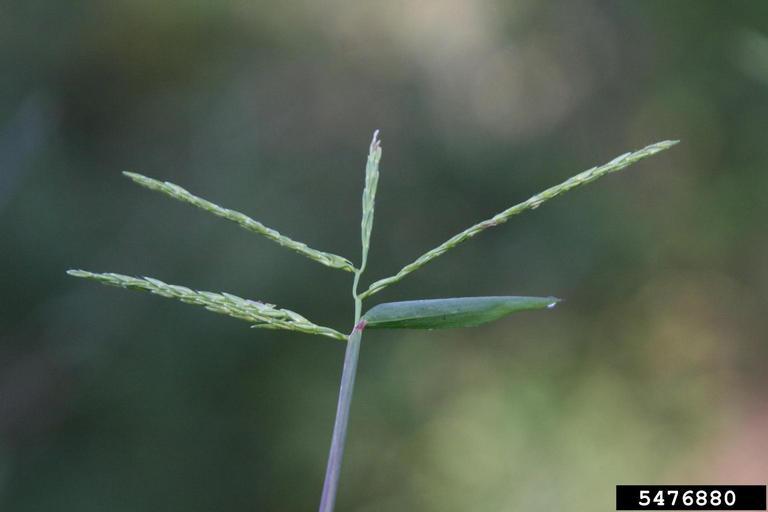 Stiltgrass has a three-branched flower spike that grows in late summer, maturing to carry the small seeds. Chris Evans, University of Illinois, Bugwood.org
Habitat and Spread
Stiltgrass can be found growing along forest edges, wetlands, and disturbed areas. It prefers moist, partially shaded growing areas but is adaptable to deep shade and full sun. Infestations usually start in disturbed sites and may spread into undisturbed areas. Stiltgrass spreads exclusively by seed, with each plant producing up to 1,000 seeds per year. Like most other annual invasive plants, stiltgrass seeds are small and highly mobile, usually spreading to new areas accidentally on contaminated surfaces, such as vehicles, equipment, and footwear.
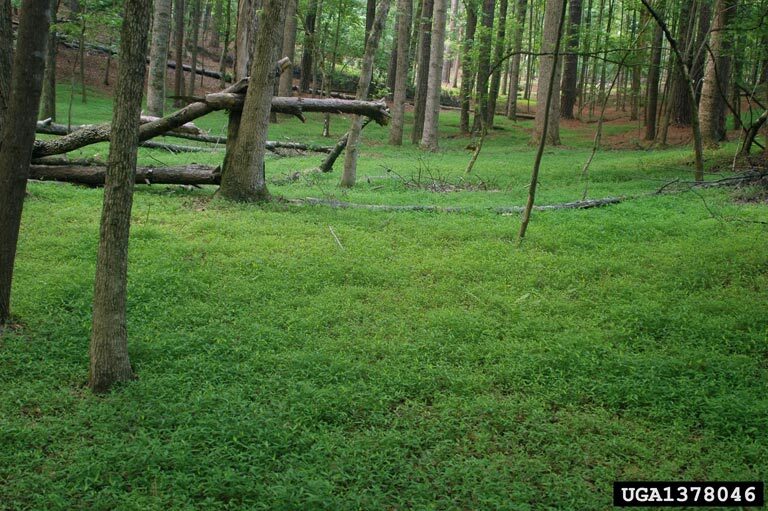 A stiltgrass infestation overtaking a forest floor. Chris Evans, University of Illinois, Bugwood.org
Management
Small stiltgrass infestations can be pulled by hand as the roots are very shallow. Plants can also be removed with a string trimmer if cut at ground level. This removes the stem tissue, preventing stiltgrass from regrowing. Mowing is not as effective as stiltgrass can regrow from parts of the stem that are left behind.
Timing is important when using these mechanical removal techniques. It is recommended to delay mechanical removal until June to avoid a second germination of the plants and complete the work before late August which is when seed heads emerge. Additionally, herbicides used to control crabgrass can also work for stiltgrass. For specific herbicide recommendations, contact your University of Minnesota Regional Extension Educator.
Suspected discoveries of stiltgrass in Minnesota should be submitted to the Minnesota Department of Agriculture’s (MDA) online Report a Pest service or by email.
You can learn more about noxious weeds by visiting the MDA's Noxious Weed List. You can also listen and subscribe to Smarty Plants, a podcast produced by the MDA that explores the invasive insects and noxious weeds that threaten Minnesota’s natural and agricultural resources.
MEDIA: Contact Brittany Raveill, MDA Communications, at brittany.raveill@state.mn.us or 651-201-6131 for more information on Weed of the Month
|