|
Having trouble viewing this email? View it as a Web page.
May 1, 2026
May Weed of the Month: Butterburs
Common and giant butterburs are in a 3-year nursery phase out
By Emilie Justen, Minnesota Department of Agriculture: Two species of butterburs, common (Petasites hybridus) and giant (Petasites japonicus), were added to the Noxious Weed List in January 2026. Butterbur plants grow aggressively and quickly replace native vegetation important to maintaining healthy ecosystems near river and streambanks. Their large leaves shade out other plant species, which can leave the soil bare and contribute to soil erosion. They also have tuberous, fleshy, creeping roots which can produce new plants from root pieces. These root pieces can spread downstream during flooding events.
Butterburs have naturalized along riparian areas in Michigan, Minnesota, and Wisconsin. Both species are herbaceous perennials with huge leaves that grow 3 to 4 feet tall and 3 feet across. These plants grow in shaded areas with moist soil, including riverbanks, shorelines, wetland edges, forested floodplains, and roadside ditches. |
|
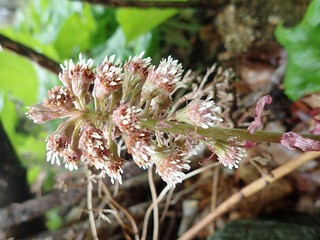 |
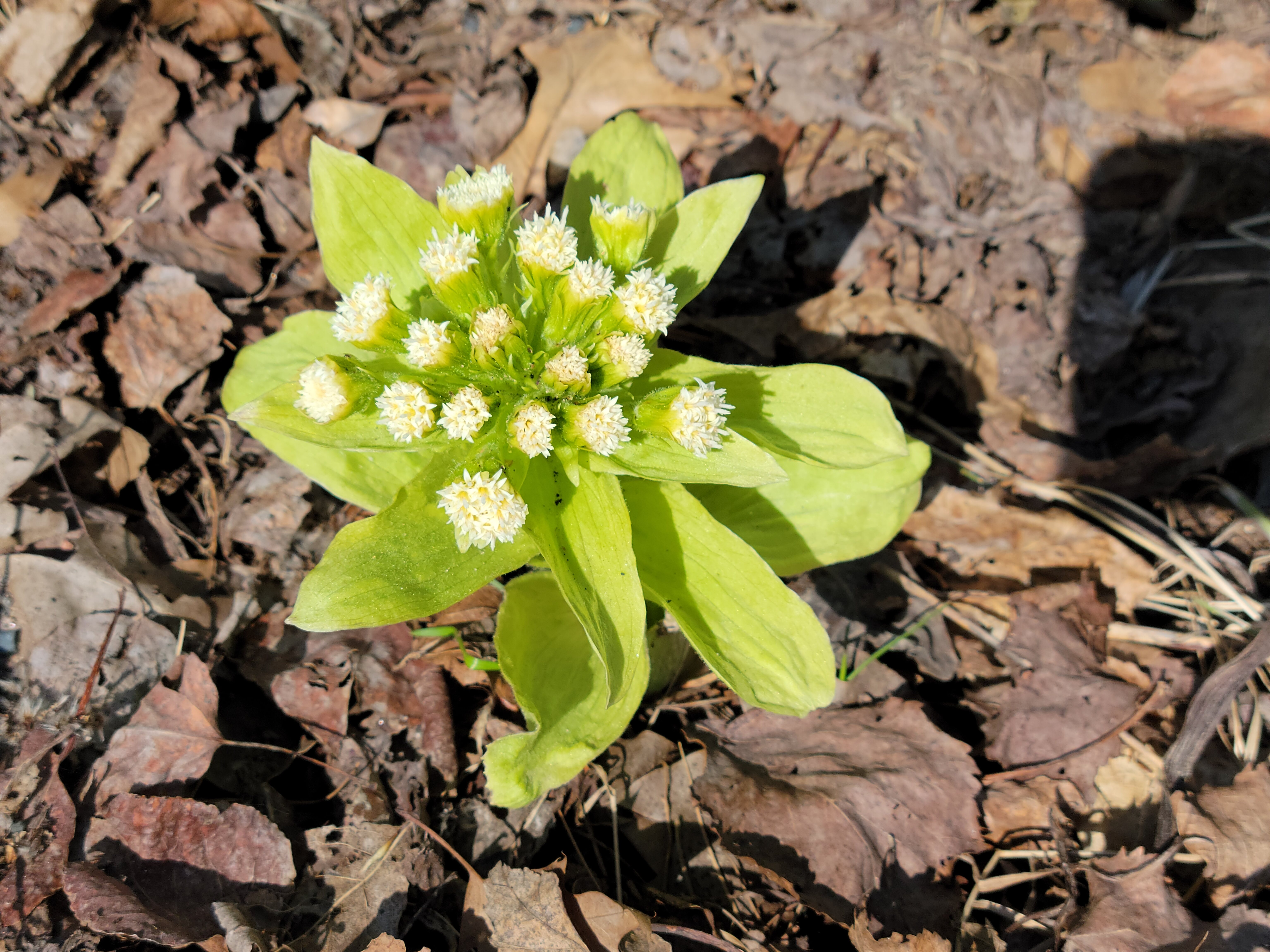
Butterburs bloom in the spring before their leaves emerge, in April or May. The flowers appear on spikes. Common butterbur has pinkish purple flowers, and giant butterbur has yellowish white flowers. The fruit and seeds appear later in the season in white, feathery tufts that easily can be blown by wind or moved in water. |
|
 |
Both butterbur species are in a 3-year nursery production phase-out. This phase-out allows nurseries time to adjust their plant stock. Beginning January 1, 2029, both species will move to the Restricted category of the Minnesota Noxious Weed List and will be prohibited from sale in Minnesota. Though there is no requirement for landowners to remove either species, we encourage people to consider managing them to keep them from spreading in shaded areas near rivers and streambanks.
When planning management strategies, be sure you have correctly identified the plant. Minnesota has a native Petasites species related to the butterburs called sweet coltsfoot (Petasites frigidus). The leaves are much smaller at 6 to 8 inches wide, deeply lobed, with undersides covered with white, woolly hairs. Sweet coltsfoot also blooms before their leaves emerge and can form large colonies along moist riverbanks. There is no need to remove these plants.
After confirming the presence of common or giant butterburs, prevent them from spreading by digging up the entire root system and monitoring for resprouting. Herbicide applications may also be effective and should be done during the active growing season. For herbicide recommendations, contact your local University of Minnesota Extension office.
You can learn more about these species by visiting the Minnesota Department of Agriculture’s (MDA) Noxious Weed List. You can also listen and subscribe to Smarty Plants, a Minnesota Department of Agriculture podcast.
MEDIA: Contact Brittany Raveill, MDA Communications, at brittany.raveill@state.mn.us or 651-201-6131 for more information on Weed of the Month
|