Plant Pest Insider

Having trouble viewing this email? View it as a Web page.

Plant Pest Insider Newsletter logo with bug and leaf

A Newsletter from the Minnesota Department of Agriculture

February 13, 2026

Looking for Weeds in the Seeds

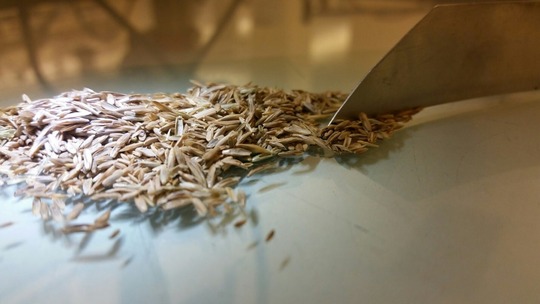
A small pile of light brown oval grass seeds on a glass table top and are very close to the lens.

Seed analysts closely examine samples, evaluating the sample seed by seed to ensure label accuracy and absence of noxious weed seeds.

Noxious weeds can enter Minnesota through multiple pathways. They may hitch a ride in tire treads, arrive as unwanted guests in materials, or travel unnoticed in retail seed. Fortunately, the Minnesota Department of Agriculture (MDA) seed inspectors and seed lab analysts are on the case, working to help stop noxious weed seeds before they can spread in the state.

Seed inspectors visit sites that process, label, and sell seed to farmers, installers, and consumers. A lot of seed travels within Minnesota whether it be for crops, landscaping, or in a backyard. To help ensure retail seed sold in the state is free of noxious weed seeds, seed inspectors review seed labels to verify compliance with state regulations and confirm noxious weeds aren’t using this pathway.

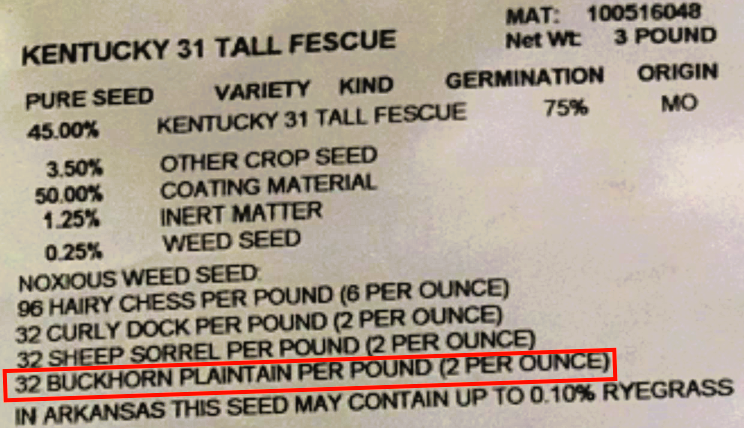
The seed label shows a restricted noxious weed (Buckhorn plantain) exceeding Minnesota limits, which triggers enforcement action.

This product contains buckhorn plantain over the 25 seeds per pound limit. Limiting this restricted weed seed helps prevent further spread in Minnesota. When inspectors see this on a label, they issue a stop sale and educate the site.

If prohibited or over-limit restricted noxious weed seeds are found, inspectors issue a stop sale to prevent the sale and movement of potentially infested seed. While this helps end transactions, inspectors also dedicate a significant amount of time to communicating regulations and sharing knowledge with the site. This education-to-compliance approach helps sites understand why regulation occurs, what their next steps may be, and builds strong relationships between the regulatory program and its stakeholders.

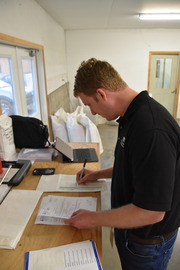
An inspector in a black shirt and jeans is standing at a table with pen in hand while reviewing a paper seed label.

An inspector reviews a label for noxious weed seed content along with other regulatory requirements. The inspector also takes a sample for testing by seed lab analysts.

What if a noxious weed seed isn’t listed on the label but may still be hiding in the product? That’s where seed lab analysts come in! During inspections, samples are collected and sent to the lab where seed analysts carefully examine the contents seed by seed to verify label accuracy and ensure noxious weed seeds are not hitchhiking in the product. While the seed industry completes quality controls to help prevent the spread of noxious weeds seeds, the state regulatory program provides an additional layer of protection to keep noxious weed seed out of Minnesota.

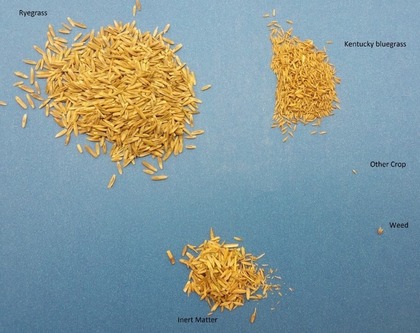
Five piles of seed on a blue background including ryegrass seed, inert matter, Kentucky bluegrass seed, and small amounts of other crop and weed seed.

Seed analysts separate sample contents in major categories, including intended ingredients (ryegrass and Kentucky bluegrass), inert matter, other crop seed, and weed seeds.

To learn more about how the MDA Seed Program helps prevent the spread of noxious weeds, visit the Seed Program webpage.


New Smarty Plants Episode: Consumer Protections on the Smallest Scale

Smarty Plants Podcast Logo

Smarty Plants is a podcast exploring invasive insects and noxious weeds that threaten Minnesota’s natural and agricultural resources.

Sitting down with a big bowl of salad or admiring the beauty of our plants, it isn't always in the forefront of our minds where those things came from, a tiny little seed. On this episode of Smarty Plants, Michael Merriman and Shane Blair from the MDA Seed Program join us to discuss the in-depth work that goes into seed sales in Minnesota and how the program helps protect consumers and agriculture. Michael also recalls the seed conundrum of 2020, when thousands of people began receiving unsolicited mystery seeds in the mail.

Subscribe to Smarty Plants today so you don’t miss an episode!


In the Field: Outreach in Action

outreach events

Outreach is a key part of the Plant Protection Division’s (PPD) efforts to prevent the spread of invasive species and emerging pests. Through reporting tools, digital campaigns, in-person events, and interagency collaboration, PPD outreach keeps residents and industry professionals informed and engaged in prevention and early detection.

Staff participate in environmental education days, industry trade shows, and conferences to share information on invasive species prevention and emerging pest concerns. From the Minnesota State Fair to the Minnesota Organic Conference, outreach connects with people across the state.

In addition to in-person events, outreach occurs through the Report a Pest system, a citizen reporting tool that improves awareness and supports early detection. Ongoing communication tools include the monthly Plant Pest Insider (PPI) newsletter and the Smarty Plants podcast. The PPI provides timely updates on invasive pests and highlights ongoing pest management, while Smarty Plants covers the work of the Plant Protection Division through interviews with researchers, agency leaders, and subject matter experts. 

Seasonal outreach focuses on holiday greenery and Christmas tree pests, such as elongate hemlock scale. Messaging highlights signs of infestation and proper disposal methods. These efforts are coordinated with the Minnesota Department of Natural Resources and the Minnesota Pollution Control Agency, and shared through press releases, social media, and short video content.

Digital campaigns complement in-person outreach. Ads ran on Google Display, Meta, and YouTube throughout the summer and into the fall of 2025, including the Buy Local, Burn Local campaign and a statewide forest pest prevention animation. Geo-targeted YouTube ads in five southeastern Minnesota counties focused on pest detection and prevention in areas at risk for tree of heaven and spotted lanternfly expansion.

By combining reporting tools, newsletters, podcasts, in-person engagement, seasonal campaigns, and digital advertising, outreach efforts continue to raise awareness, educate the public, and strengthen Minnesota’s early detection network for invasive species.

Visit the MDA at an upcoming event:


February Weed of the Month: Changes to the Minnesota Noxious Weed List

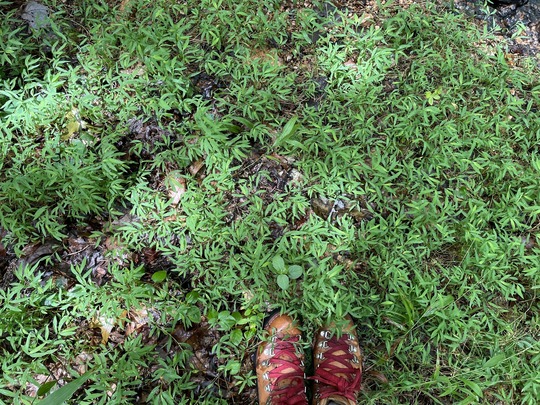
boots standing in an area of stiltgrass

Stiltgrass forms a low growing mat on the ground that inhibits native plants. Photo courtesy Jennifer Larson, United States Forest Service.

Changes took place on January 1

By Monika Chandler, Minnesota Department of Agriculture - The Minnesota Department of Agriculture’s Noxious Weed Advisory Committee (NWAC) assesses plant species to determine if they are a threat to Minnesota and whether regulation could reduce the threat level. Rigorous risk assessments are written for the plant species, and regulatory recommendations are provided to the commissioner of agriculture. Potential recommendations include listing a species as prohibited eradicate, prohibited control, restricted, specially regulated, or do not list. The commissioner reviews each recommendation and decides whether to accept or reject it.

Read more


Join the Spongy Moth Trapping Survey Team
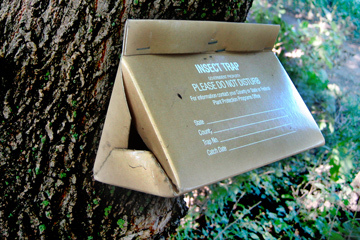
insect trap

This announcement is for approximately 20 Forest Pest Surveyor positions with the MDA’s annual Spongy Moth Trapping Survey.

Spongy Moth (Lymantria dispar) is both a human nuisance and a serious threat to Minnesota’s forests, urban trees, and shrubs. Once established, the caterpillars can cause costly and widespread defoliation during outbreaks. The trapping survey helps detect and monitor the pest early, identify potential problem areas, and provides data needed for future management decisions to slow the spread of this invasive insect in Minnesota.

Job duties include assembling, placing, inspecting, and removing up to 800 cardboard detection traps. Surveyors will each be assigned a route reasonably accessible from their home office location. Data collection is done using a GPS-enabled tablet (training provided), and surveyors report daily to a lead worker.

These are intermittent positions, meaning survey staff work as needed throughout the survey period. Read the full position description and apply today!


Help Protect Minnesota Forests from Invasive Pests 

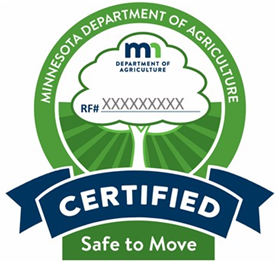
MDA certified safe to move logo

Look for the MDA certified logo.

Moving untreated firewood can spread harmful pests like emerald ash borerspongy moth, and Asian longhorned beetle; species that have destroyed millions of trees across the United States. Even native pests like carpenter ants and bark beetles can hitch a ride on firewood and cause problems for homeowners.

Help stop the spread:

  • Buy firewood where you burn it! Locally sourced wood is less likely to carry invasive pests.
  • Use MDA certified firewood with the official seal. View the list of Certified Firewood Producers in Minnesota.
  • Avoid transporting hardwood firewood across county or state lines. It is illegal to move hardwood firewood out of Minnesota quarantined counties unless it is MDA certified. Violations can result in fines of up to $7,500 per day.

Visit the MDA's Buying Firewood webpage for more information. 


minnesota green corps

Minnesota GreenCorps is now accepting applications from organizations interested in hosting an AmeriCorps member for the 2026-2027 program year.

The MPCA plans to place up to 58 full-time members with host sites across the state. Members serve full-time for 11 months from September 2026 to mid-August 2027. Organizations eligible to host Minnesota GreenCorps members include government entities (local, regional, state, and Tribal), school districts, public education institutions, and 501(c)(3) nonprofits. Applications are due March 24. Learn more.


Upcoming Events and Trainings

UMN Extension Fruit and Veg Webinar Series

January through April - "Kick off 2026 with a series of interactive online webinars to learn practical strategies to improve the production, harvest and quality of your fruits and vegetables." Register for the webinar series. 

Fridays with a Forester

February through April - Join Extension foresters to discuss some of the key issues and questions around forest and woodlands facing Minnesota land stewards. These online sessions will be very informal, open to the public and free of charge. Each session will start with a brief presentation followed by a discussion framed around participant questions on the topic. Register for webinars.

Gardening from the Ground Up Webinar Series

February 16 to 19 - "University of Minnesota Extension educators are excited to offer the sixth annual Gardening from the Ground Up webinar series, a free weeklong program designed to help gardeners build skills from soil to harvest." Register for webinar series. 

Annual Invasive Species Forum

February 17 to 19 - "The virtual Invasive Species Forum is an annual event that brings attention to invasive species issues, research, and advances in prevention and management occurring across Canada, in neighboring U.S. States, and beyond." Register for forum.

Minnesota Christmas Tree Growers Winter Convention

February 20 to 21 - We have been diligently working to create an agenda that is focused on bringing you a vast array of topics including Tree Genetics 101 and 102, a medical provider’s guide to farm safety, having an authentic social media presence and continuing education for our new growers. Register for convention. 

National Invasive Species Awareness Week

February 23 to 27 - National Invasive Species Awareness Week (NISAW) is an international event dedicated to raising awareness about invasive species, the threats they pose, and the actions that can be taken to prevent their spread. Register for webinars. 

Marbleseed Organic Farming Conference

February 26 to 28 - "The Marbleseed Organic Farming Conference is one of the largest organic farming conferences in the United States. Every year regenerative and organic farmers from a wide range of farm sizes, experiences, and backgrounds gather to learn the latest in organic farming methods, build community, and shape the future of the organic farming movement." Register for the conference. 

Expanding Awareness of Lesser Celandine in the Midwest

March 11 - There has been a noticeable increase in lesser celandine (Ficaria verna) spreading via moving waters (rivers, creeks), passing through urban areas, and even popping up in residential lawns. The Michigan Lesser Celandine Coalition is helping to answer questions of “how it got there, and what are the best management practices for control?”. Learn about the formation and efforts of the Coalition to raise awareness, increase monitoring and reporting, and develop best management practices for this invasive plant. Register for webinar.

Minnesota Shade Tree Short Course

March 17 to March 18 - "The Shade Tree Short Course is two-day course for everyone involved in urban forestry, arboriculture, and the green industry. ISA Certified Arborist® CEUs are available for most sessions. The conference includes general and concurrent sessions each day, as well as a vendor area with mini sessions covering a variety of topics." Register for conference.

Forest Pest First Detector (FPFD) 2026

April 6 - Become part of the award-winning Minnesota Forest Pest First Detector volunteer program to help find new invasive species affecting Minnesota’s trees and forests or attend as a refresher for already active Forest Pest First Detectors. First Detectors are trained to quickly detect and diagnose and report critical invasive pests. The 2026 workshops will focus on emerald ash borer, oak wilt, Phytophthora species including sudden oak death, jumping worms, elm zigzag sawfly, spotted lanternfly and tree-of-heaven, Amur corktree, round leaf bittersweet, stiltgrass, swallow-worts, rowan mountain ash and porcelain berry. This workshop is for natural resource professionals and highly trained volunteers. Register for program.

Weed ‘em Out

Learn how to identify and report early detection invasive plants before they become big trouble. You will learn identification skills and then apply those skills to target species samples to distinguish them from common look-alike species. The agenda will include these high priority plants: stiltgrass, Johnsongrass, swallow-worts, rough potato, Dalmatian toadflax, golden honeysuckle vine, porcelain berry, common and giant butterburs, teasels, Amur corktree, tree-of-heaven, rowan mountain ash plus regional specialties. These workshops are for people who are active in identifying vegetation on roadsides, parks, pastures or natural areas. The workshops are free but registration is required. This is a free program so lunch will not be provided. There will not be time to leave the site and purchase lunch so please bring your own. All workshops will be from 9 a.m. - 3 p.m. Stewardship plan writers will receive 4.5 CEs. Verification to earn SAF and ISA CFEs provided on request.

  • Rochester, Tuesday, April 7, MnDOT Southeast District Headquarters, Rochester. 2900 48th Street NW Rochester, MN 55901. Register here.
  • St. Cloud, Wednesday, April 15, MnDOT Training Center (Located at the MnDOT District 3 office), 3725 12th St. N. St. Cloud, MN 56303. Register here.
  • Duluth, Tuesday, April 28, Hermantown Police Training Center, 5111 Maple Grove Rd, Hermantown, MN 55811. Register here.
  • Grand Rapids, Wednesday, April 29, Minnesota Interagency Fire Center, 402 SE 11th St, Grand Rapids, MN 55744. Register here.

This program is a joint venture between University of Minnesota Extension, the Minnesota Departments of Agriculture, Natural Resources, and Transportation and the US Forest Service. 


Save the Date!


Upper Midwest Invasive Species Conference, October 6-8, 2026 in La Crosse, WI

Pests in the Press


cartoon bug holding newspaper

It Flies! Regulatory Officials on Constant Alert for Flighted Spongy Moths

One invasive species that’s been here for quite some time, though, is the spongy moth (Lymantria dispar, formerly known as the gypsy moth). This species is firmly established in North America, and countless hours of effort have gone into studying and managing this pest. Read more

Sugar Rush: Spotted Lanternfly Honeydew Attracts Variety of Fellow Insects

The damage that this misnamed planthopper causes to trees and other plants when it feeds on their sap is much ballyhooed, if not a bit overstated. Its bad deeds do not stop at sap sucking, however. After it processes nutrients from sap, the lanternfly excretes a sticky glop called honeydew that, in large amounts, can kill vegetation and foul up everything on which it lands, from automobiles to lawn chairs. Read more

This Invasive Wasp Is Wreaking Havoc on Elms in North America

First discovered in North America in 2020, the elm zigzag sawfly is expanding across the continent at an “alarming pace,” scientists report in a study published in November in the Journal of Integrated Pest Management. They’ve since been spotted in 15 U.S. states and 4 Canadian provinces, with their range on the continent stretching between North Carolina, Quebec and Manitoba. Read more

ARS Scientists Develop Innovative Pipeline to Analyze Plant Pathogens

ARS scientists in Corvallis, OR, in collaboration with Oregon State University, developed a disease surveillance platform that could improve U.S. agriculture by unlocking the future of plant health. PathogenSurveillance is an innovative, open-source software tool that can quickly analyze and identify novel microbial variants based on DNA sequences. Read more


Grants that Grow

stacks of pennies with sprouts coming out of top

Agricultural Growth, Research, and Innovation (AGRI) Program

The Agricultural Growth, Research, and Innovation (AGRI) Program supports the advancement of Minnesota’s agricultural and renewable energy industries. Learn more

Winter Funding Opportunities for Fruit and Vegetable Farmers

Find grants for infrastructure, equipment, and more. Learn more

Produce Safety Mini-Grant

The Produce Safety Program has approximately $30,400 to distribute via the 2026 mini-grant. Funding comes from the United States Department of Agriculture (USDA) Specialty Crop Block Grant (SCBG), Catalog of Federal Domestic Assistance (CFDA) 10.170. This grant provides reimbursement up to $800 per farm. No matching funds from the applicant are required. Learn more.


Listen and Subscribe to the Smarty Plants Podcast

Subscribe to Smarty Plants Podcast


Report a Pest


Call us at 888-545-6684

Email us at reportapest@state.mn.us

Use our online reporting form