|
October 7, 2025
Did you know forest pests may be lurking in your firewood?
Fall in Minnesota brings shorter days, cooler nights, and the perfect time to gather around a fire. But firewood can do more than keep us warm, it can also carry harmful pests that threaten our forests.
Many insects and diseases live on or inside trees, lumber, and firewood. Moving untreated firewood can spread these pests, putting Minnesota’s trees at risk. Invasive species like the emerald ash borer, spongy moth, and Asian longhorned beetle have attacked millions of trees across the United States. Native pests such as wood borers, bark beetles, and carpenter ants, along with diseases like oak wilt and Dutch elm disease, can also hitch a ride and spread to healthy trees.
How You Can Protect Minnesota Forests
-
Buy firewood where you’ll burn it. Locally purchased wood is less likely to contain pests not already in the area.
-
Choose MDA-certified firewood. Certified, heat-treated wood poses the lowest risk and is marked with the MDA certified logo. Check labels for the county of harvest. Find a Minnesota Certified Firewood Producer near you.
-
Follow state park rules. If visiting a Minnesota State Park, comply with DNR firewood guidelines.
-
Burn firewood promptly. Use wood before spring to prevent pests from emerging. Avoid storing wood indoors for long periods.
-
Store it safely. Stack wood off the ground with good air circulation to help it dry. Cutting in mid to late fall also reduces the risk of attracting springtime borers.
To limit the spread of pests, the Minnesota Department of Agriculture (MDA) regulates hardwood firewood. It is illegal to:
Violations can result in fines of up to $7,500 per day, per violation.
If you have questions about safe firewood practices or suspect a tree may have a pest, contact the MDA at reportapest@state.mn.us.
Protect Minnesota’s trees this firewood season by buying local and using certified firewood. Your choices can help stop destructive pests and keep your trees and our forests healthy.
Fall House Guests That May Bug You
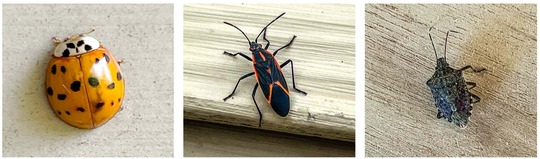
Left to right: Asian lady beetle, boxelder bug, brown marmorated stink bug
As the weather cools, several insects, both native and non-native, begin looking for a way indoors to survive our Minnesota winters. The most common include box elder bugs, lady beetles, and the invasive brown marmorated stink bug. These insects are often seen congregating on the sunny side of homes and other structures in the afternoon. Outdoors they feed on plants and plant parts but as the temperatures drop and the days shorten, they move indoors. You may not notice them right away, but once the heat in your home is turned on, they often reappear.
These insects are mostly just an annoyance but there are some things you can do to keep them out of your home. The best thing to do is to make sure the exterior of your home is sealed up tight. Check doors, windows, vents, siding, soffits, and fascia and seal as necessary. If you do find them inside your home, hand removal is often the best method.
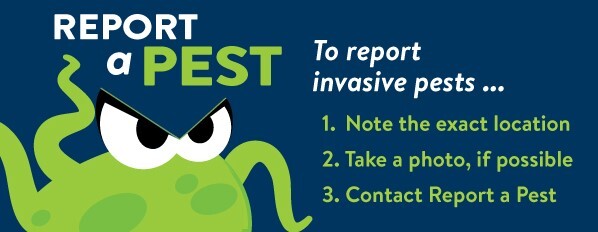
The MDA tracks invasive species in Minnesota and asks residents to report sightings of any brown marmorated stinkbugs found outside the Twin Cities metropolitan area (Anoka, Carver, Dakota, Hennepin, Ramsey, Scott, and Washington counties). If you suspect you’ve found one, please take a clear photo or collect the insect for identification.
More information on how to report can be found on the Report a Pest webpage.
New Episode of Smarty Plants - Are Invasive Plants Just a Click Away?
Smarty Plants is a podcast exploring invasive insects and noxious weeds that threaten Minnesota’s natural and agricultural resources.
Shopping online is easier than ever, making our favorite products accessible and deliverable to our homes with just a click or two. In this episode of Smarty Plants, Amy Morey from the University of Minnesota joins host Jennifer Burington to share her research on purchasing invasive plants online and what she was able to get delivered. Rachel also highlights the Minnesota Grown marketing program and shares easy ways to buy local.
Subscribe today so you don’t miss an episode!
In the Field: Surveying for Phytophthora
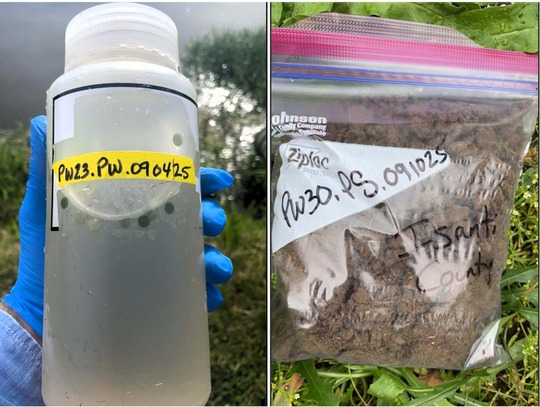
Water (left) and soil (right) samples collected by field staff. The small green circles in the water sample are rhododendron leaf discs, which act as bait to attract waterborne Phytophthora.
Field work for the Ag Pathways and Nursery and Christmas Tree surveys has wrapped up for the year. As part of this effort, MDA staff collected water and soil samples to test for the following:
-
Phytophthora ramorum - the pathogen that causes sudden oak death and ramorum blight
-
Phytophthora kernoviae - the pathogen that causes beech bleeding canker
- Other Phytophthora species
Phytophthora are plant pathogens that live in soil and water and cause root rot, crown rot, and wilt in many common landscape plants. More than 100 plant species can be infected by P. ramorum, including popular nursery and landscape plants like rhododendron, viburnum, and lilac.
Samples were collected from 31 sites across 12 Minnesota counties. Soil samples from Christmas tree farms and nurseries were sent to the University of Minnesota for analysis. Water samples were collected from nurseries and were processed at the MDA laboratory.
Invasive Phytophthora species pose a serious threat to the state’s nursery and Christmas tree industries if introduced. Routine surveys provide early detection, help maintain compliance with federal regulations and protect growers while supporting the continued health of Minnesota’s green industry.
September Weed of the Month: Update on Palmer Amaranth
Over 120 reports of Palmer amaranth investigated in 30 Minnesota counties since 2016
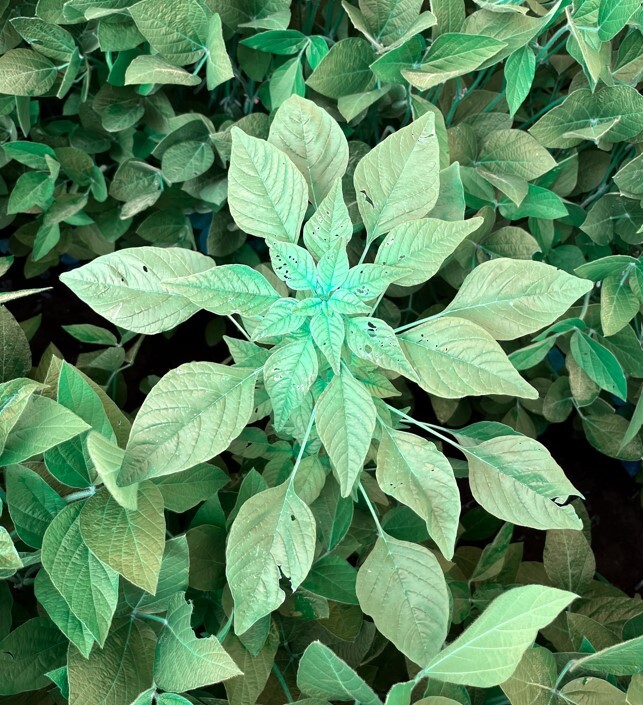
A single Palmer amaranth plant growing in a soybean field.
By Julia Dellick, Minnesota Department of Agriculture - Palmer amaranth is a fast-growing, annual weed that is detrimental to row crops and can add higher production costs to farmers already dealing with high costs like fertilizer and fuel. Read more
|