|
Having trouble viewing this email? View it as a Web page.
August 5, 2025
Creeping Bellflower Status in Minnesota
Creeping bellflower, Campanula rapunculoides, is receiving a lot of attention in the metro area this summer. It is a flowering perennial plant native to Europe and western Siberia. The purple flowering plant was brought to North America as an ornamental then escaped cultivation.
Creeping bellflower is now a common plant in metro residential yards growing in turf and gardens. A single plant can produce up to 15,000 seeds annually. It can also spread by underground stems. In addition to underground stems, there are underground storage tubers that can send out new underground stems. The high seed production combined with extensive underground parts makes this plant difficult to control.
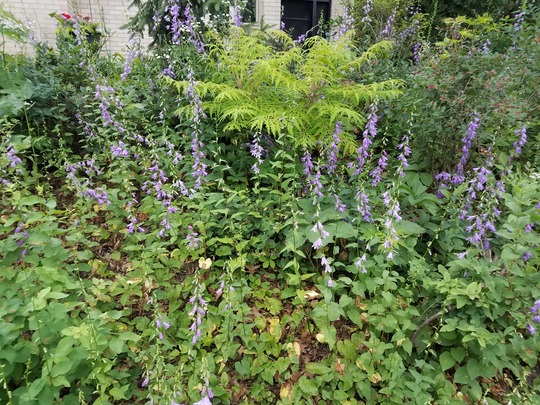 Creeping bellflower is commonly found growing in metro residential yards.
Master Gardeners and other groups have done a very good job educating the public about how to identify and control this plant. As more people learn about creeping bellflower, there has been increasing advocacy for the Minnesota Department of Agriculture (MDA) to regulate it. The MDA has received 42 petitions to evaluate the species for regulation. To put this in perspective, the next species with the most petitions is dame’s rocket with three petitions. It is likely that the Noxious Weed Advisory Committee (NWAC) will vote to select creeping bellflower for evaluation and a risk assessment will be written.
The NWAC was established by the Legislature in 2009 to evaluate plant species for invasive potential, cost and feasibility of control, benefits and damaging impacts. This process is necessary to prioritize the growing number of invasive plants impacting Minnesota and the limited resources available to address them either through management or enforcement. Counties, townships, and cities also have authority to address invasive plants not listed by the state but are of concern to their citizens.
The media has covered creeping bellflower on television and in newspapers. The MDA knows of one website advocating for creeping bellflower regulation as well as discussions on social media. There are yard signs about creeping bellflower in some metro neighborhoods. Overall, there has been a lot of communication about creeping bellflower and its management.
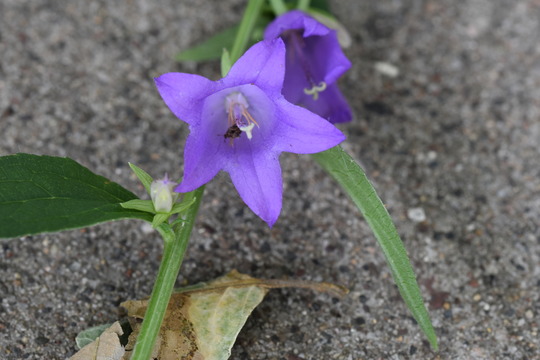 Creeping bellflower flowers are blue-purple and are pollinated by insects.
For information about identification and management please see University of Minnesota Extension’s creeping bellflower page. It is feasible to control creeping bellflower but persistence is needed. There is understandable frustration if one property owner controls the plant then faces constant reinfestation pressure because the neighboring property owner doesn’t control the plant.
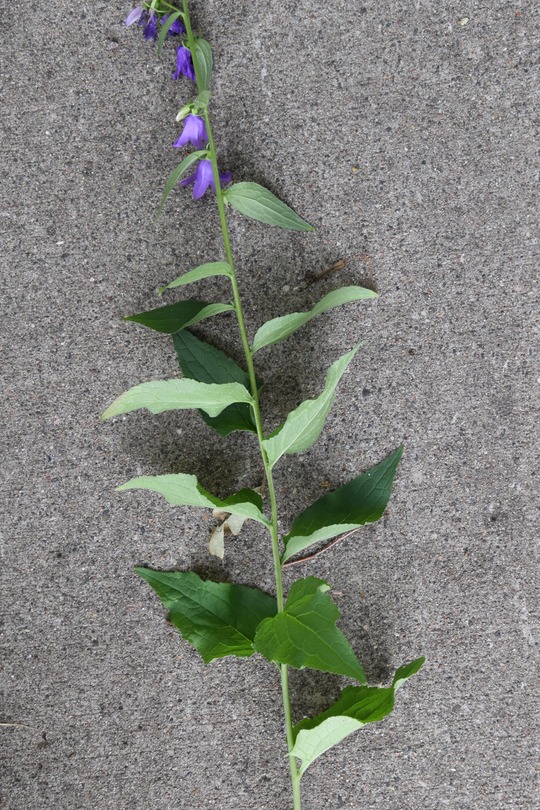 Creeping bellflower has alternate, simple leaves and flowering spikes.
CAI Grant FAQs
Grant funding is available for all counties that employ a County Ag Inspector or County Designated Employee (CAI/CDE). The Request for Proposals is linked in the Forms + Resources box on the CAI Grant webpage: https://www.mda.state.mn.us/county-agricultural-inspector-grant. A CAI/CDE or other county administrator must apply through the online application system by September 4, 2025.
In addition to the questions in the FAQ section on the grant webpage, we wanted to also clarify a few other questions we’ve received:
Q: If a CAI is housed in an SWCD, can the SWCD apply for the grant or does the county have to apply then give to the SWCD?
A: Yes, the SWCD can apply for the grant if the CAI is an SWCD employee. The funding should go to the CAI.
Q: Can the budget include personnel time for county spray crew employees?
A: We prefer that the budget prioritizes personnel time that goes to enforcing the noxious weed law. For example, if the county receives 10 weed complaints, the CAI has followed up on those complaints, and the landowners have not responded to enforcement actions, then grant funds can be used to treat those noxious weeds, including personnel time for spray crew employees.
Q: If counties have multiple CAI/CDEs, can they submit multiple applications?
A: No, each county can only receive one grant award per county.
Please send questions to Emilie Justen emilie.justen@state.mn.us.
|