|
June 16, 2025
MDA Launches Annual Spongy Moth Survey
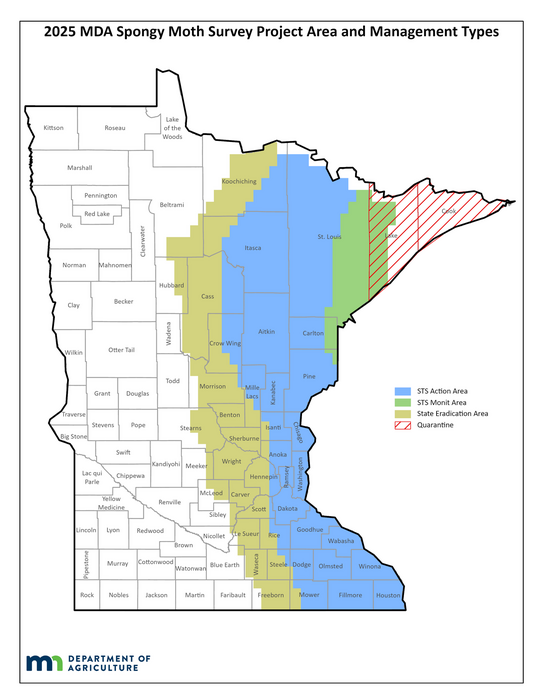
Map showing the different management types within the project area.
The Minnesota Department of Agriculture (MDA) has launched its annual spongy moth (Lymantria dispar) survey, setting insect traps across the state to help detect and slow the spread of this destructive pest.
Survey Timeline and Regional Details
Trap placement began in early June and will continue through early July. The traps will be removed at different times depending on the region:
Southern Minnesota: Trap placement underway now through early July; traps will be removed by early September.
Northern Minnesota: Trap placement begins in early June; traps will be removed by the end of October.
This survey is part of a nationwide effort known as the Slow the Spread (STS) program. Minnesota has 21,538 planned trap sites, accounting for 21.6% of the 99,347 total traps planned across all participating STS states in the nationwide project area, which extends from Minnesota to North Carolina.
Purpose of the Survey
The MDA’s trapping program plays a crucial role in early detection of spongy moth populations. Rather than attempting to trap every moth, the program identifies potential infestation hotspots, guiding future treatment and management strategies. This proactive approach helps protect Minnesota’s forests and urban landscapes, delaying the damaging effects of the pest.
Spongy moth caterpillars feed on the leaves of over 300 tree and shrub species, especially oak, poplar, birch, and willow. Repeated infestations can defoliate and eventually kill trees, and the caterpillars themselves can become a nuisance to people when populations are high.
In addition to trapping, the MDA also uses aerial mating disruption management in select areas to help manage spongy moth populations. This method involves releasing a synthetic version of the spongy moth’s sex pheromone, the same one used in traps, into the air. By flooding the area with this scent, male moths become confused and can’t find females to mate with. Because they can’t reproduce, mating success drops, and population growth slows. Aerial treatments typically occur in June or July, depending on insect development and weather conditions.
To learn more about spongy moths and the MDA’s efforts to slow their spread, visit the MDA’s spongy moth webpage.
Revisit Episode 7 of Smarty Plants: Making Plans for a Healthy Garden
As you dig into this year’s gardening season, now is the perfect time to revisit the January episode of the Smarty Plants podcast: “Making Plans for a Healthy Garden.” This episode offers timely advice on how to ensure the seeds and plants you select are free from diseases and noxious weeds, an essential step for building a healthy, successful garden. Whether you're just starting your garden or updating your plans, this episode is full of helpful reminders.
Smarty Plants, produced by the Minnesota Department of Agriculture’s Plant Protection Division, explores invasive insects and noxious weeds that threaten Minnesota’s environment and agriculture. Each episode features expert insights and practical tips to help listeners protect our natural resources.
Subscribe to Smarty Plants today so you don't miss an episode!
Elm Invasion: Keep an Eye on the ZigZag Sawfly!
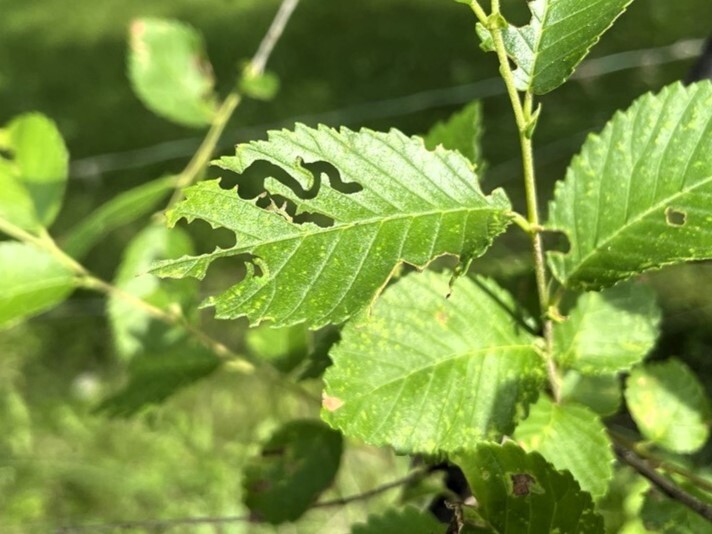
Characteristic zigzag feeding pattern caused by EZS larvae.
Now is the time to be on the lookout for the elm zigzag sawfly (EZS) (Aproceros leucopoda). EZS is a defoliating sawfly that was first confirmed in Minnesota in July 2024 and has since been found in multiple areas across the Twin Cities metro.
EZS larvae feed exclusively on elm species (Ulmaceae), including but not limited to American, Siberian, Chinese, winged, and English elm, in both urban and forested landscapes. If you look up into elm tree canopies, you may see the characteristic zigzag feeding damage on the leaves.
EZS can complete multiple generations in a year. At this point in the season, you may notice damage from the larvae feeding as well as pupae or cocoons on the undersides of leaves or on nearby objects.
The Minnesota Department of Agriculture is collaborating with other states to determine the current range of this insect in the U.S. To learn more about EZS, visit NC State Extension.
If you suspect elm zigzag sawfly, please report it to Report a Pest.
June Weed of the Month: Report a Pest Success Stories for Noxious Weeds
Early detection is essential to keeping noxious weed species out of Minnesota
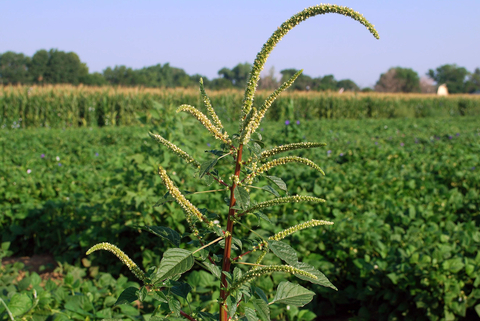
Palmer amaranth is listed as a Prohibited Noxious Weed on the Eradicate List. Photo by: Howard F. Schwartz, Bugwood.org
It’s important to treat new infestations of invasive species as they arise. Treating infestations early limits their spread and saves resources. This method of treatment is called early detection and rapid response (EDRR), which focuses on detecting new invasive species early and treating them as soon as possible to prevent their spread and establishment (for more information, check out The Invasion Curve).
One way to detect species early is through a community science-based approach asking people in our community to report suspicious species when they see them. The Minnesota Department of Agriculture (MDA) does this through Report A Pest, an online form for concerned community members to report potential threats of invasive species, diseases, and insects. In fact, some of these reports resulted in the early detection of and rapid response to invasive plant species on the Noxious Weed List.
Read more
Look for the Logo: Minnesota Certified Firewood
Buying firewood? Look for the Minnesota Certified Firewood logo.
The Minnesota Department of Agriculture has certified 13 firewood producers across the state for heat treatment, ensuring their firewood is safe to move and free of damaging pests such as the emerald ash borer.
View the list of Minnesota certified firewood producers.
|
|