|
Spring 2025
Achieving Active Managerial Control
Handwashing
Mobile food operators recognize that handwashing is essential for maintaining food safety and preventing the spread of illness. However, handwashing violations are often cited during routine inspections.
Hidden, inaccessible, or poorly located sinks are common errors. Some units are designed with built-in hand sinks that have a cover to provide both a wash station and a work surface. If food preparation is ongoing, employees must have access to the hand sink, meaning the sink is open without a cover or door enclosure. Keeping the basin free of utensils, supplies, or other food containers is also key to accessibility. Employees must be able to wash their hands without additional steps of moving items out of the sink, opening a door, or lifting a cover.
For mobile operations using a gravity-fed hand sink, a water dispensing container with a free-flowing nozzle must be used. This allows both hands to be rubbed together, as the friction of hands combined with soap is more effective for removing soil and contamination. Push-button dispensers are not permitted as they do not allow both hands to be washed together. Additionally, a catch basin for wastewater must have enough capacity to not overflow and allow for easy disposal. Wastewater should be disposed of into a mop sink, toilet, or a plumbed hand sink, but not into a three-compartment or food prep sink.
Washing hands with soap and drying with a single-use towel is also required. A single-use towel can be either paper or cloth but must be dry and clean to prevent recontamination of hands. Missing or low supplies of either soap or towels are common citations.
Efficiency is a business priority, so easy access to a hand sink and supplies must be considered. When designing the layout of the mobile operation, think through the steps of food preparation. With good planning, handwashing will become second nature, not a citation on the next inspection.
Handwashing resources:
Important Notice: New License and Permit Surcharge
As part of our ongoing efforts to improve our services, the Minnesota Department of Agriculture (MDA) is introducing a license and permit surcharge (MINN. STAT. 17.033). This surcharge is an application processing charge that will be added to all licensing and permitting applications and renewals beginning Jan. 1, 2025. The surcharge will be calculated as 5% of the license or permit fee, with a minimum charge of $5.
The surcharge is supporting the modernization of our technology systems, which will provide better online services and more efficient processing of applications. The collected funds will be dedicated to updating our electronic systems, making it easier for you to interact with us and access the services you need.
More information regarding food licenses can be found online.
You can also provide feedback on the proposals and licensing modernization in general. Check out the Food Licensing Modernization webpage to learn more.
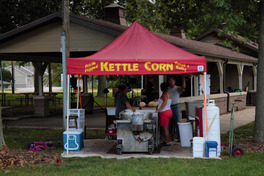
There are many resources available for operators of Special Event Food Stands in Minnesota. The MDA has information online for obtaining Special Event Food Stand Licenses as well as a Special Event Food Stand License Application Guide. The application guide should be used when completing the MDA Special Event Food Stand License Application form and provides information on the basic operating requirements for a Special Event Food Stand. The City of Minneapolis has created additional training for food stands. The training is free and is offered in English and Spanish. The city has provided additional resources for Special Event operators to assist with active managerial control at their food stands:
|

Operating a mobile food unit provides the flexibility to serve customers at a variety of events and locations throughout the state. With this mobility, you may be inspected by different regulatory agencies depending on where you operate. The MDA and the Minnesota Department of Health work with local jurisdictions through delegation agreements, so you may encounter inspectors from multiple agencies.
We recommend keeping a copy of your most recent food inspection report with your unit. This document gives inspectors background on your operation and helps provide context during their visit.
Please note that having this report available does not prevent future inspections. However, it does reflect your attention and commitment to food safety and helps maintain clear communication with regulatory staff.
|
|