|
May 13, 2025
Red Star Rust Springs into Action
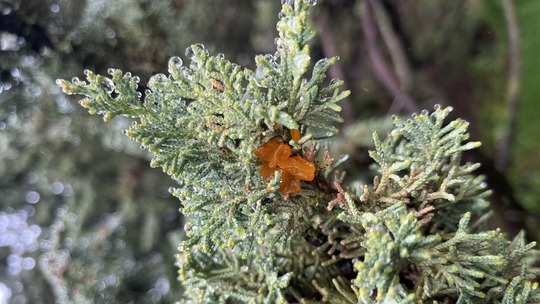 Red star rust on juniper branch. Photo by T. Enzenbacher, UMN.
Now is the time to protect apple and crabapple trees from red star rust caused by the invasive fungus Gymnosporangium yamadae. This fungal plant pathogen has a complicated lifecycle, spending half its life infecting junipers and the other half infecting apple and crabapple trees.
Red star rust survives Minnesota’s winter in infected juniper branches. In spring, small (less than 1/4-inch) round, woody galls form on these branches. During warm, wet weather, a bright orange gelatinous fungal mass emerges from the gall and releases spores. Spores from junipers are carried by wind and rain to the leaves of nearby crabapple and apple trees, resulting in red, orange, or yellow spots.
The small brown galls on juniper are hard to see unless the bright orange spore masses are present. Researchers at the University of Minnesota Horticulture Research Center found galls on juniper producing spores at the end of April. These galls will continue to produce spores through May and early June, whenever it rains.
For nursery managers, it’s important to spray apple and crabapple trees during this period to protect them from red star rust. Trees that develop leaf infections may not be certified and must be removed from sale until treated, in accordance with Minnesota nursery law 18H. Fungicides effective against the native disease cedar apple rust are also effective against red star rust. More information on spray timing and product choice is available in this extension article.
Home gardeners and landscape managers do not need to spray trees. Instead, scout for orange, sporulating galls on junipers during wet weather. These galls can be pruned and either buried or discarded to help reduce disease levels in your area.
Spongy Moth Temporary Quarantine
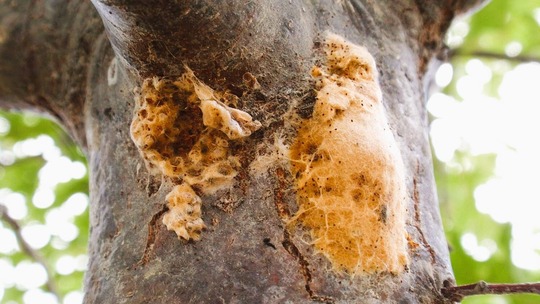 Spongy moth eggs are laid in a fuzzy, tan-colored mass.
The Minnesota Department of Agriculture has enacted temporary emergency quarantines in areas of Coon Rapids, Grand Rapids, and Winona to restrict the movement of woody materials out of the affected areas. Restricted items include trees and shrubs with persistent woody stems, all limbs and branches greater than 1 inch in diameter, and outdoor household articles.
For more information, visit the Spongy Moth Quarantine webpage or email reportapest@state.mn.us with any questions.
Read more about the temporary quarantine.
Unwelcome Guests? Report a Pest!
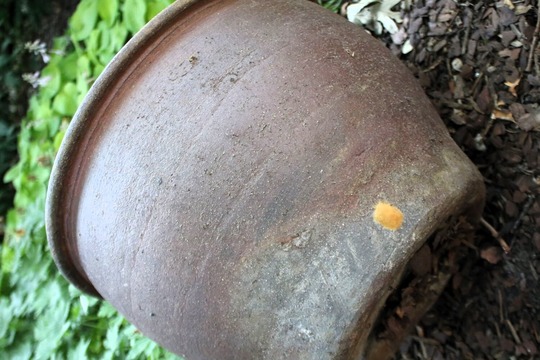 Tan spongy moth egg mass found on flower pot.
As the weather warms, insects that took cover in your home to avoid the Minnesota winter begin to emerge and make their way outside. In early spring, it’s common to spot box elder bugs, multi-colored Asian lady beetles, and brown marmorated stink bugs (BMSB) inside homes. Spring is also a time to be on the lookout for invasive species and understand how they spread. Many of us are getting ready to work in our yards planting, moving soil and compost, and purchasing plants. These are just some of the places invasive species such as jumping worms and spongy moths can show up and how they can be unintentionally spread.
If you see something unusual in your yard, please report it to the Minnesota Department of Agriculture’s Report a Pest.
Emerald Ash Borer Awareness Week: May 18-25
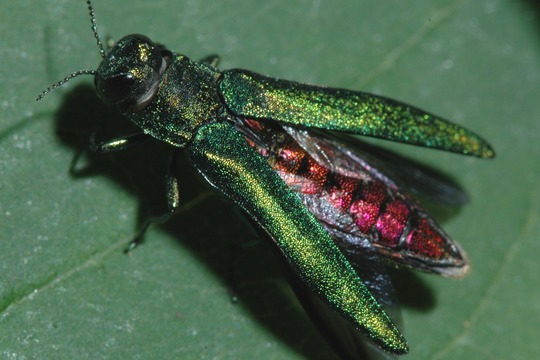 Adult emerald ash borer. Photo by Jeff Hahn.
The month of May hosts Emerald Ash Borer Awareness Week, observed from May 18 - May 25, 2025. Sponsored by Don’t Move Firewood, this week is dedicated to educating the public about the devastating impact of the emerald ash borer (EAB) on ash trees across North America.
This invasive insect has already killed millions of trees and continues to pose a serious threat to ecosystems and urban landscapes. Spring is a great time to remind communities who are already dealing with EAB and to inform communities not yet impacted about how they can help. Individuals can support conservation efforts, take action to protect ash trees from infestation, and follow best management practices such as not moving firewood.
For more information and additional resources on EAB Awareness week please visit the Emerald Ash Borer Awareness Week Toolkit.
Don’t Let Weeds Take Root—Check the Minnesota Noxious Weeds List
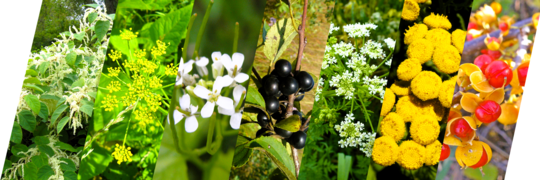
The Minnesota Noxious Weed List is the official reference for invasive and harmful plant species regulated in the state. All hybrids, cultivars, and varieties of listed species are included—unless specifically exempted.
Noxious weeds are plants that threaten human or animal health, the environment, crops, roads, livestock, and property. They can be annuals, biennials, or perennials and are grouped into five categories under Minnesota law (Statute 18.771).
The list is reviewed every three years, with updates made as needed. The most recent update was in January 2023, and the next one will be in January 2026.
Printable version of Minnesota Noxious Weeds list.
Stay Compliant with Minnesota’s Noxious Weed Seed Regulations
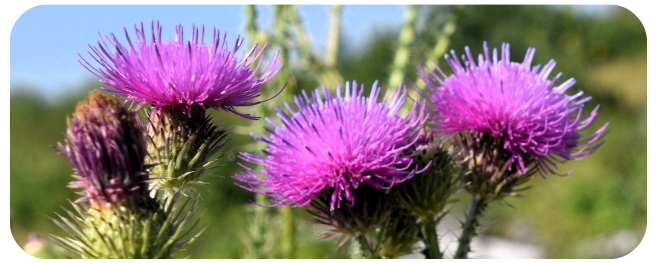
Minnesota has rules about certain weed seeds that can’t be in agricultural seed sold in the state. Some weed seeds are prohibited—like Palmer amaranth and Canada thistle—while others are only allowed in very small amounts (no more than 25 seeds per pound) and must be listed on the seed label. These rules help protect farms, grasslands, and native plants. To follow the law, seed companies should use good practices like checking fields, cleaning seed, and testing samples in a lab.
To find out if weed seeds are present, the Minnesota Noxious Weed Exam is the official test. Labs approved by seed testing organizations (AOSA and SCST) can do this testing. Selling seed with too many weed seeds—or not labeling it correctly—is against the law. Seed professionals should check the full Minnesota Noxious Weed Seed List and contact the Minnesota Department of Agriculture Seed Regulatory Program if they have questions.
|