A Newsletter from the Minnesota Department of Agriculture
|
|
|
May 10, 2018
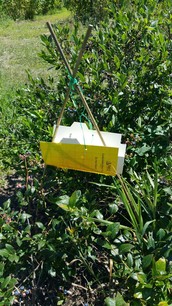 The MDA will be starting a number of surveys for invasive insects and pathogens soon. Surveys planned for this year include:
Fruits
and vegetables pathway survey: Community gardens and small farms in and
around urban areas are considered at high risk for invasive species
because of their proximity to transportation and commerce centers
(pathways for invasive species). The MDA works with these sites to
monitor for a broad range of insects and diseases including Swede midge, brown marmorated stink bug, clubroot and bacterial wilt and canker of tomato. Read more about this survey at the MDA website.
Forest
pathway survey: Similarly, the MDA will be continuing work begun in
2017 in parks and other forested areas in and around urban areas of the
state to monitor for invasive pests of trees like the velvet longhorn beetle.
The velvet longhorn beetle has been introduced to Minnesota through
infested rustic log furniture and has also been found a number of times
near the Minneapolis-St Paul airport.
Gypsy moth
survey: Significant effort goes into finding new gypsy moth populations
so that they can be treated and eradicated or suppressed. About 20,000 gypsy moth traps will be placed and monitored across Minnesota during 2018.
Field
crop surveys: Surveys in small grains, soybeans, corn and canola during
2018 will monitor emerging pathogen and insect issues. In addition,
these surveys help to demonstrate freedom from problematic insects and
diseases that can limit access to markets in other states or counties.
For more information about any of these surveys, contact the MDA at Arrest.The.Pest@state.mn.us.
|
|
|
Apiary
inspections offered as part of the National Honey Bee Health Survey
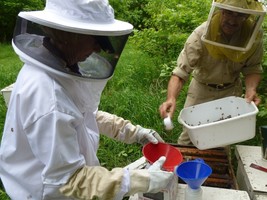 The Minnesota Department of Agriculture (MDA) is again participating in the
National Honey Bee Health Survey this summer and is seeking interested beekeepers with at least 10 colonies in a location. Sampled apiaries will be spread across the
state to give an overview of the disease and pest status of honey bee colonies
in Minnesota.
The survey protocol requires MDA to collect two samples of bees,
one that is submitted live and one submitted preserved in alcohol. A frame debris sample is also collected and submitted. The MDA will also note brood diseases
and the general condition of hives during sampling.
All samples are sent to USDA for analysis and
the results are sent directly to the beekeeper. Anyone interested in the survey should contact Blane White at the MDA via email, blane.white@state.mn.us or at 651-201-6578.
|
Recent Finds of Emerald Ash Borer
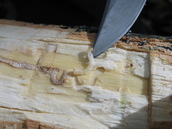 There has not
been a find of emerald ash borer in a new Minnesota County since
August, 2017 when it was found in Martin County, the 16th of Minnesota's
87 counties to be identified as infested. However, during 2018 there
have been 11 new cities where emerald ash borer has been discovered in
southeastern Minnesota and the Twin Cities area. At the time of
publication, 59 of Minnesota's 800+ cities have been confirmed as
infested with emerald ash borer. You can keep tabs on all areas where
the MDA has confirmed emerald ash borer infestation online:
www.mda.state.mn.us/eabstatus
|
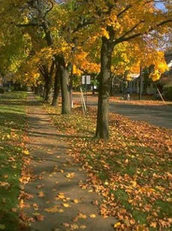 Emerald ash borer and gypsy moth affect more trees in Minnesota every year, meaning that more people are in need of tree care services. According to Minnesota Statute 18G.07, all persons or companies that provide tree care services in Minnesota must register with the Minnesota Department of Agriculture. This ensures opportunities for communication between tree care providers and the MDA regarding the presence of invasive species like EAB and gypsy moth and any regulations on wood movement to limit their spread.
Before hiring a tree care service, make sure that they are listed on the MDA Tree Care Registry.
|
Per Minnesota Statute only Approved Firewood can be brought onto DNR lands.
The following are considered to be approved firewood:
- Firewood sold by the DNR at state parks
- Firewood
purchased from a vendor that is non-ash and harvested from and
purchased in the same county where it will be used (be sure to keep your
receipt to show proof of purchase)
- Firewood harvested in Minnesota that has been certified as heat-treated by the MDA or the USDA (be sure to keep your receipt to show proof of purchase)
- Kiln-dried,
unpainted, unstained dimensional lumber that is free of any metal or
foreign substances, or manufactured logs. Pallet wood is not approved
firewood. Dimensional lumber does not require proof of purchase
Read more about firewood restrictions and DNR lands at the DNR website.
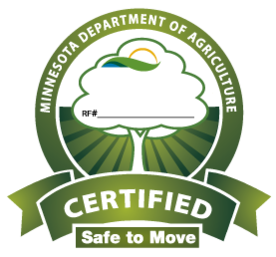
The Minnesota Department of Agriculture has certified seven firewood producers in the state of Minnesota for heat treatment of firewood. Look for the logo when purchasing firewood. It means the firewood is safe to move and is free of emerald ash borer.
Certified firewood producers:
- Emily Forest Products
- JN Firewood
- Minnesota Firewood LLC
- Paul's Fireplace Wood Inc.
- Price Firewood
- Sunset Firewood Company
- TSL Firewood
Find contact information for MDA certified firewood producers at the MDA website.
|
|
|
 Call us at 888-545-6684
Email us at arrest.the.pest@state.mn.us
|
|