 JB populations on the rise
Steven Shimek, Nursery Program Coordinator
Minnesota has seen an increase in population and spread of Japanese beetle (Popillia japonica) to more locations around the state over the past few years. As a result, nursery stock has become more commonly infested both by the adult beetles, and in a recent incident as grubs and pupae in container grown nursery stock.
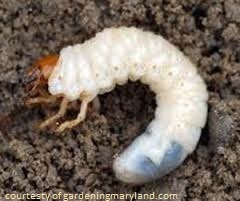
Japanese beetle grubs spend their lives below ground feeding on roots. They most commonly occur in turf. Turf that is fertilized and irrigated is particularly attractive for adult beetles to lay their eggs and for grubs to happily munch away until they pupate and emerge from the soil as the adult beetles the following year. Grub feeding can cause damage to turf. The adults can cause significant damage to a number of plants feeding on and skeletonizing leaves and feeding on flowers and fruits.
It is important to note that even stock that is in compliance with the Japanese Beetle Harmonization Plan (JBHP) for container accreditation can become infested. This certification method requires that container grown stock must be kept on an impervious surface such as gravel. This is meant to discourage egg laying in and around nursery containers. More details on the JBHP that was revised in 2016 and became effective January 1, 2017 can be found at: http://nationalplantboard.org/wp-content/uploads/docs/jbhp
2017_update.pdf
Surveying for JB in containers is done by removing plants from pots, examining the potting media for life stages, namely grubs and pupae. Some samples can be destructive in nature, though staff try to minimize the operational and economic impact.
Observations from recent surveys of accredited container stock
There seems to be no common denominator as to why containerized stock grown under the JBHP guidelines became infested during the past year. Production history or location of the stock to potentially infested surrounding areas did not seem to influence the likelihood of infestation. Stock that was positive included: Physocarpus, Taxus, Thuja, Juniperus, Hosta, Heuchera, Atrium, Rosa, Rhus, Celastrus, Vaccinium, and Rubus, several of which are not known to be commonly fed upon by JB larvae or adults.
During a survey of accredited containers at the end of June, larvae were most often found in the bottom 1/4 of the pots. Larger pots were favored. Some loose potting media at the bottom of the pot seemed to be more likely to harbor beetle grubs. Plants that had more or heavier roots were not favored by the beetle. When one larvae was found, it was likely that more than one was present, up to 6 or 8 per pot. Most of the grubs found were late instar in late June, and many pupae were also found. Grubs and pupae were confirmed as Popillia japonica by MDA personnel. Adult beetles were also found in traps placed nearby to determine the beginning of the adult flight period.
Regulatory Action
Blocks of plants where grubs were found are restricted pending treatment and control. Follow-up inspections will be conducted to verify efficacy of treatments.
|