The Council on LGBTQIA2S+ Minnesotans works for the implementation of economic, social, legal, and political equality for Minnesota’s community of people who identify as lesbian, gay, bisexual, transgender, gender expansive, queer, intersex, asexual, and/or Two-Spirit.
Community Needs Assessment Results Spotlight
Disability Identity
July is Disability Pride Month, a time to celebrate the anniversary of the Americans with Disabilities Act (ADA) and to uplift disability identity and community while continuing to fight for full inclusion in daily life. In recognition of this month, we are highlighting findings from our Community Needs Assessment related to disability identity and the experiences of LGBTQIA2S+ Minnesotans with disabilities.
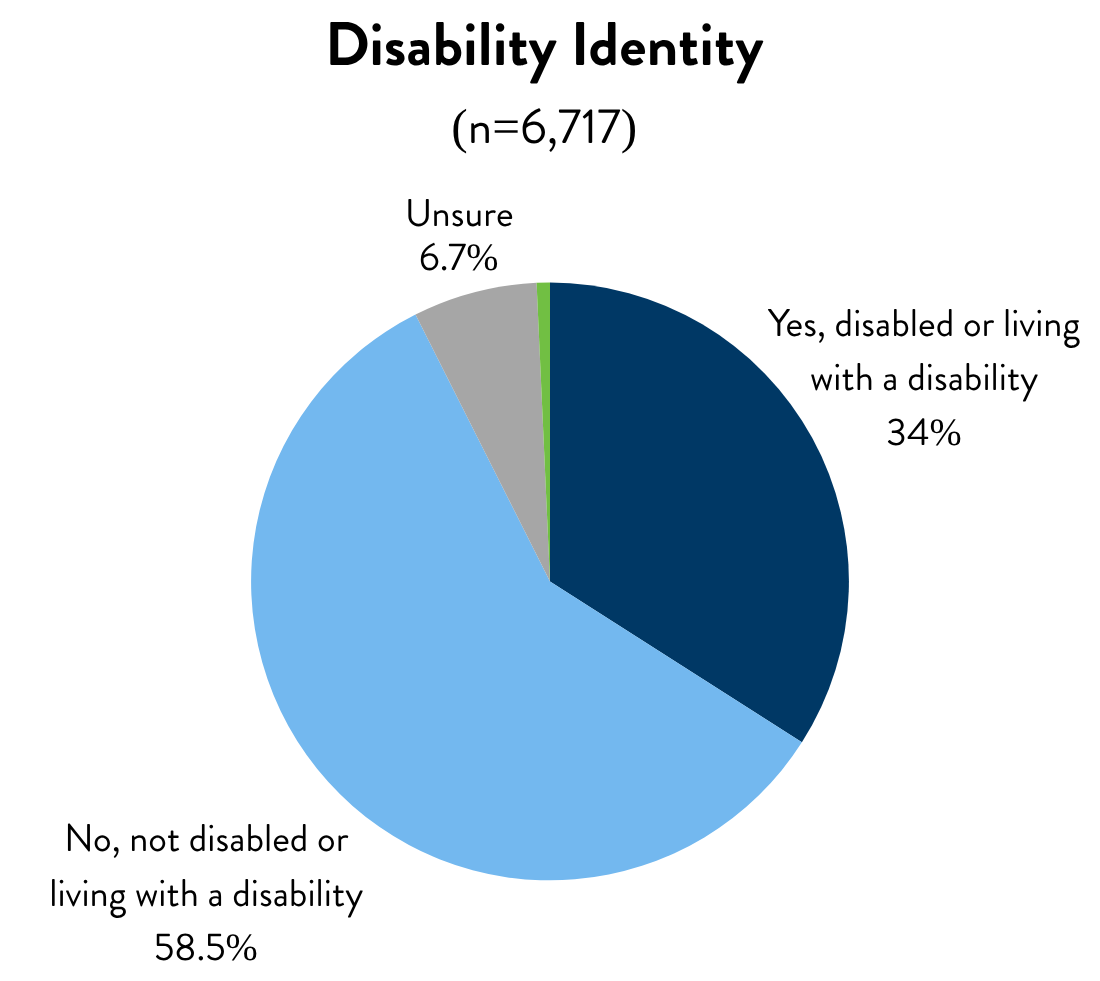
Overall, 34% of our survey respondents identified as disabled or as a person living with a disability. While statistics are not always directly comparable, available research suggests that disabilities are more common among LGBTQIA2S+ people than in the general population. Our data suggest that a broad spectrum of ability and disability exists within the LGBTQIA2S+ community.
 Disability identity can also be complex. People with the same diagnosis or condition may not identify the same way. For example, some people who are Deaf, hard of hearing, or neurodivergent identify as disabled, while others do not. To respect the ways people describe their own identities and to capture identities more accurately, we asked about Deafness and neurodivergence separately and in addition to a general question about disability identity.
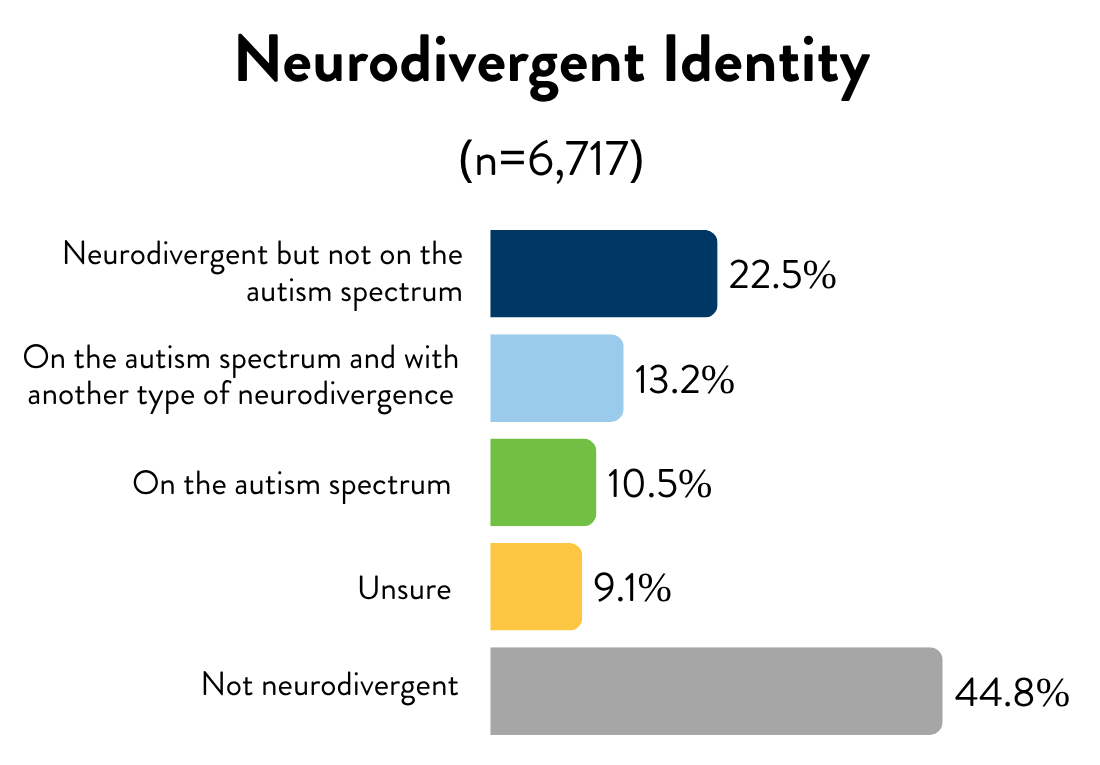
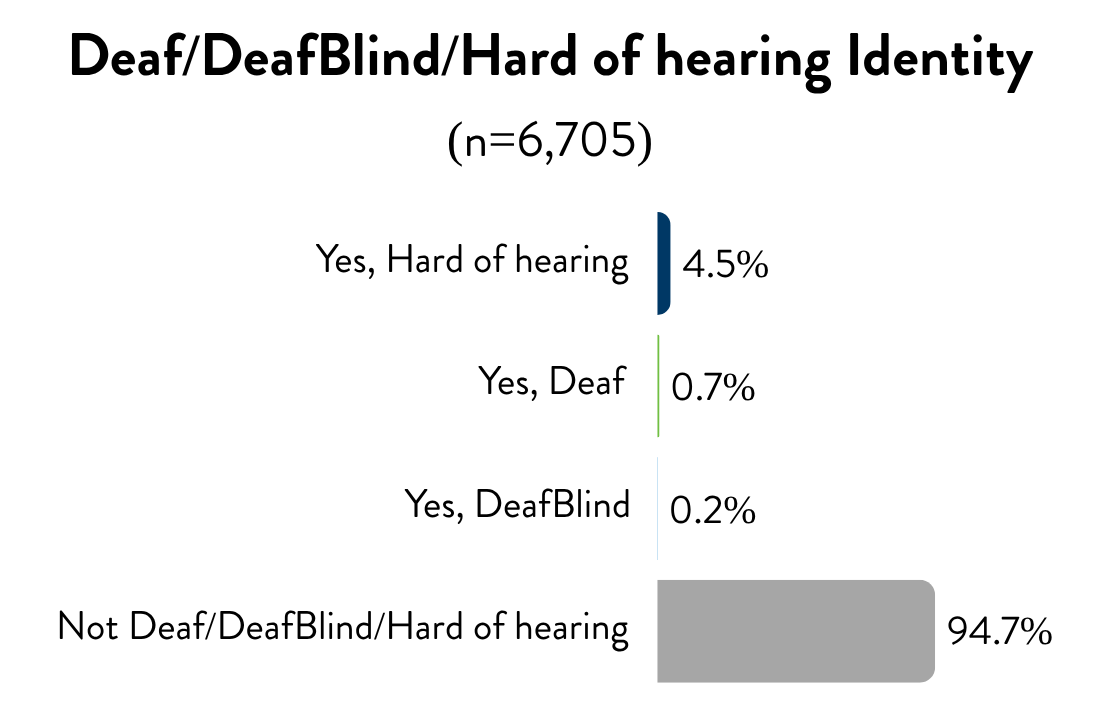 About 5.3% of our respondents identified as Deaf, DeafBlind, or hard of hearing, and 46.1% identified as neurodivergent and/or on the autism spectrum. Among those identifying as Deaf, DeafBlind, or hard of hearing, 29.4% (105 people) did not identify as having a disability. Of those identifying as neurodivergent and/or on the autism spectrum, 34.1% (1,058 people) did not identify as having a disability. These findings suggest that asking separately about disability identity, Deafness, and neurodivergence captured identities that may have been missed by the disability question alone. Further conversations and sensemaking with community members will help provide additional context and insight into these findings.
 These responses highlight how important it is to consider the intersecting identities of LGBTQIA2S+ Minnesotans. Accessibility and inclusion are essential to supporting a thriving LGBTQIA2S+ community in our state. We are grateful to each and every one of our survey respondents for choosing to share their identities and experiences with us.
Nonbinary Identities
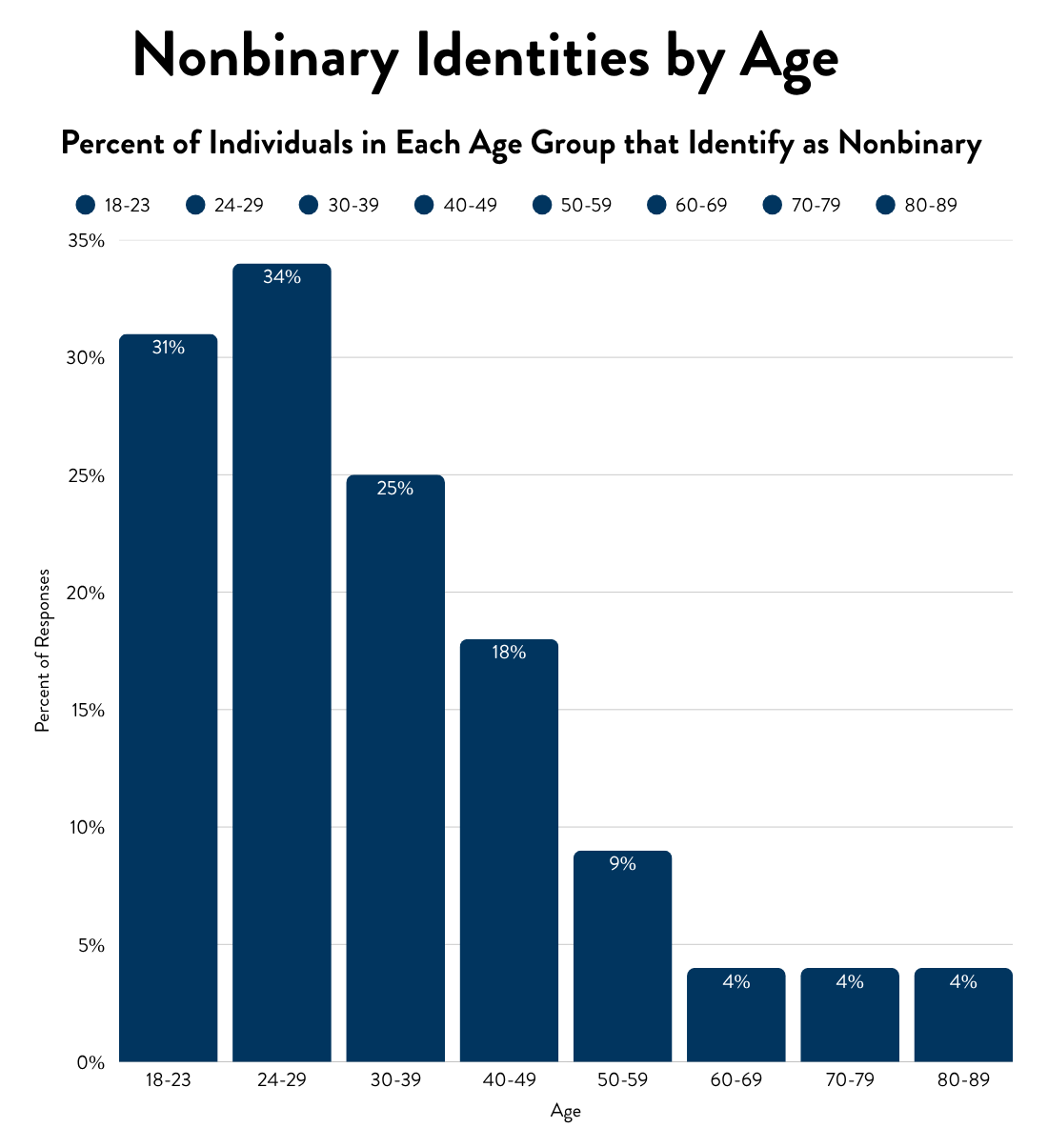
Nonbinary Awareness Week also takes place in July, from the Sunday - Saturday surrounding International Nonbinary People's Day on July 14th. This awareness week is to celebrate people who do not identify within the gender binary and to increase allyship and support for the nonbinary community. In recognition of this, we’re sharing survey results related to nonbinary identities and respondents. Almost one-fourth of our survey respondents (23%) selected that they identified as nonbinary. While nonbinary people were part of every age group, higher percentages of young people selected this identity. The highest percentages were seen in people aged 24-29 (34%) and 18-23 (31%). Overall, 33% of survey respondents aged 18-29 identified as nonbinary. A full chart of results can be seen below.
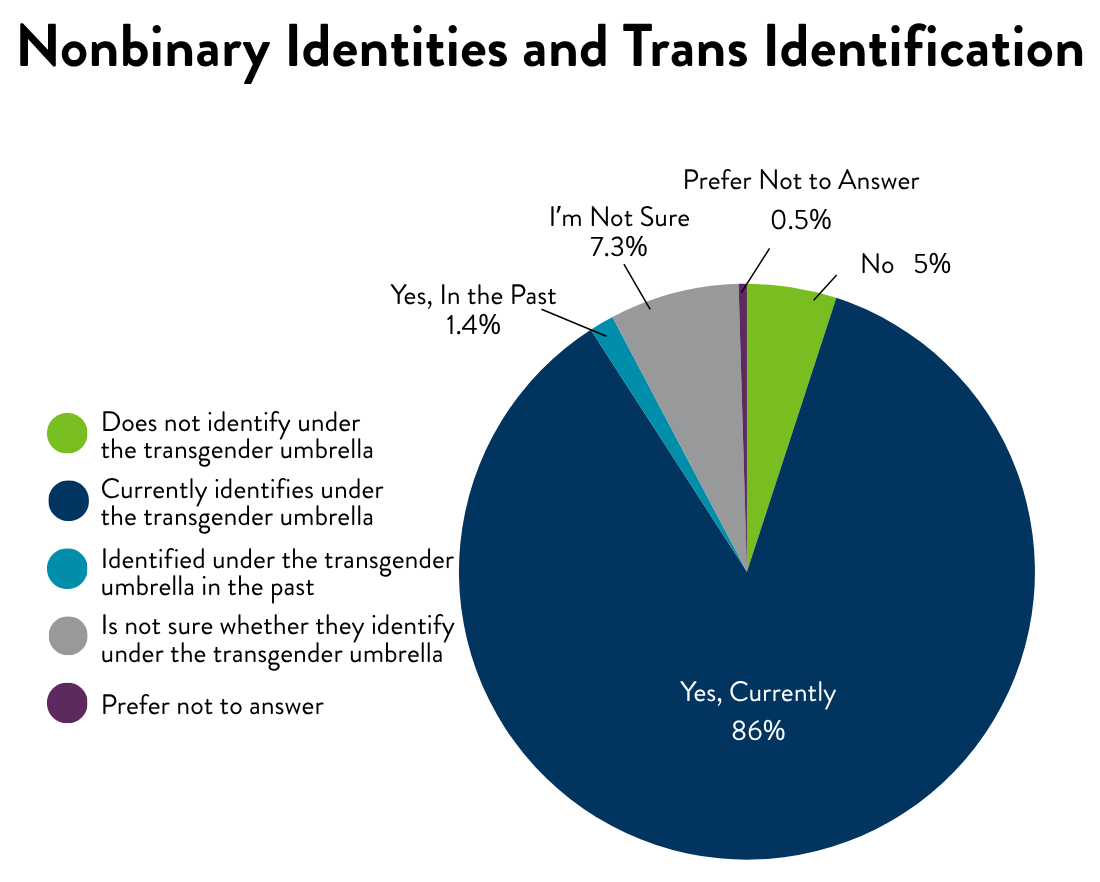
 In addition to asking about gender identity, we also asked individuals whether they currently or ever identified under the transgender umbrella. Most individuals (86%) who selected nonbinary as their gender identity selected that they currently identify under the transgender umbrella. However, 5% selected that they have never identified under the transgender umbrella and an additional 1.4% said they identified under the transgender umbrella in the past. The survey did not include follow-up questions, so these responses should not be interpreted as evidence of any particular experience or reason for the change. While nonbinary is frequently included under the transgender umbrella, about 14% of our survey respondents either do not identify as transgender or are uncertain if they do. Taken together, these findings highlight the diversity of ways nonbinary people understand and describe their gender. They also serve as a reminder that gender identities cannot be fully understood through a single label or category and reinforce the importance of asking thoughtful and inclusive questions.
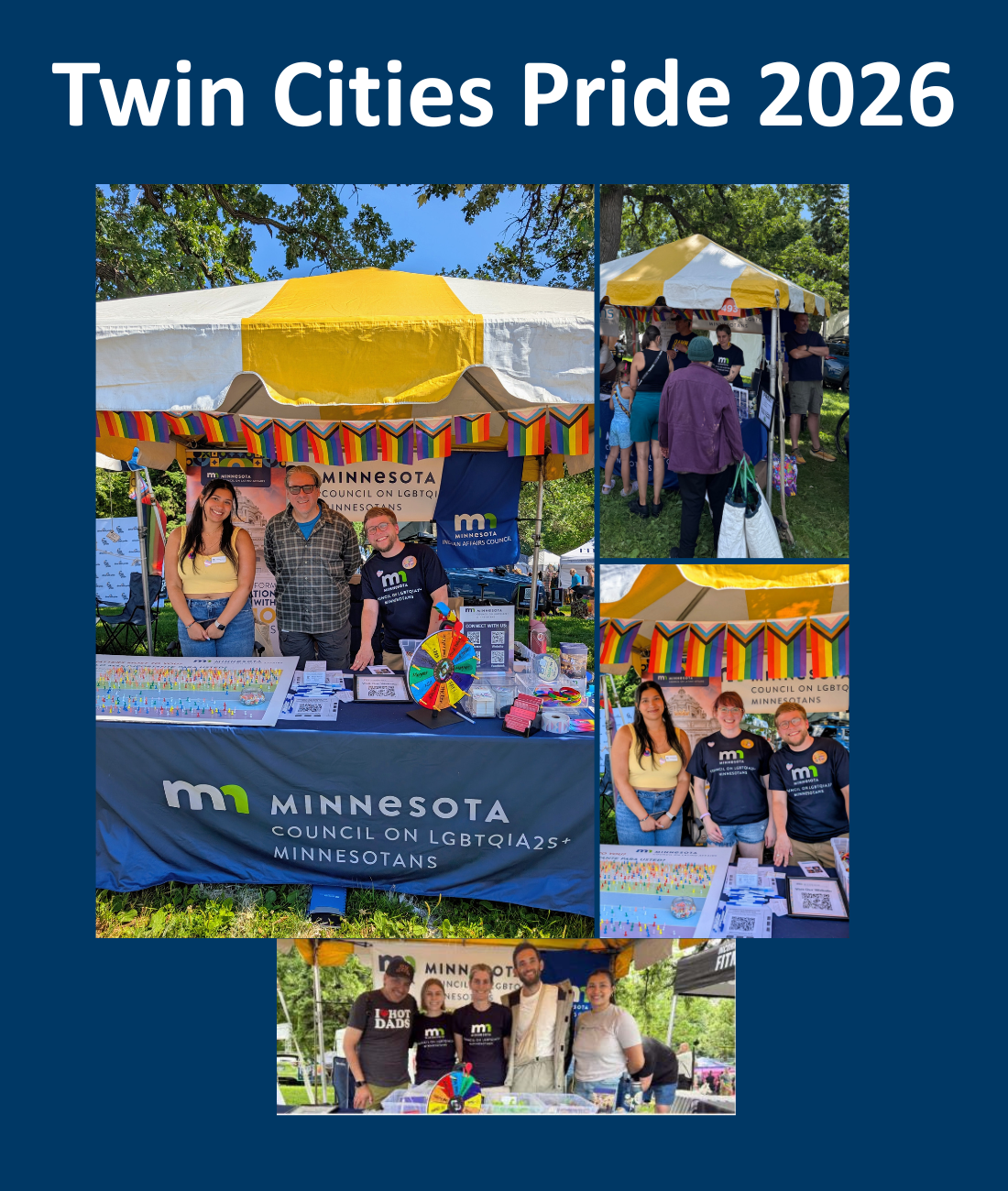 MNQT partnered with staff from MCLA and MIAC to host a booth at Twin Cities Pride June 27th and 28th.
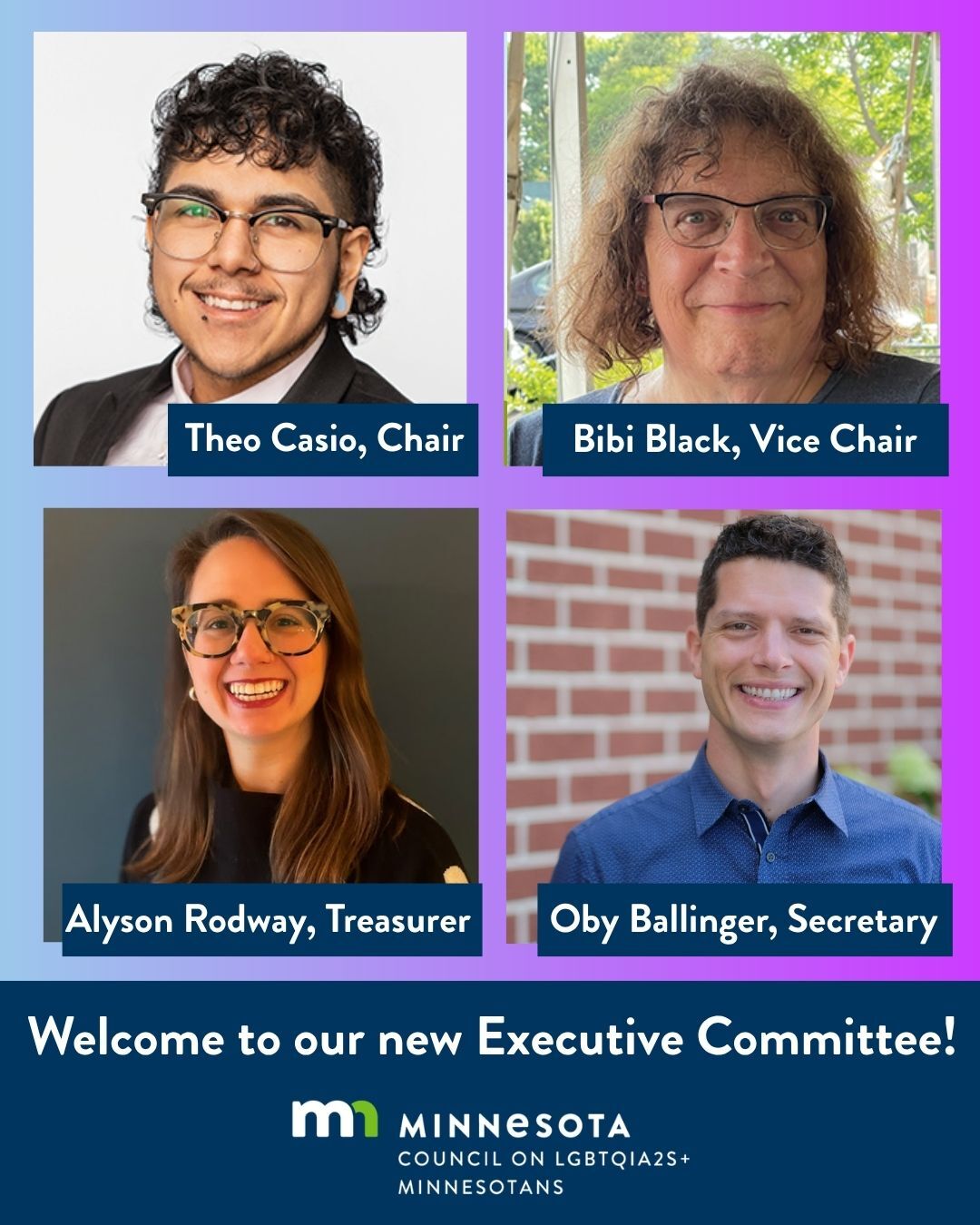 Congratulations to the new MNQT Executive Committee!
At the start of the new fiscal year on July 1st, MNQT's new Executive Committee entered their roles. Please welcome Chair Theo Casio, Vice Chair Bibi Black, Treasurer Alyson Rodway, and Secretary Oby Ballinger. MNQT extends sincere gratitude to departing Vice Chair KB Brietzke for their years of service to the MNQT Executive Committee.
Upcoming Election Resources
Minnesota's primary elections are coming up on Tuesday, August 11th. Register to vote, update voter registration, or verify voter registration on the Secretary of State website. In Minnesota, there are two options for voting before election day:
- Absentee voting opens 46 days before an election (Friday, June 26th). Request an absentee ballot via mail, fill it out, and mail it back or submit in person. There are also absentee voting locations where you can fill out and submit your ballot all at once.
-
New this year to Minnesota is the option of early voting, which begins up to 18 days before an election (Friday, July 24th). Voters can go to their polling place, fill out their ballot, and directly submit it. The last day to vote early in person is Monday, August 10th.
- Actual counting of votes for each candidate doesn't begin until polls close at 8pm on August 11th.
- Learn more about the options for voting early from this MPR article.
- Visit the for additional election and voter information.
June 30th Supreme Court Decision Upholds Sports Bans
On Tuesday, June 30th, the Supreme Court issued a 6 – 3 decision in West Virginia v. B.P.J. and Little v. Hecox, which upheld state laws that ban transgender girls from participating in girls’ sports. These bans are currently in 27 states, including North Dakota.
The Council on LGBTQIA2S+ Minnesotans wants to be clear that trans inclusion continues to be the law in our state. The Minnesota Human Rights Act protects trans individuals from discrimination, which means trans athletes in Minnesota can continue to play sports with their peers. Even so, decisions like this contribute to stigma and fear and have real consequences for the well-being of trans people and their families.
In other states that have bans, this ruling upholds those laws and allows states to continue discriminating against trans athletes. The Council stands with these athletes and all trans youth who deserve the opportunity to play, be on a team, and experience the belonging, friendships, and joy that sports provide. In Minnesota, we have fought hard for trans inclusion and remain committed to protecting and defending those rights and our trans community.
Gender Justice has this SCOTUS chat that breaks down the ruling in greater detail, discusses wider implications of the decision, and shares ways to get involved in supporting our trans neighbors.
Help Shape Legal Services for Minnesotans 60+
The Minnesota Board on Aging (MBA) wants to hear from you. Your experiences and ideas can help improve access to free and low-cost legal services for older Minnesotans. This survey is for any Minnesota resident who is 60 years or older or a person (caregiver) who helps a family, friend, or neighbor who is 60 years or older.
The goal of this survey is to better understand the legal needs of older Minnesotans and identify barriers to finding legal help, education, and resources. Legal needs may include issues related to housing, health care, finances, independence, or personal safety where legal guidance or assistance may be helpful.
Your responses are anonymous and will help improve and expand legal services for older adults across Minnesota. Participation is voluntary, it takes about 10 minutes to complete the survey, no compensation is provided, and your decision to participate, or the answers you provide, will not affect any benefits or services you receive now or in the future.
Results will be compiled by the Minnesota Board on Aging and the Minnesota Department of Human Services Aging and Adult Services Division to help identify needs and improve access to legal services statewide. The survey deadline is August 31st, 2026. Read more about the survey and complete it here.
|
|