The Council on LGBTQIA2S+ Minnesotans works for the implementation of economic, social, legal, and political equality for Minnesota’s community of people who identify as lesbian, gay, bisexual, transgender, gender expansive, queer, intersex, asexual, and/or Two-Spirit.
Happy Pride from MNQT!
Pride Month is both a celebration of our communities and a moment to honor the movement’s roots in resistance and the leaders who helped spark it. The Pride movement was largely led by Black and Latina transgender women and supported by many other LGBTQIA2S+ community members who fought back against police brutality and demanded equal rights and freedom from discrimination and violence. Together, we continue this legacy of courage and resilience today.
As we travel this Pride season to celebrate with communities across the state, we continue our work to ensure Minnesota is a welcoming and supportive place for LGBTQIA2S+ people today and for generations to come. Governor Walz kicked off the State of Minnesota’s Pride celebration in early June with a proclamation in recognition of June as Pride Month and you can read it here.
Content warning: The following paragraphs mention lives taken by gun violence.
This month also marks one year since the death of Speaker Emerita Melissa Hortman who was killed June 14th, 2025 in a politically targeted attack along with her husband Mark and dog Gilbert. Senator John Hoffman and his wife Yvette were also shot in the same attack and suffered significant injuries. To honor Melissa’s legacy, many paid tribute to her in unique and meaningful ways:
- St. Paul City Council unanimously passed Resolution 26-946. The resolution recognizes the lasting impact that Melissa and Mark had on Minnesota through their service, leadership, volunteerism, and commitment to community. The resolution also proclaims June 14th as Mark, Melissa, and Gilbert Hortman Day in St. Paul. Read the full resolution here.
-
Helping Paws, an Eden Prairie-based non-profit that trains service dogs, shared a tribute to Gilbert Hortman. Gilbert was originally completing service dog training at Helping Paws, although it was later determined that Gilbert was better suited to the family dog life and ultimately found his forever home with the Hortmans instead. Last legislative session, lawmakers funded an entire litter of golden retriever puppies, all with names that start with “G”, to go on to become service dogs in the Hortman’s honor. Read more about the “Guided by Gilbert” litter here.
- Governor Tim Walz and other DFL lawmakers shared, "Melissa was our friend, our leader, and the greatest Speaker of the House in Minnesota's history. She — along with Mark and their dog Gilbert — all lived lives defined by their service to others."
- Attorney General Keith Ellison wrote, “The best tribute we can offer is to continue the work she devoted her life to: serving others, treating people with dignity, and building a Minnesota where everyone can thrive.” Read more statements recognizing the Hortmans and find links to the social media tributes in this article.
Finally, June 12th, 2026 marked the 10th anniversary of the Pulse nightclub mass shooting in Orlando, Florida, a tragedy that stole the lives of 49 people and forever changed LGBTQIA2S+ communities across the country. We remember those whose lives were taken and honor the survivors and all those impacted. This article from Central Florida Public Media reflects on the lingering grief that remains in the community and the annual memorials held in honor of the survivors and victims.
MNQT stands with and mourns alongside those grieving the Hortmans and the victims of the Pulse nightclub shooting, and we welcome the opportunity Pride brings to show up for each other and to experience connection and community. We hope to see many of you this weekend at Twin Cities Pride.
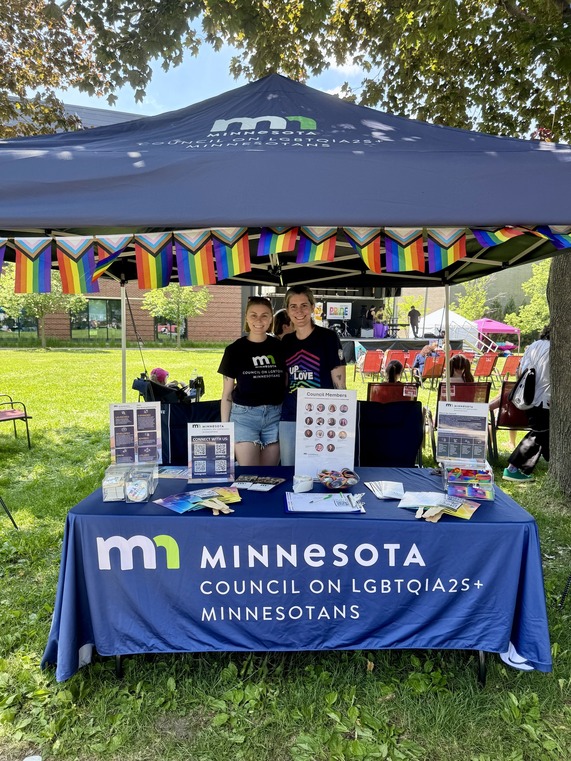 First Pride festival of the season! Kelsey and Emma had a fantastic time at Northfield Pride on June 6th!

Welcome, Alexander Lussenhop
MNQT is delighted to welcome Alex Lussenhop (he/him) to the position of Project Coordinator!
Alex joins MNQT after years working in science museums conducting research, evaluating programs, and building data collection systems. He brings experience advocating for equity and inclusion in museums, creating resources to support LGBTQIA2S+ museum workers, and developing staff training focused on diversity and equity goal-setting. Alex brings his extensive research background to a new partnership between MNQT and The Collaboration for Data Disaggregation (CDD) initiative, overseen by MMB, to support the development of state standards for the collection of data related to gender identity. Data disaggregation is the process of breaking down broad, generalized data into smaller subcategories such as race/ethnicity, gender identity, and disability status. This process allows inequities and system gaps to be revealed so they can be addressed with specific solutions. The standard is intended to cover race/ethnicity, gender identity, and disability status data. MNQT's Community Needs Assessment (CNA) survey included an extensive range of response options for gender identity, as well as three separate questions capturing disability status, reflecting the diversity and complexity of Minnesota’s communities. This project will lead to more effective data collection that will create stronger services and supports for all Minnesotans.
|
Community Needs Assessment Results Spotlight
This survey is the most comprehensive examination of LGBTQIA2S+ experiences and needs conducted in Minnesota to date. MNQT extends our deepest gratitude to every person who entrusted us with their experiences as well as the hundreds of organizations, advocates, and leaders that collaborated with us to move this historic project forward.
Whether we live in an urban area in the Twin Cities metro or rural communities in Greater Minnesota, LGBTQIA2S+ people are an important part of every community and every demographic group. With this in mind, for Pride, we wanted to share data that showcase the diversity and expansiveness of LGBTQIA2S+ Minnesotans.
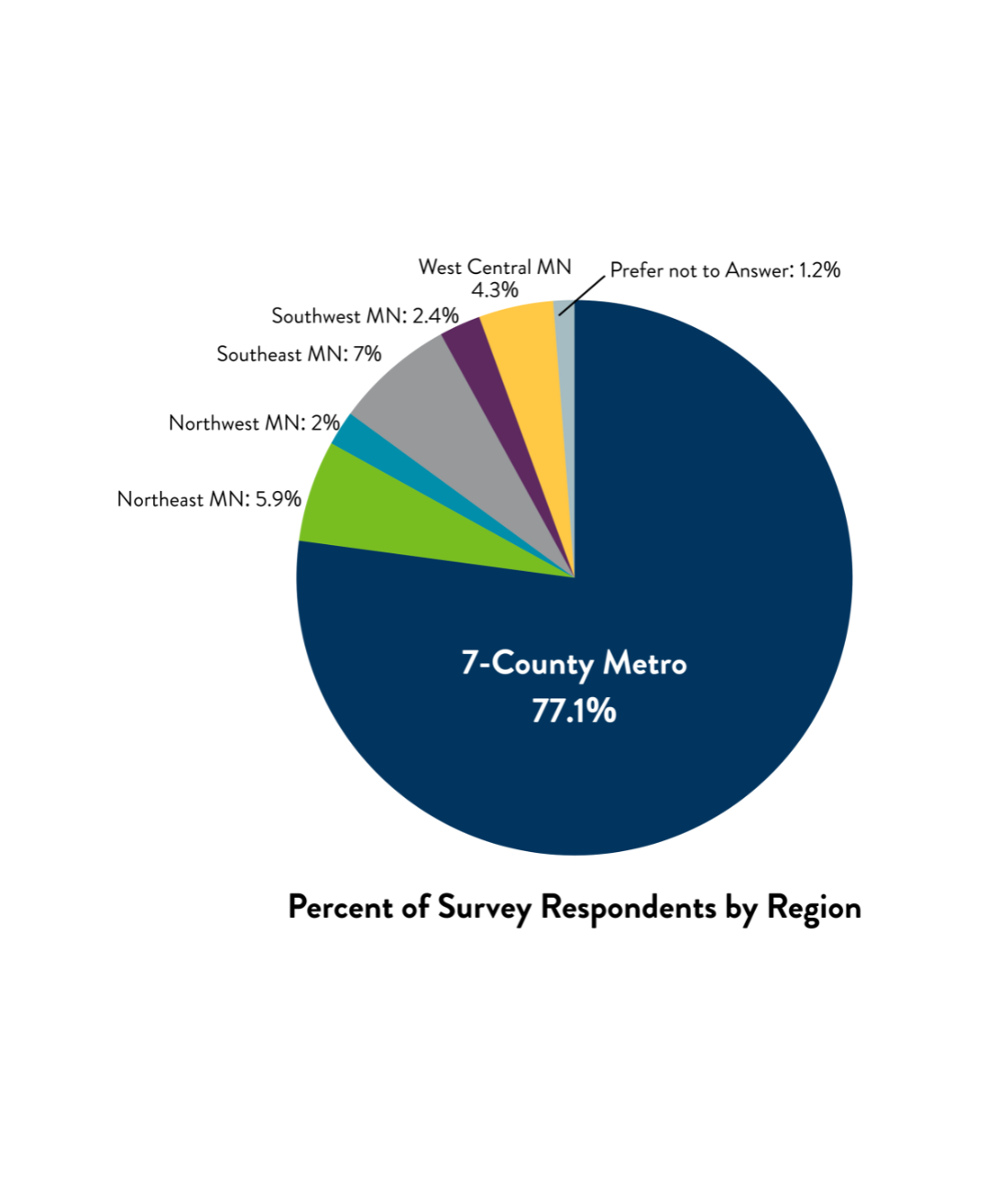
77% of our survey respondents live in the Twin Cities metro region while 22% are spread throughout Greater Minnesota. “Greater Minnesota” does not necessarily mean rural. In fact, only 32% of survey respondents from Greater Minnesota live in rural areas. Others live in urban areas, suburban communities, Tribal communities, or small cities that don’t neatly fall into the other categories.
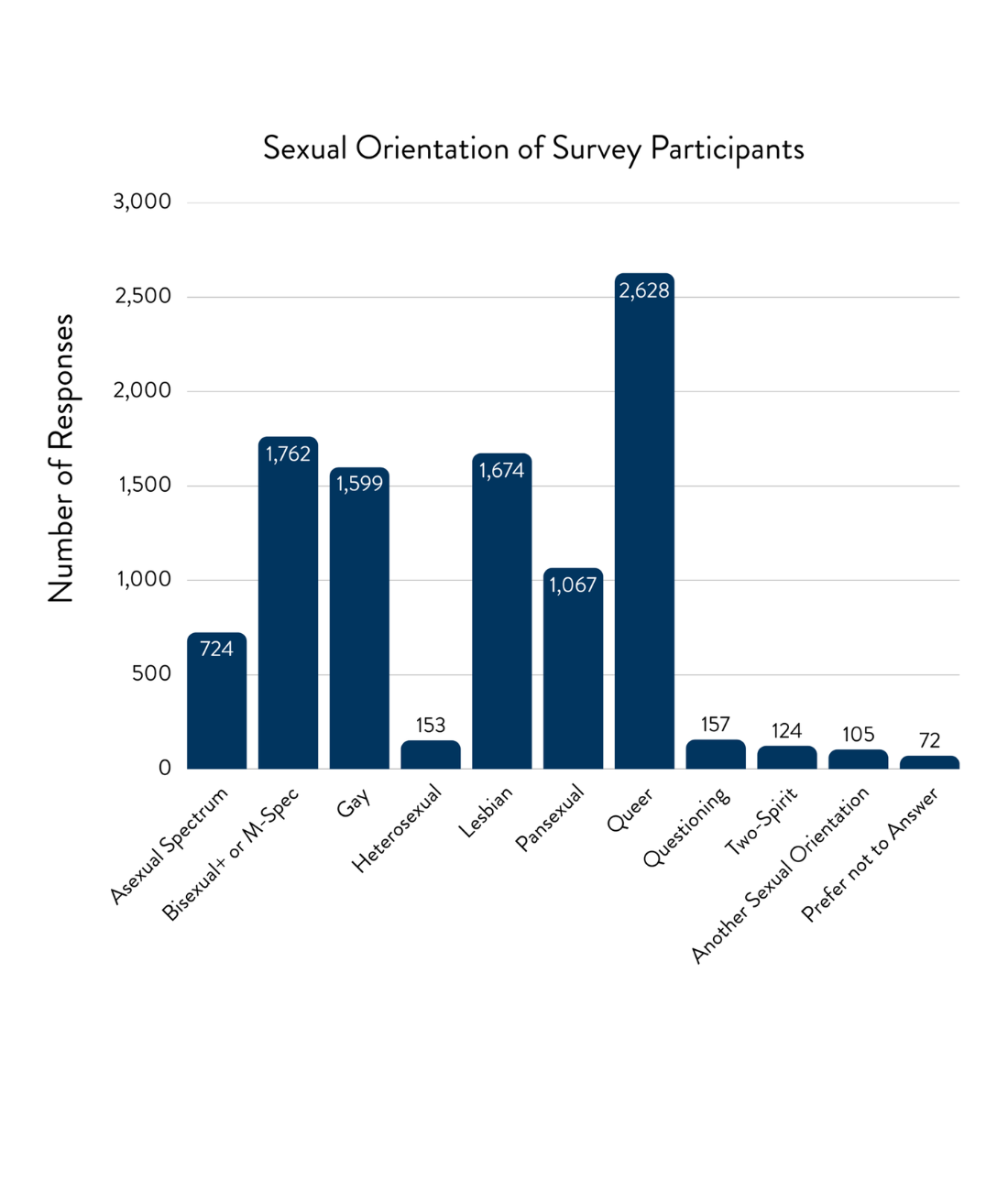
 To better reflect the lived experiences of individuals taking our surveys, our questions related to sexual orientation and gender identity allowed more than one response to be selected. The most common identity selected was queer; however, over 70% of individuals who selected this identity selected it in addition to another sexual orientation. Overall, about 62% of our survey respondents chose a single sexual orientation label to describe their identity. The chart below shares the number of individuals who selected each identity. When looking at the data, please note that because individuals could select more than one identity, the total number of responses in the following chart is not the total number of respondents to our survey as a whole.
 Cisgender woman was the most common gender identity selected by individuals who took our survey (27%) followed by nonbinary (23%). Like sexual orientation, most survey respondents (66%) selected a single label to describe their gender identity. While most individuals who selected they were cisgender only selected one gender identity label (85%), a majority of individuals who selected genderqueer, genderfluid, or nonbinary selected more than one label to describe their experience. The chart below shares the number of individuals who selected each identity.
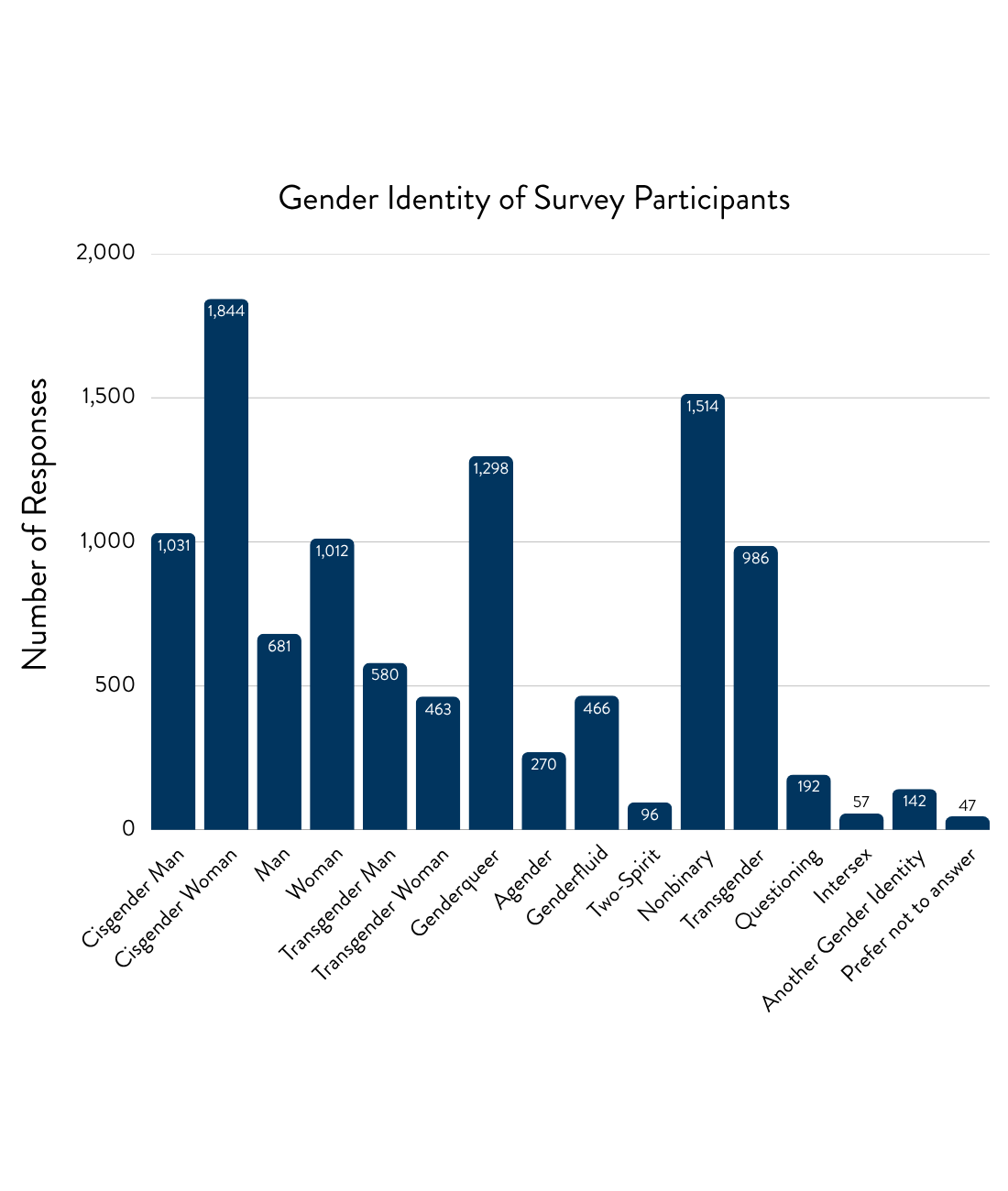 This preliminary data supports the idea that the queer and trans community is not a monolith, but a vibrant, diverse, and expansive community from a vast array of sexual orientations, gender identities, geographies, racial and ethnic backgrounds, and lived experience. The Minnesota LGBTQIA2S+ Community Needs Assessment will provide a deeper understanding of how experiences vary across different demographic groups, helping identify patterns, disparities, and community-specific needs among LGBTQIA2S+ Minnesotans.
This Pride month we celebrate the diversity and creativity of our communities while renewing our commitment to advocacy that recognizes the unique experiences people have across different identities, backgrounds, and communities.
Upcoming Election Resources
Minnesota's primary elections are coming up on Tuesday, August 11th. Register to vote, update voter registration, or verify voter registration on the Secretary of State website. In Minnesota, there are two options for voting before election day:
- Absentee voting opens 46 days before an election (Friday, June 26th). Request an absentee ballot via mail, fill it out, and mail it back or submit in person. There are also absentee voting locations where you can fill out and submit your ballot all at once.
-
New this year to Minnesota is the option of early voting, which begins up to 18 days before an election (Friday, July 24th). Voters can go to their polling place, fill out their ballot, and directly submit it. The last day to vote early in person is Monday, August 10th.
- Actual counting of votes for each candidate doesn't begin until polls close at 8pm on August 11th.
- Learn more about the options for voting early from this MPR article.
-
Visit the for additional election and voter information.
Issue Briefing: Protecting LGBTQ Rights from Pfund Foundation and the Minneapolis Foundation
Pfund Foundation supports LGBTQ+ organizations, entrepreneurs, and scholars in the Upper Midwest through grants and scholarships. They frequently partner with other community organizations such as the Minneapolis Foundation. In collaboration, these two foundations have created this issue briefing full of ways to support the LGBTQ+ community and resources to increase awareness of the challenges facing the LGBTQ+ community. This briefing details recent national legislation that has targeted the safety and well-being of the LGBTQ+ community, like the constant threats to gender-affirming care for youth. This briefing also recognizes the way LGBTQ+ folks face challenges that overlap with other community issues, such as housing, health disparities, economic stability, and mental health. Read the briefing here (PDF).
|
Federal News Impacting the LGBTQIA2S+ Community:
-
The Office of Management & Budget (OMB) proposed new rules published on May 29th to establish political oversight of federal grants: This was an expected development that seeks to give Trump-appointed officials more control over deciding where to award federal grants. Officials can also deny existing grants if they find the grantees are out of alignment with Trump's Executive Orders and priorities. The proposal also, according to OMB, bans “grants that push disparate impact liability theories, discriminatory event services, DEI, "gender ideology” and “child sex mutilation” (the term the Trump administration uses for gender-affirming care). The proposal is over 400 pages and is open for public comment for 45 days. Read more about the proposed rules here.
-
Federal court decision from June 1st declares the ban on trans people in the military is unconstitutional: A panel on the US Court of Appeals for the District of Columbia ruled 2-1 in Talbott v. USA that the ban on trans people serving openly in the military was designed to exclude people from the military based on their gender identity. The panel's new ruling will keep the military from kicking out current trans service members named in the lawsuit, but wouldn't allow new trans recruits to join. The Supreme Court ruled last year that the Pentagon can enforce the ban on new trans recruits while litigation around the policy continues. Read more about the ruling here.
|