|
In this edition:
- Orientation to the 2026 Minnesota Legislative Session on MICH's February 4 webinar
- Welcome Brian Pittman!
- Minnesota Housing approves $41.75 million to preserve Naturally Occurring Affordable Housing (NOAH) across Minnesota
- Medicaid improper payment rate in Minnesota far below national average
-
Inequities worsen homelessness
Join us for the next MICH webinar on Wednesday, February 4 from 1 - 2 p.m. If you have any questions about your webinar registration, please email dan.gregory@state.mn.us
On the February 4 webinar, we'll share a nuts-and-bolts orientation to the 2026 Minnesota Legislative Session, covering topics such as timelines, the committee structure, how to track bills, and more.
Though MICH webinars are not the ideal place to address individual circumstances, MICH is committed to following up if people do raise specific questions or concerns.
We are THRILLED to welcome Brian Pittman (he/him) to the MICH staff!
Brian will be working with MICH and Minnesota Housing as a Results Management Specialist. In this role, he will provide strategic direction through research, data, and evidence to inform decision making and integrate findings into policies, programs, and resource allocation. Brian brings more than 20 years of experience to our team, including positions with the Frey Foundation of Minnesota, Wilder Research, and Hamline University.
Outside of work, Brian enjoys the outdoors including camping, agate hunting, and biking with his family.
We are grateful Brian will be sharing our work leading the State of Minnesota's efforts to move toward housing, health, and racial justice for people facing homelessness!
The Minnesota Housing Board of Directors approved a slate of NOAH selections that will allocate $41,750,000 in state appropriations to preserve existing rental housing that is affordable without ongoing government subsidies. The funding supports developments in Greater Minnesota ($18.1 million) and in the Twin Cities metro ($23.7 million) and is expected to help stabilize 1,013 homes for Minnesotans.
NOAH generally refers to older rental properties with rents that are affordable due to market conditions, not because of government rent restrictions. Preserving NOAH helps keep homes affordable, address aging building needs, and reduce the risk of displacement for residents when properties change hands or require major repairs.
“Preserving naturally occurring affordable housing is one of the most direct ways to protect affordability and strengthen community stability,” said Minnesota Housing Commissioner Jennifer Leimaile Ho. “This investment helps ensure more Minnesotans can live and thrive in safe, stable homes—both in Greater Minnesota and in the Twin Cities metro.”
For renters, the affordability commitment means their building’s owner must keep a set number of apartments at affordable rent levels for 15-30 years — helping residents avoid sudden rent spikes or displacement. It also supports needed repairs and upgrades, so people can live in safer, more stable homes while staying connected to their jobs, schools, services and community.
New data from the federal U.S. Centers for Medicare & Medicaid Services (CMS) shows the overall rate of improper payment in Minnesota’s Medicaid program is far below national averages.
In the review released in January, CMS found an error rate of slightly over 2.1%, compared to a national average of 6.1%.
The data for the review was compiled before the Minnesota Department of Human Services (DHS) began implementing new strategies to minimize the risk of fraud and harden its systems against bad actors. Reviewers at CMS checked billing statements and then compared them with medical records to ensure the billing was accurate.
“No amount of error or fraud is acceptable. Even one dollar is too much,” said Temporary Human Services Commissioner Shireen Gandhi. “We’re committed to making Minnesota a national model for preventing fraud and catching errors. This review shows we have strong internal controls that we continue to improve, and we are not stopping there as we accelerate our efforts to fight fraud.”
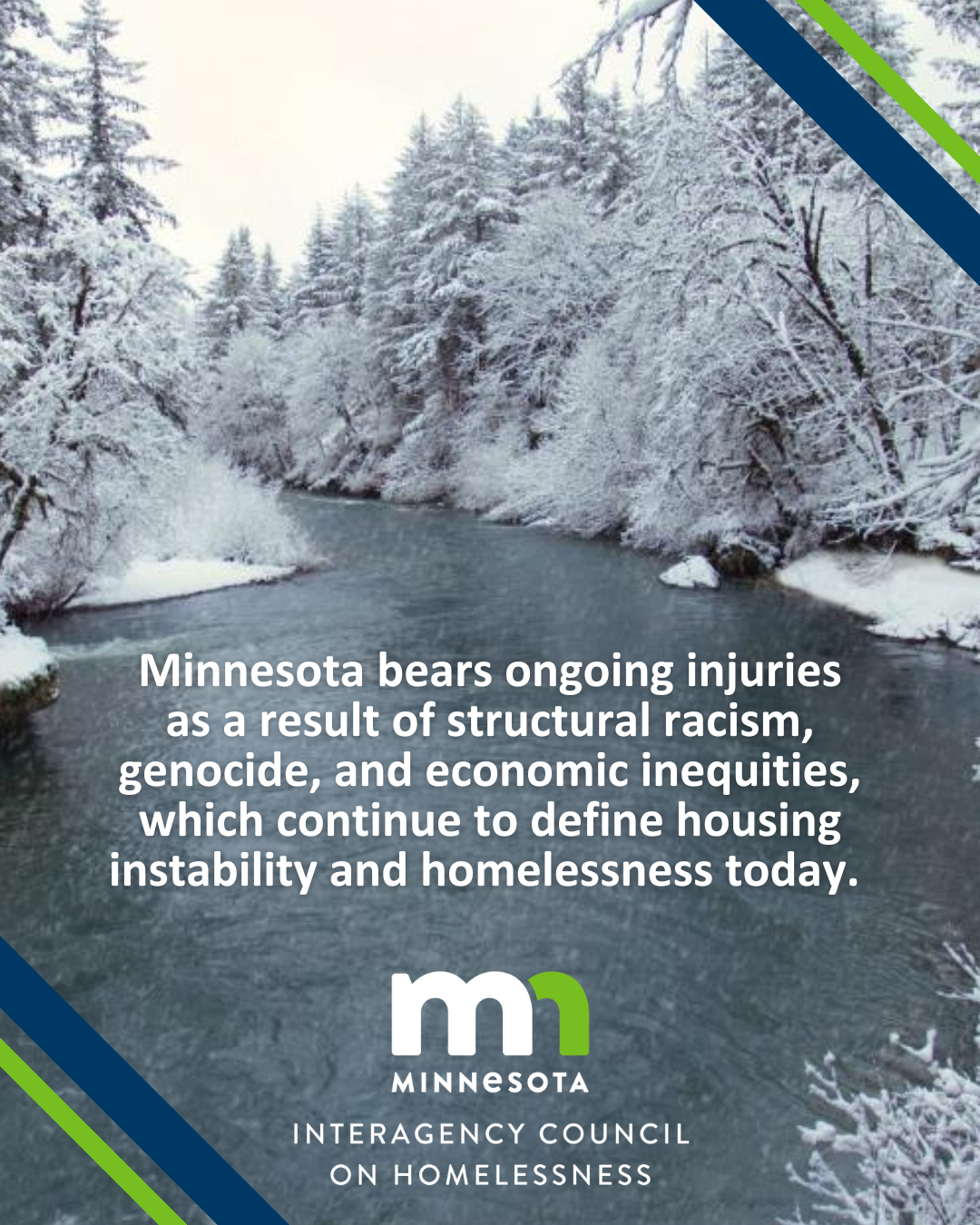
How have structural racism, genocide, and economic inequities contributed to disparities in who experiences homelessness in Minnesota? Learn more on our Facebook, Instagram, and LinkedIn pages.
The State has a key role to play as one partner in ending homelessness. While not a direct service provider, the State plays an important role in funding local partners. We take seriously our responsibility to listen to and be led by the wisdom of our Native and Black relatives so we can best understand needs and work together to create and fund impactful responses.
|
|
Receive this eNews as a forward? Sign up for the Minnesota Interagency Council on Homelessness eNews list. |
|
|
|
|