In this edition:
-
How will changes at HUD impact Minnesota? Join MICH’s December 3 webinar to learn more
-
Resources for understanding HUD’s Continuum of Care funding application
-
Trainings to support your work
-
Getting Veterans home
Join us for the next MICH webinar on Wednesday, December 3 from 1 - 2 p.m. If you have any questions about your webinar registration, please email dan.gregory@state.mn.us
On the December 3 webinar, we will discuss what we know about HUD’s changes to Continuum of Care funding (see “Resources for understanding HUD’s Continuum of Care funding application” below for more), what MICH is hearing from community, and how we’re approaching this harmful and destabilizing directive.
Though MICH webinars are not the ideal place to address individual circumstances, MICH is committed to following up if people do raise specific questions or concerns.
The beginning 10 minutes of each monthly webinar will be held to hear from the Speakers Bureau. Anyone who has lived experience of homelessness is welcome to sign-up to share through the Speakers Bureau. This is open time each month for lived experience experts to share ideas and feedback with the webinar audience.
The next webinar Speakers Bureau will be on Wednesday, December 3 at 1 p.m. There is a monthly prep session held the Tuesday before the webinar. The prep session will be Tuesday, December 2 from 11-11:30 a.m. Follow this link to join the prep session. This is an ongoing opportunity that happens each month. Sign up is required. Please email dan.gregory@state.mn.us or call/text Dan at 651-983-9985 to sign up to speak or with any questions.
Last week, the U.S. Department of Housing and Urban Development (HUD) issued the FY2025 Continuum of Care Program Notice of Funding Opportunity (NOFO). This NOFO guides the allocation of nearly $4 billion nationally – about $48 million to Minnesota – in federal funding that local communities rely on to get our neighbors out of homelessness and into homes tailored to their needs.
Instead of focusing on proven solutions and local input, the new NOFO prioritizes failed, harmful approaches that will not reduce homelessness.
Cuts to permanent housing mean at least 4,900 Minnesotans who already have a home risk being pushed out with no options.
The loss of HUD funding could ripple out, destabilizing entire buildings and nonprofits and undermining hundreds of millions in State investments.
The National Alliance to End Homelessness has created summaries to understand the language and funding implications in the NOFO:
A home – with the right supports – ends homelessness. This NOFO will disrupt that stability for thousands of our neighbors and undermine decades of bipartisan success.
Congress and HUD still have the ability to stop this disastrous change – and they should. Tell Congress the impact this would have on homes in your community.
Minnesota Engagement on Shelter & Housing (MESH) offers trainings for staff in housing and shelter programs, with opportunities to network, hone skills, and deepen understanding. These trainings include on-demand and live on Zoom options, with both approaches available for Continuing Education Units (CEUs).
They have also added a new page on their website to highlight other trainings and opportunities to help participants do your best work for the people you serve. Click here to see these other training opportunities (note MESH is not responsible for registrations, logistics or content of these trainings).
If your agency has trainings or resources you’d like to have considered for this page, contact Michele at events@mesh-mn.org
Minnesota Housing is accepting applications for the Property Owner Risk Mitigation Fund Program. Applications are due by 4:30 p.m. Central Time on Friday, December 5, 2025.
Click here for application materials and eligibility.
The Property Owner Risk Mitigation Fund (RMF) Program is intended to reduce risks to property owners in efforts to expand housing opportunities for households with barriers to accessing housing or those unable to obtain housing without additional funding coverage or guarantees in place. Grant Proceeds are used to create or expand risk mitigation programs to recruit and engage property owners, reimburse property owners for damages or other eligible costs, link property owners and renter households to tenancy support services, and establish other strategies to support property owners serving eligible households.
Households served by property owners under this Program must be eligible under the Family Homeless Prevention and Assistance Program (FHPAP) guidelines outlined in the FHPAP Program Guide.
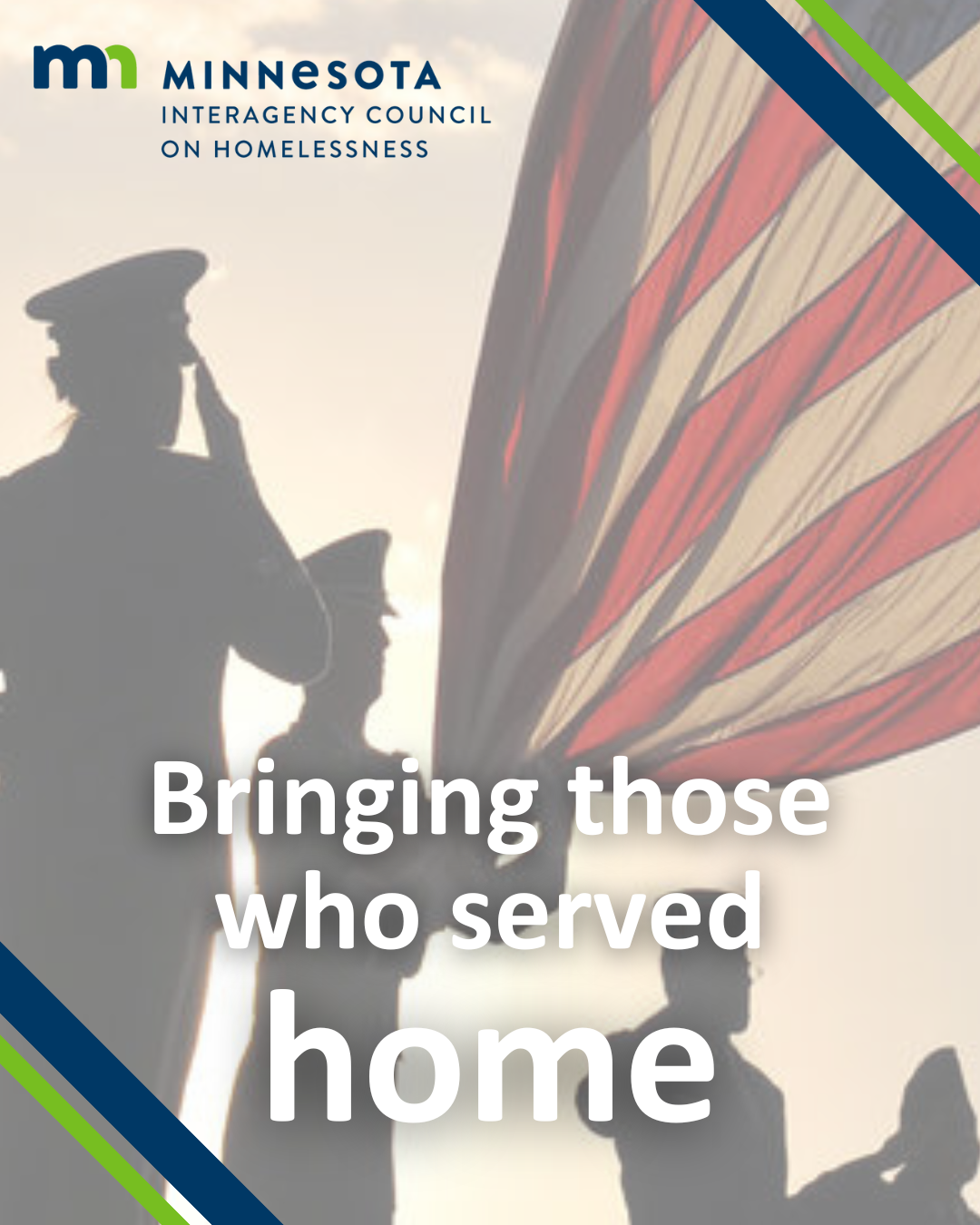
Together, we have effectively ended Veteran homelessness in 86 of Minnesota’s 87 counties, and we are poised to be the fourth state in the nation to reach that goal. Years of bipartisan support investing in the housing and services proven to end homelessness (approaches that risk disruption through HUD's NOFO) made this success possible.
For Veterans Day, we highlighted this incredible work and what it took to get those who have served our nation home. See more on our Facebook, Instagram, and/or LinkedIn posts!
|