In this edition:
-
Hear why criminalizing homelessness is harmful for people and communities on the June 4 MICH webinar
-
DCYF Publishes Guide to Housing Resources for Foster Youth
-
Take action now for the naloxone portal reopening
- DHS is hiring a Tribal Liaison for the Homelessness, Housing and Support Services Administration (HHSSA)
-
Office of Addiction and Recovery webinar will focus on recovery friendly workplaces and Minnesota Department of Education Statewide Health standards
-
How will President Trump’s proposed budget impact you?
-
Celebrating the grand opening of a shelter expansion together
- Crossroads to Justice: Implementation Consultant Pablo Romo on the importance of working together to make a difference
Be sure to join the next monthly webinar on Wednesday, June 4 from 1 - 2 p.m. If you have any questions about your webinar registration, please email dan.gregory@state.mn.us
On the June 4 webinar, hear why punishing people simply for sleeping outside while facing homelessness is detrimental for people and communities.
The beginning 10 minutes of each monthly webinar will be held to hear from the Speakers Bureau. Anyone who has lived experience of homelessness is welcome to sign-up to share through the Speakers Bureau. This is open time each month for lived experience experts to share ideas and feedback with the webinar audience.
The next webinar Speakers Bureau will be on Wednesday, June 4 at 1 p.m. There is a monthly prep session held the Tuesday before the webinar. The prep session will be Tuesday, June 3 from 11-11:30 a.m. Follow this link to join the prep session. This is an ongoing opportunity that happens each month. Sign up is required. Please email dan.gregory@state.mn.us or call/text Dan at 651-983-9985 to sign up to speak or with any questions.
The guide seeks to raise awareness of foster youth housing resources for caseworkers and youth in extended foster care or exiting foster care. This guide assists in the completion of the 180-day transition plan to ensure youth leaving foster care have stable housing.
The Minnesota Department of Human Services Harm Reduction Team is implementing a more sustainable naloxone portal as a part of the multi-agency Naloxone Saturation Strategy. Staff are working to reopen the portal to new eligible accounts while developing sustainable ordering limits for naloxone portal users.
Required Survey for Portal Access
To ensure effective resource allocation, every organization with an ordering account must complete the naloxone portal allocation survey. Orders will be approved once it has been confirmed your survey has been submitted.
The naloxone portal remains open for all current accounts. Unless otherwise notified, organizations are eligible to place orders for up to 2 cases (24 kits) of naloxone per calendar month.
Naloxone must be ordered through the portal and is not automatically shipped.
Organizations that have completed the survey and need more than their current allocation are encouraged to place an exception request for additional naloxone. Exception requests are reviewed by the portal team and approved as resources allow.
New portal accounts for eligible organizations will be available starting in June through the DHS website. Organizations without current accounts but with immediate needs may contact portal staff for case-by-case evaluation.
Organizations receiving naloxone through the portal will receive quarterly emails requesting distribution updates.
The Homelessness, Housing and Support Services Administration (HHSSA) of the Minnesota Department of Human Services (DHS) is hiring a Tribal Liaison to promote and maintain positive working relationships with the Tribal Governments and American Indian communities, both tribal and urban, related to HHSSA’s regulatory and program integrity missions. This includes work related to grant administration, program development, and program integrity oversight. It also involves providing policy direction to the administration and technical assistance to Tribal Governments and American Indian homelessness and housing programs statewide. Collaborating closely with the DHS Office of Indian Policy and DHS Tribal Liaisons, this role ensures seamless coordination and alignment of efforts associated with Tribal Government engagement.
Responsibilities include, but are not limited to:
-
Manage and provide leadership on HHSSA’s engagement with Tribal Nations and American Indian Communities across the state.
-
Foster the HHSSA’s partnerships with Tribal Nations and American Indian communities.
-
Lead the development of agency, interagency and interdepartmental policy initiatives, and legislative proposals to ensure a continuum of services that support and strengthen services and programming for American Indians.
-
Develop training materials and resources to build and promote the engagement and sovereignty of Tribal Nations for DHS, Tribal Nations, counties and providers.
Applications are due by June 5.
The next Office of Addiction and Recovery (OAR) monthly webinar will be held on Wednesday, May 28 from 11:00 a.m. to 12 noon.
The May session will include the following topics:
-
Office of Addiction and Recovery update
-
Recovery friendly workplaces
-
Minnesota Department of Education Statewide Health standards
These monthly updates share addiction and recovery initiatives with partners, highlighting important work happening inside and outside state government.
President Trump’s FY26 budget proposal includes at least $43 billion in cuts to programs that prevent and end homelessness. We won’t mince words: these cuts would be devastating for Minnesota families and communities.
We want to know: how would this budget impact you as an individual, an organization, or a jurisdiction in your efforts to prevent and end homelessness?
Email Dan at dan.gregory@state.mn.us with your reflections. Please note that we may follow up to seek permission in sharing your story more widely.
Grace House is the only homeless shelter in Itasca County – and earlier this month we celebrated its expansion that will serve more people in their community! Learn more and add your congrats and appreciation for their work by engaging with our posts on Facebook, Instagram, and/or LinkedIn.
Crossroads to Justice is the strategic plan of the Minnesota Interagency Council on Homelessness (MICH), bringing a housing, racial and health justice approach for people facing homelessness in Minnesota to guide the work of state government.
The implementation of this plan is being co-led and co-monitored by 14 paid Implementation Consultants, all people with lived experience of homelessness representing different experiences and different parts of the state. Their expertise and priorities are shaping the daily work of state agencies.
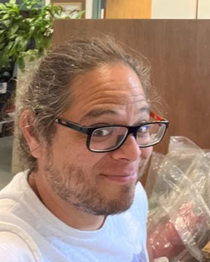
Pablo experienced homelessness in his youth. This experience of his family being treated without dignity and respect stayed with him. Like many who have experienced the way systems treat people who are unhoused, he internalized the message that it was his fault. He knows that is not true and is committed to work with MICH to support systems to be accountable as respectful partners to people as they move toward housing stability and wellness on all levels. Pablo currently works at One Roof, which is addressing the lack of supply of affordable housing for unhoused people in Duluth.
Pablo’s reflections on the importance of working together
“Working with the Minnesota Interagency Council on Homelessness has been a great experience. I’ve had the chance to partner with different state agencies like DEED, the Department of Revenue, and the Department of Health.
"By working with these teams, I’ve learned how each one is trying to improve services for people who are unhoused. It gave me a new perspective on how much effort is going on behind the scenes.
"I’ve also learned that there are no easy answers to ending homelessness. It will take time, patience, and continued teamwork. But staying connected and working together through these interagency efforts is important. It’s the kind of collaboration the Crossroads to Justice team needs to keep moving forward and making progress.”
|