Celebrate Olmstead Day with us on June 25, for the 25th Anniversary of the Olmstead Decision!
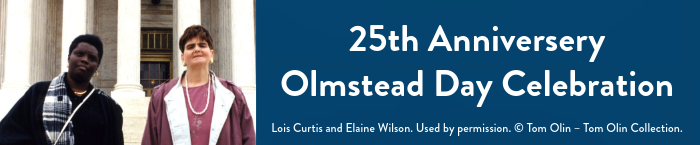 This year is the 25th anniversary of the 1999 Supreme Court Decision Olmstead v. L.C. 25 years ago, when Elaine Wilson and Lois Curtis advocated for – and won – their rights, they also reaffirmed the rights of disabled Americans everywhere, including people for generations to come. Their right to live in the most integrated setting possible came about thanks to the Americans with Disabilities Act and the countless advocates who came before.
On June 25, the Olmstead Implementation Office invites you to celebrate disability advocacy. We are hosting a virtual Olmstead Day celebration from noon to 1:30 p.m. We will learn from Colleen Wieck of the Governor’s Council on Developmental Disabilities about the long history of disability advocacy that brought us to today. David Dively of the Minnesota Council on Disability will share about how disability advocacy continues to shape life today, and self-advocate Brittanie Hernandez-Wilson will discuss the future of disability advocacy. All three speakers will share insights on the past, present, and future of disability advocacy in a panel discussion.
Celebrate 25 Days of Olmstead with a daily email June 1 through 25! OIO will be sharing insights about Olmstead, accessibility, intersectionality, resources and more for 25 days leading up to the Olmstead Day celebration. Subscribe to this special email list to get the daily emails.
This year, the 35W bridge in Minneapolis will be lit to celebrate the 25th anniversary of the Olmstead decision. The bridge will be lit on June 22, 2024 starting a half hour before sunset to a half hour after sunrise. It will be lit in the colors of the disability pride flag. The Olmstead Implementation Office will share a photo of the lit up bridge on our website, social media, and newsletter.
 |
|
The colors of the disability pride flag represent:
- Black is to mourn and honor people with disabilities who have died.
- Green is for sensory disabilities.
- Blue represents emotional and psychiatric disabilities.
- White stands for non-visible and undiagnosed disabilities.
- Gold is for neurodiversity.
- Red represents physical disabilities.
|
Take our survey on community integration, choice, and inclusion starting June 3!
The Olmstead Implementation Office will be launching a virtual survey on June 3. The survey will ask a few questions about integration, choice and inclusion. Anyone can take this survey, but the main audience is people with disabilities in Minnesota. Information collected through this survey will inform what areas the next Olmstead Plan will focus on. Once the survey is open for responses, it will be shared on the Olmstead Implementation Office website, social media and newsletter. Over the coming year there will be other opportunities for people to share input that will affect the next Olmstead Plan.
The Olmstead Implementation Office is excited to share that we will be working with a contractor to conduct small community conversations this summer. These will be small, intentional conversations with communities who have had less engagement with the Olmstead Plan in the past. Communities that have particular barriers to accessing engagement opportunities will also be included in these smaller conversations. Feedback from these conversations will help inform the next Olmstead Plan. OIO will also host a series of larger conversations open to the public both in person and virtually to inform the next Plan.
The next Olmstead Leadership Forum meeting is Tuesday, June 18
The next Olmstead Leadership Forum meeting is on Tuesday, June 18 from 3 to 4:30 p.m. The Olmstead Leadership Forum includes people who work for State Agencies who have goals in the Olmstead Plan. This meeting is open to the public. This is a working meeting for the Olmstead State Agencies.
The Minnesota Department of Human Services (DHS) is seeking input about Minnesota’s disability waiver system and the Waiver Reimagine project. Take their anonymous, virtual survey before May 30 to share your input. Your feedback will help DHS improve the experiences of people who receive waiver services. The survey includes questions about: how you get information about disability waiver services, suggested changes to the disability waivers, and choice for your services.
|