|
|
Dear Friends & Neighbors,
The 2026 legislative session has ended, and in the final days we were able to pass several bills to give Minnesotans some needed tax relief and address the fraud epidemic. Key highlights are listed below.
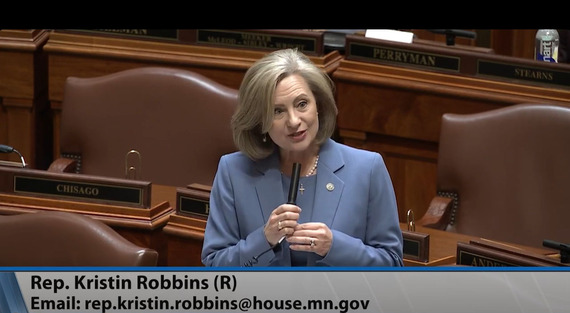
Monday was a bittersweet day for me as I gave my final speech on the House Floor! I am deeply grateful to the amazing people of House District 37A for allowing me to serve our district for the past 8 years!
It has been an incredible honor to be your voice at the Capitol and to fight for families, seniors and small businesses. I will continue to be your representative through December and will keep working on constituent issues and fighting fraud.
Thank you for allowing me to serve our communities in this way! I hope to stay connected with all of you!
To watch my final speech, click on the photo below.
|
|
Executive Summary
-
SESSION ENDS WITH NEEDED TAX RELIEF
-
UPDATED COUNTY TECHNOLOGY WILL HELP IDENTIFY FRAUD
-
MINNESOTA HOUSE FRAUD PREVENTION COMMITTEE MAJORITY REPORT RELEASED
-
YOUTH SOCIAL MEDIA RESTRICTION BILL SIGNED INTO LAW
-
HIGHER EDUCATION CONFERENCE COMMITTEE REPORT APPROVED
-
PHOTOS
|
|
SESSION ENDS WITH NEEDED TAX RELIEF
Hardworking Minnesotans will see $400 million in tax relief thanks to legislation approved in the final days of the 2026 legislative session.
You’ll recall in 2023, when Democrats controlled the House, Senate and Governor’s Office, that they wasted an $18 billion surplus, raised taxes by $10 billion and grew state government spending by 40%. This year many of their tax-and-spend decisions began to take effect, hitting hardworking Minnesotans hard as they struggle to pay their bills.
Under the agreement, Minnesotans will see some, but not as much as they need, one-time tax reform:
- $125 million in property tax relief – which will give homeowners with income less than $143,000 a property tax refund of about $173.
- $250 million in one-time license tab fee reductions, which will be in effect for calendar year 2027; and
- An extension of the Pass-Through Entity tax deduction on federal taxes for two years, which will reduce federal taxes for partnerships and small businesses without reducing revenue to the state.
Because this has zero impact on the state budget but substantially reduces federal tax liability for small businesses, this should have been a permanent, not a temporary, reduction.
I actually voted against the Tax bill because I was so frustrated with how little tax relief was included. We had many bills that would have delivered much broader tax cuts to families and businesses that would have helped families and seniors and driven economic growth.
It is disappointing that none of the tax cuts were permanent and that they will not help most working families in the middle class.
|
|
UPDATED COUNTY TECHNOLOGY WILL HELP IDENTIFY FRAUD
For decades, Minnesota’s county governments have struggled with outdated technology they are forced to use in order to reliably implement social programs like Supplemental Nutrition Assistance Program (SNAP) and Medicaid. The software they are using was developed in the 1980’s.
This outdated tech has made it harder for counties to verify and track eligibility for public programs and has been one of many reasons fraud was sometimes hard to detect.
We had strong bipartisan support for legislation that will allow counties to make needed technology upgrades. This will help them improve efficiency, strengthen security protections, and enhance eligibility verification.
In addition, we expect that the savings from improved fraud detection will mean that the cost of these upgrades will eventually pay for itself. Providing accountability, reliability and transparency with these needed changes is a win for Minnesota.
|
|
MINNESOTA HOUSE FRAUD PREVENTION COMMITTEE MAJORITY REPORT RELEASED
The Minnesota House Fraud Prevention and State Oversight Committee recently adopted its Majority Report, summarizing the work of the Committee over the 2025-2026 Legislative Session. The report addresses the different vectors of fraud the Committee held hearings on over the past two years, providing the Majority’s findings and recommendations for future action.
This report will serve as an important roadmap for the public and future Legislatures to understand the genesis of the staggering amount of fraud in the State of Minnesota. The report outlines the ‘anatomy of fraud’ and the failure of the Walz Administration to take action.
This report describes how the Dayton and Walz Administrations enabled fraud, allowed fraud to continue, and covered up the fraud by trying to suppress findings by investigators and whistleblowers.
In January of 2025, the Minnesota House of Representatives created this committee as the first oversight committee in the history of the Minnesota Legislature. The Committee was formed as the result of the power-sharing agreement negotiated when the House was tied for only the second time in state history. The new House Fraud Prevention and State Agency Oversight Committee was formed in the wake of the Feeding our Future COVID-era meal fraud scheme and increasing concern that Minnesota’s non-traditional Medicaid waivered services programs were riddled with fraud.
At the time, leaders thought that Feeding Our Future (FOF) might exceed $250 million and that this unprecedented level of fraud justified special focus by an Oversight Committee. In December of 2025, First U.S. Attorney Joe Thompson estimated the fraud in 14 high-risk Medicaid programs to be $9 billion.
After two dozen hearings with dozens of witnesses and hundreds of whistleblower reports, and reviewing hundreds of documents and reviewing years of Office of Legislative Auditor (OLA) reports, the committee found the breadth and depth of fraud in Minnesota is much worse than anyone thought possible and stretched across multiple agencies within the Walz Administration.
The Majority Report concluded that:
- Democrats in the Dayton and Walz Administrations, as well as in the Minnesota House of Representatives, took steps to suppress findings of fraud
- The Walz Administration enabled fraud by poor program design and weak controls
- The Walz Administration’s failure to hold anyone accountable for fraud, especially after having had the benefit of the OLA reports in March and April of 2019, is what enabled fraud to grow from an estimated $5 million - $100 million in the childcare program to billions across multiple Medicaid services
- Attorney General Ellison has failed to protect taxpayers and vulnerable Minnesotans
- Representative Ilhan Omar created the conditions for Feeding our Future
The scope of the fraud is staggering. I hope the findings and recommendations are taken seriously. We have made enormous progress in exposing fraud, strengthening internal controls and bringing a culture of accountability to state government, but there is more work to do to bring an end to the fraud, protect taxpayers and vulnerable citizens, and restore Minnesotans faith in government and public programs.
To watch our press conference on this report, click here.
|
|
YOUTH SOCIAL MEDIA RESTRICTION BILL SIGNED INTO LAW
Legislation that helps ensure children are protected from social media (SF 4244) was signed into law.
This bipartisan bill requires verifiable parental consent for children under the age of 16 to have social media accounts. When consent is given, the social media account will have none of the addictive features like infinite scrolling and push notifications. The proposal will protect our kids online by removing additional features and empowering parents.
I was pleased to support this legislation as it will significantly reduce the documented harm to kids, as would a bill I have been championing in the House for more than 6 years. My Stop Online Targeting Against (SOTA) Kids Act (HF 48) would have prohibited social media platforms from using recommendation algorithms to target kids under the age of 18 with unsolicited content. Under my bill, social media companies could not serve up content to kids they haven’t liked or followed. Children’s feeds would basically go back to how they were originally – reverse chronological order of posts from people you like or follow, without endless scroll.
Studies show that social media is causing plenty of problems with today’s youth. Teens ages 13-18 spend more than 3 hours per day on social media, but some spend up to 9 hours per day, which is problematic since it has been linked to teen drug use and anorexia, body image issues and mental health problems.
Meanwhile, the social media companies – TikTok, Youtube, Instagram, etc. – are making hundreds of billions, and in some cases trillions of dollars a year based on engagement. The more time your child spends on a site, the more money the social media companies make through ads and product sales. The sites use algorithms to target content they know kids will watch, and that targeted content – weight loss, drugs, sex – sends kids into dark places that drive awful outcomes.
If you are a parent or parent or grandparent, I encourage you to follow Dr. Jonathan Haidt and read his book The Anxious Generation this summer! His research, and that of many others, has documented the devasting effects social media has had on a generation of our children, driving them into depression, anxiety, addiction to gambling and pornography, anorexia and bulimia, and self-harm and suicidal ideation.
The more we can do to protect kids from the harms of social media, the better. I’m pleased the legislature took this needed step in the right direction.
|
|
|
As temporary co-chair of the Minnesota House Higher Education Finance Committee, I was happy we were able to negotiate a strong bipartisan fraud tool that will help the colleges and universities in the Minnesota State system deal with “ghost students” – an increasing problem where criminals pose as students to get financial aid but don’t actually show up for classes they have registered for.
We were also able to fully fund the financial aid for kids who grew up in the foster care system and have no family support for college. This program has a long-term structural deficit and we had ideas on how to streamline the program to make sure it will be able to help as many foster kids as possible, but those changes were rejected by the Democrats. Instead, we took unspent money from a workforce development program and the general fund to close the gap this year. Structural changes will have to be made next year.
Unfortunately, we were not able to end free college for illegal immigrants. We had two hearings on the issue and Democrats voted against our bill, so it failed in a tie vote in Committee and again when we tried to do it as an “urgency” on the Floor.
This matters because our state grant program, which is a taxpayer-funded financial aid program that is supposed to help Minnesota students afford college, has a deficit of $131 million. The program was also in a deficit last year, but we were able to fill the gap through spending cuts and changing some of the program’s parameters.
This year, we were not able to get agreement on more cuts or structural changes to fix the hole in the state grant program, so current students will have their financial aid awards reduced, sometimes drastically, despite them having already made decisions about where to go. It is unfair to give non-citizens free college and greater access to financial aid than students who are here legally.
|
|
PHOTOS
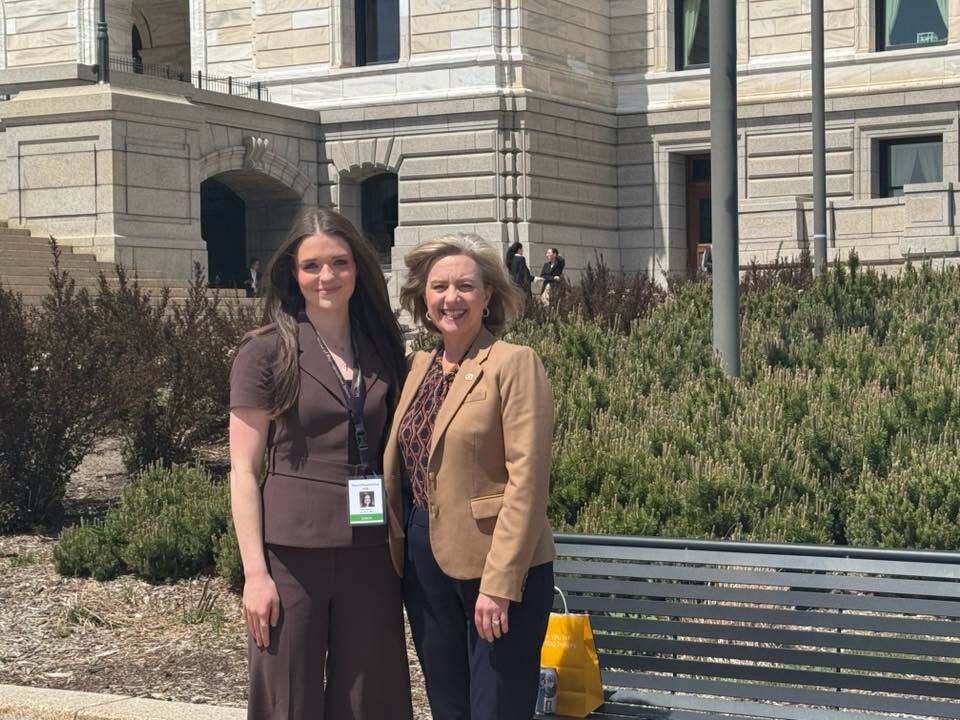 I’m so thankful for the amazing young people who have interned for me over the years!
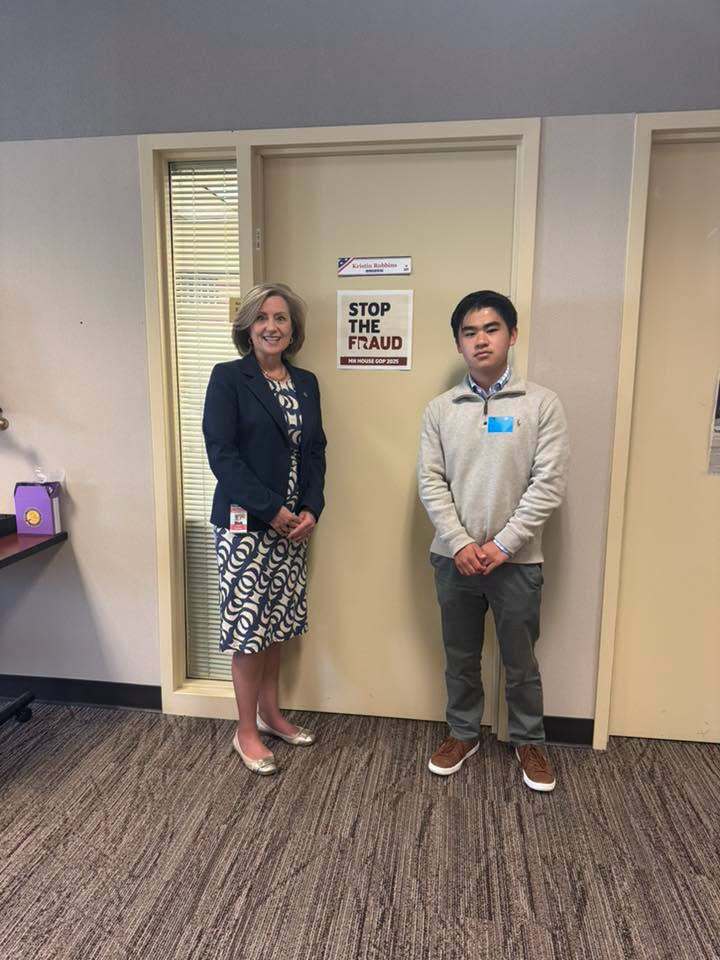 Here is this year’s spring crew!
|
|
Please Contact Me
With the 2026 legislative session now over, updates from the Capitol will no longer be sent weekly - but do expect them occasionally when there is news to report.
Many of you have already been in touch to discuss your thoughts on the issues that matter most to you. Thank you for sharing your ideas! Please continue to contact me to discuss any matters to which I can be of assistance.
The best way to reach me is by email: rep.kristin.robbins@house.mn.gov. For occasional updates, you can follow my Facebook Page at @RepKristinRobbins. You can also leave a voicemail on my office number, 651-296-7806, which is checked every weekday while we are in session.
Of course, if you are coming to the Capitol, I’d love to meet you! Please reach out if you would like to set-up an in-person meeting.
Have a great weekend!
Kristin
|
|
239 State Office Building
100 Rev. Dr. Martin Luther King Jr. Blvd.
Saint Paul, MN 55155
ph: 651.296.7806 |
|
|
|
|