Dear friends and neighbors on the Iron Range,
All major committee deadlines have passed, which means the work of the session has shifted fully to the House floor. The focus over these final weeks is clear: deliver results for Minnesotans. That includes making life more affordable, strengthening efforts to address fraud and protect taxpayer dollars, and advancing other key issues that impact communities across the state. I remain committed to pushing for practical, common-sense solutions that get results before our constitutional deadline.
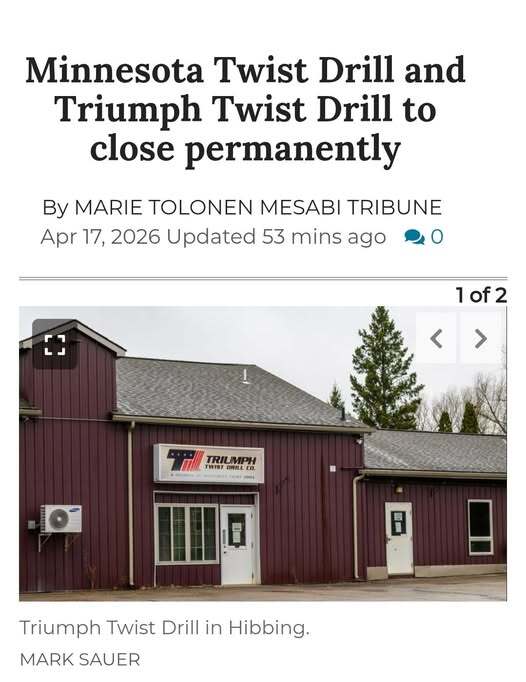
Devastating News about MN Twist Drill
The announced closure of Minnesota Twist Drill is devastating news for the Iron Range. This is a long-standing employer that has been part of our region for generations, and many families have built their careers there or had their first jobs at the plant. Losing another major employer is a real blow to workers, families, and our local economy. State officials have noted that impacted workers will be eligible for support through the Dislocated Worker program, including retraining, upskilling, and unemployment benefits, which will be an important resource as Iron Rangers affected by this closure figure out their next steps.
In moments like this, Rangers show what makes our region strong. People are already stepping up to help, and we will continue working to connect workers with new opportunities and support efforts to bring stable, good-paying jobs back to our communities.
 |
Citizens League Civic Celebration
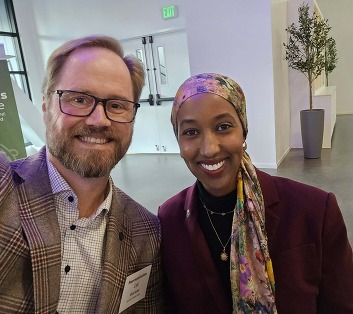
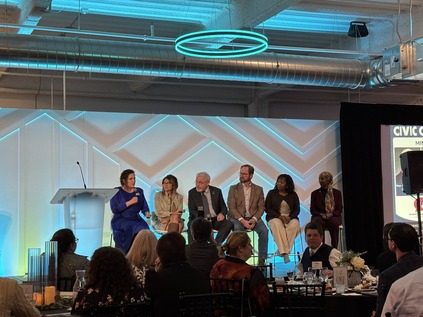
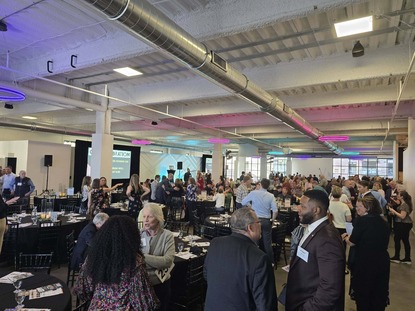
On April 16th, and just after our floor session concluded, five House members had the opportunity to speak about the value of the Legislative Exchange Program at the Citizens League Civic Celebration in Minneapolis. The event brought together about 400 people and highlighted the importance of building relationships across political divides. Representatives Mary Frances Clardy, Ned Carroll, Anquam Mahamoud, Natalie Zeleznikar, and I shared stories from our experience and reflected on what we gained from the program, not just as legislators, but as people and fellow Minnesotans.
With 134 House districts across the state, each one has its own unique character, priorities, and challenges. Getting the chance to step into another member’s district and see firsthand what matters to their communities helps build real understanding that you cannot get at a distance. Those shared experiences go a long way in strengthening relationships and improving how we work together at the Capitol. It was a beautiful evening with a great turnout, and I appreciate the Citizens League and everyone who helped make it a meaningful conversation.
Working to lower taxes
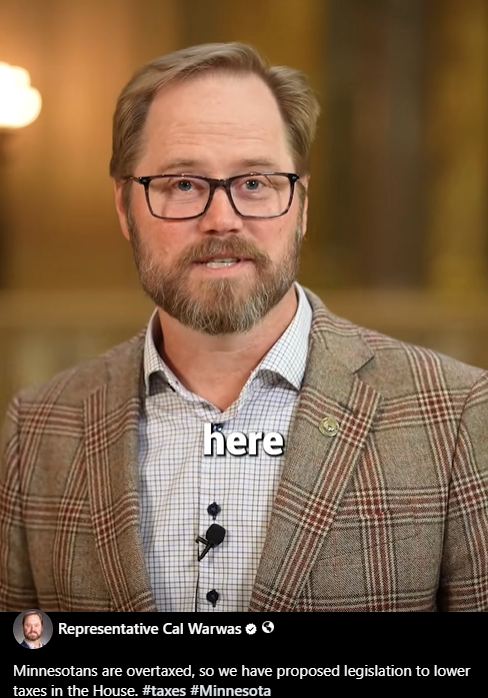
One of our main focuses this session is affordability. The truth is that Minnesotans are paying far too much in taxes, from car tabs to income taxes and many others in between. I am proud to have voted yes on a number of bills this session that would eliminate tax on tips and overtime (at the state level, these are already exempt at the federal level), offer a property tax refund, lower car tab fees, and more. Check out my video below for a little more on our work to lower taxes with legislation in the House.
Rickey and Sisu Solar
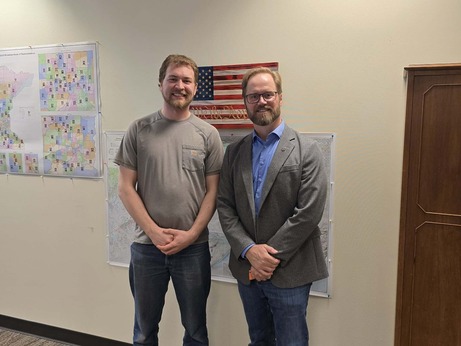
I recently had the opportunity to meet with Rickey Sipila of Britt, Minnesota. Rickey has a strong interest in alternative energy and turned that passion into a business when he founded Sisu Solar about five years ago. We had a productive conversation about Minnesota’s energy policies, the role of base-load energy production, and the importance of keeping energy reliable and affordable for families and businesses. It was great to connect with someone so engaged in both the industry and the broader policy discussions shaping our energy future. Thank you, Rickey, for taking the time to visit and share your perspective.
Mayor Larry Cuffe Jr. in the Taxes Committee
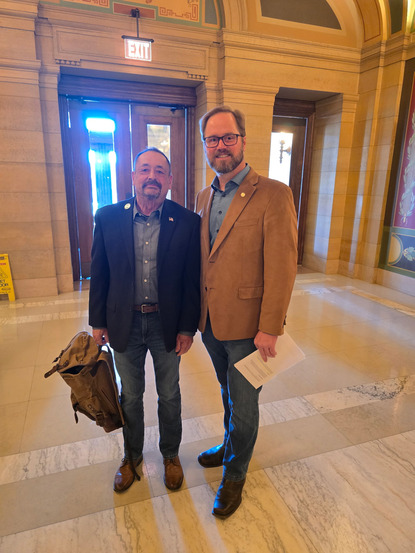
Thank you to Virginia Mayor Larry Cuffe Jr., who testified at one of our Tax Committee meetings this past week. Nearly all the bills heard that day pertained to new or adjusted scope Local Option Sales Tax (LOST) measures. I am grateful to the Mayor for making the journey to St. Paul to deliver his perspective. Many Rangers have done the same this session, and it makes all the difference to the committees that our folks take the time to be in-person for our narrowly scheduled committee days.
A Word on the Federal Congressional Review Act (CRA)
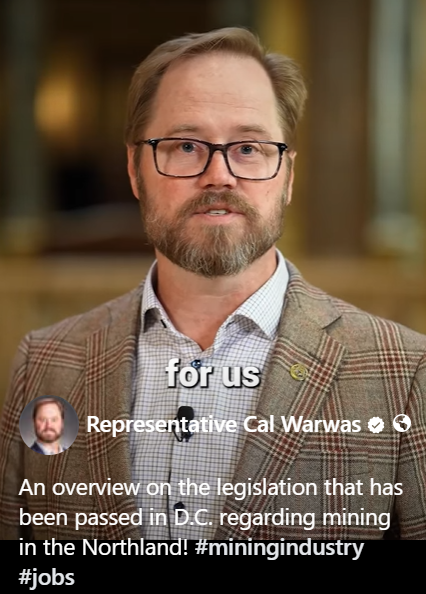
Following recent action in the United States Senate on the Congressional Review Act resolution, there has been a great deal of discussion across the Iron Range about what this means for mining in Northern Minnesota. It is important to address a key point of confusion. Some claims suggest this action puts the Boundary Waters Canoe Area Wilderness at risk, though nothing could be further from the truth.
Mining is not, and never will be, allowed in the Boundary Waters, nor in the established protected buffer areas surrounding it. This has not changed. What the CRA did is lift a blanket federal restriction on mineral leasing in certain areas of the Superior National Forest outside those protected zones.
The CRA ended a ban on certain usage of over 225,000 acres of the Superior National Forest. It’s important to recall that the ban was enacted illegally, by then Secretary of the Interior, Deb Haaland, at the behest of former President Joe Biden. Anti-mining activists promoted the ban, and the truth of the matter is that the move was anything but scientific, but rather a political one. Permitted exploratory drilling has been done in the SNF since at least the 1980’s, which is how we know about the vast mineral wealth that exists there in the first place.
The CRA simply allows proposed projects, including Twin Metals Minnesota, to move forward into the standard, science-based permitting process where environmental impacts are thoroughly reviewed by federal and state agencies. Most people on the Iron Range, myself included, see this as a step toward restoring a fair process and creating opportunities for responsible development and jobs in the Northland, while ensuring that decisions are guided by established regulations and scientific evaluation rather than broad prohibitions.
|